
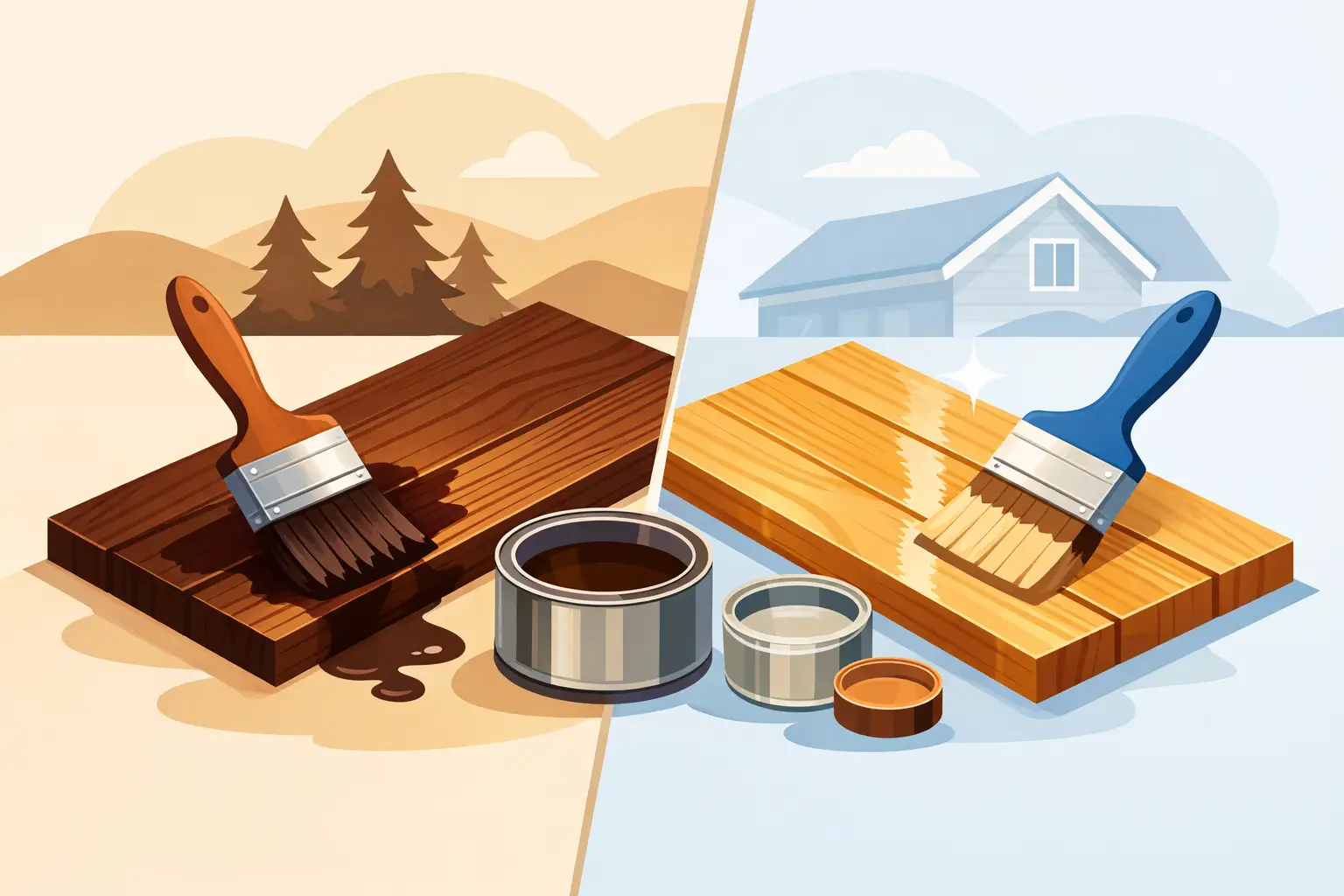
A timber deck can look tired for two very different reasons. Sometimes the timber has lost its colour and looks dry and washed out. Other times it still has decent colour, but the surface protection has broken down and the timber is taking a beating from sun, rain and foot traffic. That is where the timber stain vs varnish question matters, because these products do different jobs and give very different results.
If you are deciding how to finish a deck, front door, pergola, handrail or outdoor furniture, the right choice comes down to appearance, exposure and maintenance. There is no one-size-fits-all answer. What works beautifully on a sheltered entry door may be the wrong call for a full-sun Adelaide deck.
Timber stain vs varnish: the core difference
The simplest way to think about it is this: stain mainly changes or enriches the timber’s colour while soaking into the grain, and varnish mainly forms a protective film over the surface. Some modern products blur the line a bit, but the principle still holds.
A timber stain is designed to penetrate the wood. It enhances the grain rather than hiding it, and it can refresh faded timber or shift the tone lighter or darker depending on the product. Many exterior timber stains also include protective ingredients, so they are not just about looks. Even so, their finish usually feels more natural and less built-up than varnish.
Varnish sits on top of the timber and creates a clear or lightly tinted coating. Its job is protection as much as presentation. It can bring out the richness of the timber and often gives a more noticeable sheen, from satin through to gloss. That surface film is the reason varnish can look polished and refined, but it is also the reason failing varnish can peel, crack or flake if the preparation or product choice is wrong.
Where timber stain works best
Timber stain is often the better option where you want a natural look and easier long-term upkeep. On decks, cladding, fences and pergolas, a stain tends to age more gracefully than varnish. Instead of forming a hard shell that can lift, it wears back more gradually.
That matters outdoors. Adelaide conditions are tough on timber, especially in areas that get hard sun, heat and weather changes. A finish that looks great in the first month is only part of the story. You also want something that can be maintained without turning the next recoating job into a full strip-back.
Stain is also a practical choice when the timber already has variation in tone or minor cosmetic wear. Because it soaks in and enhances the grain, it can make the overall surface look more even without trying to create a furniture-like coating where one does not suit the setting.
For decks in particular, stain usually makes more sense than varnish. Decks deal with moisture, furniture movement, shoes, pets and regular washing. A penetrating finish is generally better matched to that kind of wear.
When stain may not be enough
Stain is not always the answer. If you want a high-build, glossy look, stain will not give you that. And not every stain offers the same level of moisture or UV protection, so product selection matters. Some cheaper coatings fade fast or wear unevenly if the timber was not cleaned and prepared properly first.
If the timber is premium feature timber in a protected area and appearance is the top priority, a clear varnish may still be the better fit.
When varnish is the right choice
Varnish comes into its own when you want a richer finished look and stronger surface barrier, especially on feature timber that is not taking the full force of the weather. Think entry doors under cover, interior timber trim, decorative panelling, stair components or selected architectural timber details.
A good varnish can make the grain look deeper and more defined. On the right surface, it gives a cleaner, more finished presentation than stain alone. That is why many people choose it for timber they want to show off.
The trade-off is maintenance. Once a varnish film starts to fail, spot repairs can be difficult to blend. If peeling or cracking sets in, the proper fix may involve sanding back a large area and recoating thoroughly. That is why varnish on exposed horizontal surfaces, especially decks, often creates more work than owners expect.
Varnish outdoors needs extra care
Not all varnishes are equal outdoors. Exterior-grade products are made to handle UV and movement better than interior coatings, but even then, exposure levels matter. Full sun, rain and ponding water are hard on any film-forming finish.
This is where honest advice matters. A product can be technically suitable, but that does not always mean it is the most practical choice for your property. If you are after a finish that stays looking sharp with less fuss, a stain or specialised timber coating is often the smarter route.
Appearance, durability and maintenance
Most property owners are balancing three things: how it looks now, how long it will last, and how painful it will be to maintain. You rarely get the maximum of all three at once.
Stain usually wins on natural appearance and easier maintenance. It lets timber look like timber. It is also generally more forgiving when recoating time comes around, provided the timber has been cleaned and the old finish is compatible.
Varnish usually wins on formal presentation. It can look sharper, deeper and more premium, especially on feature pieces. But it tends to ask more from the owner later. Once the coating starts breaking down, it often needs more labour to restore properly.
Durability depends on more than the tin. Surface preparation, moisture content, previous coatings, exposure to weather and how many coats are applied all affect the result. That is why two decks coated with the same product can age very differently.
Timber stain vs varnish for common jobs
For decks, stairs and high-traffic outdoor timber, stain is usually the safer choice. It handles movement and wear better, and maintenance is generally more straightforward.
For front doors and feature timber under cover, varnish can work well if you want that richer, more finished look. The protection can be excellent when the area is sheltered and the coating is maintained before it breaks down.
For pergolas, screens and cladding, it depends on how exposed the timber is and what look you want. In heavily exposed spots, a stain or specialised exterior timber coating is often more practical. In protected areas, varnish may be suitable if appearance is the main priority.
For older or weathered timber, stain often gives a better result because it works with the timber rather than trying to mask every imperfection under a film coat.
Preparation matters more than most people think
This is the part many people underestimate. A great product over poor preparation will still fail.
Timber needs to be clean, dry and free from loose or incompatible old coatings. Greyed timber may need restoring. Previous varnish may need to be removed or sanded back thoroughly before a new system goes on. If moisture is trapped in the timber, no finish is going to perform as it should.
Application matters too. Over-applying stain can leave sticky patches or uneven absorption. Under-building varnish can leave weak protection, while over-building it can lead to cracking if the timber moves. Weather conditions on the day also play a part, especially outdoors.
That is one reason professional application often pays off. An experienced team knows when a surface needs more prep, when the existing coating changes the plan, and when a customer is better off choosing durability over a finish that looks good only in the short term.
How to choose the right finish for your property
If your priority is a natural look, easier upkeep and better practicality on exposed outdoor timber, stain is often the better option. If your priority is a more polished appearance on sheltered or feature timber, varnish can be the right fit.
If you are still unsure, ask yourself three plain questions. Is the timber fully exposed to Adelaide weather? Is it a high-traffic area? Do you want the easiest maintenance path over the next few years? If the answer is yes to those, stain usually comes out ahead.
If it is a feature element, partly protected and you want a richer visual finish, varnish may be worth it – as long as you go in knowing the maintenance commitment.
At Shine Painters Adelaide, we see plenty of timber that has not failed because the owner picked a bad product, but because the finish did not match the job. The best result comes from choosing a coating that suits the timber, the exposure and the level of upkeep you are realistically willing to do.
A good timber finish should not just look sharp on day one. It should still make sense a year or two down the track, when the weather has had its say and the next maintenance cycle rolls around.