
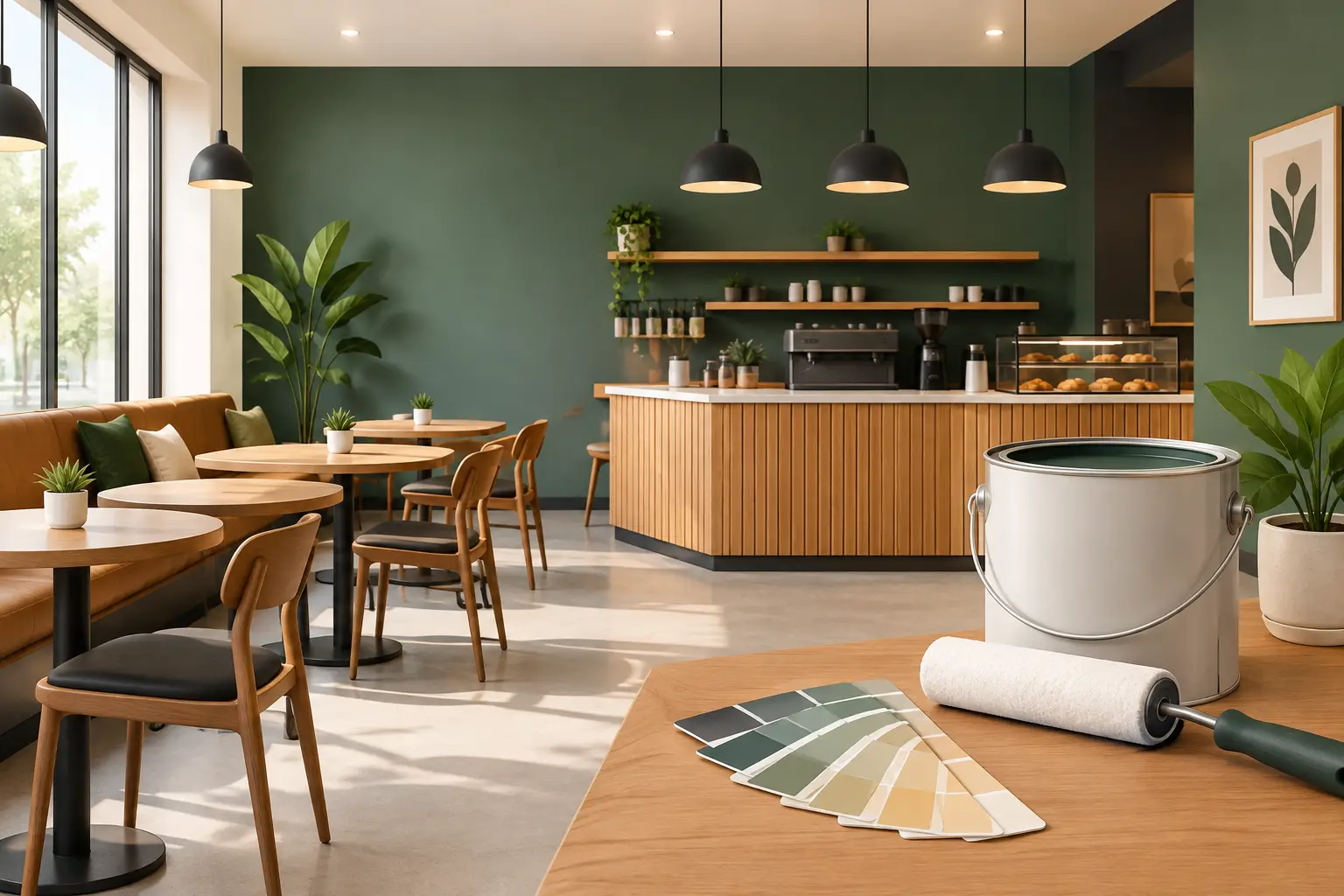
A café wall can look tired far sooner than a wall at home. Steam from the coffee machine, chairs rubbing against corners, takeaway traffic, spills and frequent cleaning all take their toll. The best paint for café interiors is not simply the nicest colour on a sample card. It needs to suit the way the space works, stand up to daily wear and help customers feel comfortable from the first glance.
For Adelaide café owners, the right paint choice comes down to three things: a finish that can be cleaned, colours that suit the brand and lighting, and proper preparation underneath. Skip any one of them and even premium paint can struggle to last.
Start with a durable, washable wall paint
For most café dining areas, a high-quality water-based acrylic paint with a washable low-sheen finish is the sensible choice. It gives walls a soft, modern appearance while offering better cleanability than flat ceiling paint or basic matt finishes. Low sheen also helps disguise minor imperfections in older plaster walls, which is useful in many character buildings and converted shopfronts.
A washable acrylic finish allows staff to wipe away fingerprints, light food splashes and marks around tables without quickly polishing the wall surface or stripping away colour. Not all low-sheen paints perform equally, though. Cheaper products may look acceptable on day one but can mark easily when cleaned, especially along service queues and near high-traffic seating.
In hard-working spots, it can pay to use a more durable finish rather than applying the same paint throughout the whole venue. Walls beside the counter, near rubbish stations, in hallways and around bathroom entries see more contact than a feature wall behind booth seating. A premium washable product is a better long-term investment in these areas because it reduces the need for constant touch-ups.
Choose the sheen level room by room
There is no single sheen level that suits every café surface. Low sheen works well across most customer-facing walls, but trims, doors and practical areas need extra protection.
Semi-gloss or satin finishes are typically better for skirting boards, door frames, timber doors and service counters. Their tougher surface handles knocks and regular wiping, although the extra shine will highlight dents, roller marks and patchy repairs. This is why surface preparation matters so much.
Ceilings are different again. A quality flat ceiling paint helps minimise glare from pendants, track lights and natural light through front windows. If the café has persistent moisture near the kitchen pass, dishwashing area or bathrooms, use a suitable mould-resistant coating in those specific spaces. Good ventilation still comes first – paint is not a fix for an ongoing moisture problem.
The best paint for café interiors depends on the zone
A café is not one room with one set of demands. Treating the space in zones gives a better-looking and more practical result.
The front-of-house area should feel considered and welcoming, so colour and finish deserve the most attention here. A washable low-sheen acrylic usually provides the right balance between appearance and cleanability. In a small café, lighter shades can make narrow rooms feel more open, while deeper colours can give a larger space warmth and a stronger identity.
Behind the counter, durability takes priority. Walls can be exposed to steam, milk splashes, cleaning products and frequent contact from staff. A hard-wearing washable finish is essential. Where paint sits close to food preparation, appliances or splash-prone areas, check that the coating system suits the surface and the cleaning routine. In some locations, a painted wall may not be the best solution at all – tiled, stainless or other hygienic linings can be more suitable for heavily exposed sections.
Bathrooms, corridors and staff areas often receive less design attention, yet they are where paint gets punished. A practical, easy-clean finish in a mid-tone colour can hide everyday scuffs better than bright white while still keeping the area fresh. Doors and frames should be finished in a durable coating that can handle regular use.
Low-odour paint keeps disruption down
Most cafés cannot afford to close for long. That makes low-odour, low-VOC water-based paints a smart option for interior repainting. They are generally more comfortable to work around than traditional solvent-based coatings and can allow spaces to be aired and returned to use sooner, subject to the product, weather and ventilation.
Low-VOC does not mean no smell at all, and drying time is not the same as full curing time. A wall may feel dry within hours, but it takes longer to reach its full toughness. During that period, avoid aggressive scrubbing, moving furniture tightly against freshly painted walls or attaching signage too soon.
Planning the work around quieter trading days, evening closures or staged sections can keep the disruption manageable. A professional painter can also protect furniture, floors, equipment and fixed fittings so the café does not reopen with paint dust or splatters where customers can see them.
Colour should support the customer experience
Café colours need to work under real conditions, not just look good under showroom lights. Before settling on a palette, look at the room in early morning light, midday sun and under the lighting used during service. A creamy neutral can turn yellow under warm bulbs, while a charcoal feature wall may feel flat or overly heavy in a dim, narrow space.
Warm whites, soft greys, muted greens, clay tones and natural earthy colours are popular because they sit comfortably beside timber, plants, black metal and stone-look finishes. But popularity is not a reason to copy another venue. The right choice depends on your branding, the amount of daylight, ceiling height, furniture colours and the type of experience you want to create.
Deep feature colours can work beautifully behind banquette seating, menu boards or a coffee counter. Use them with care in compact rooms, particularly if the wall has visible flaws. Dark colours absorb light and show chips more readily, so they need sound preparation and enough lighting to look intentional rather than gloomy.
Always test sample patches on the actual wall. Paint two coats on a reasonable-sized area, then view it beside tables, joinery and signage. This small step avoids expensive second thoughts after the entire café has been painted.
Preparation is what makes the finish last
The paint system is only as good as the surface beneath it. Café walls commonly have old adhesive, picture-hook holes, cracks, greasy marks, uneven patches and previous touch-ups in slightly different shades. Painting straight over these problems is a shortcut that will show through once the job is finished.
A proper repaint starts with cleaning, scraping loose material, filling holes and cracks, sanding repairs smooth and spot-priming where needed. Glossy surfaces and previously painted trims may need sanding and a suitable primer to help the new coating bond properly. Water stains, nicotine marks or other stubborn stains also need the right sealing treatment before the finish coats go on.
If walls are damaged from removed signage, old shelving or years of chair contact, repair them before choosing a sheen level. A glossier finish over a rough wall will draw attention to every defect. In many cases, a carefully repaired surface with a quality low-sheen paint gives the cleanest result.
Think beyond the walls
A café repaint is a good opportunity to assess the surfaces customers touch and notice most. Scuffed doors, tired timber panelling, chipped metal rails and worn cabinetry can make newly painted walls look unfinished. Depending on the material, these surfaces may need specialised primers and coatings rather than standard wall paint.
For example, cabinets can often be refreshed with a suitable hard-wearing coating system instead of being replaced. Exposed timber may need staining, varnishing or clear protection to preserve its character. Metal elements need preparation that deals with rust and creates adhesion before a topcoat is applied. Each surface has different requirements, so one tin of paint is rarely the answer to the entire fit-out.
Get the timing and maintenance right
Once the painting is complete, a simple cleaning routine will protect the finish. Use a soft cloth or sponge with mild cleaner where possible, rather than harsh abrasives that can dull the surface. Clean marks sooner rather than letting coffee, grease or fingerprints build up.
Keep a small, clearly labelled amount of touch-up paint for minor repairs, but use it carefully. Touch-ups on older paint can flash in certain light, especially on darker colours or high-sheen finishes. For larger scuffs, repainting a full wall from corner to corner often produces a neater result.
For café owners who want the job handled properly from repairs and colour guidance through to final clean-up, Shine Painters Adelaide can help plan a finish that suits both the look of the venue and the realities of daily service. The goal is not just fresh walls for opening day, but a finish that still looks professional after thousands of coffees have crossed the counter.
Before choosing a colour, stand in your café during a busy service and notice where people touch, queue, lean and spill. Those everyday pressure points should guide the paint system just as much as the design brief.