
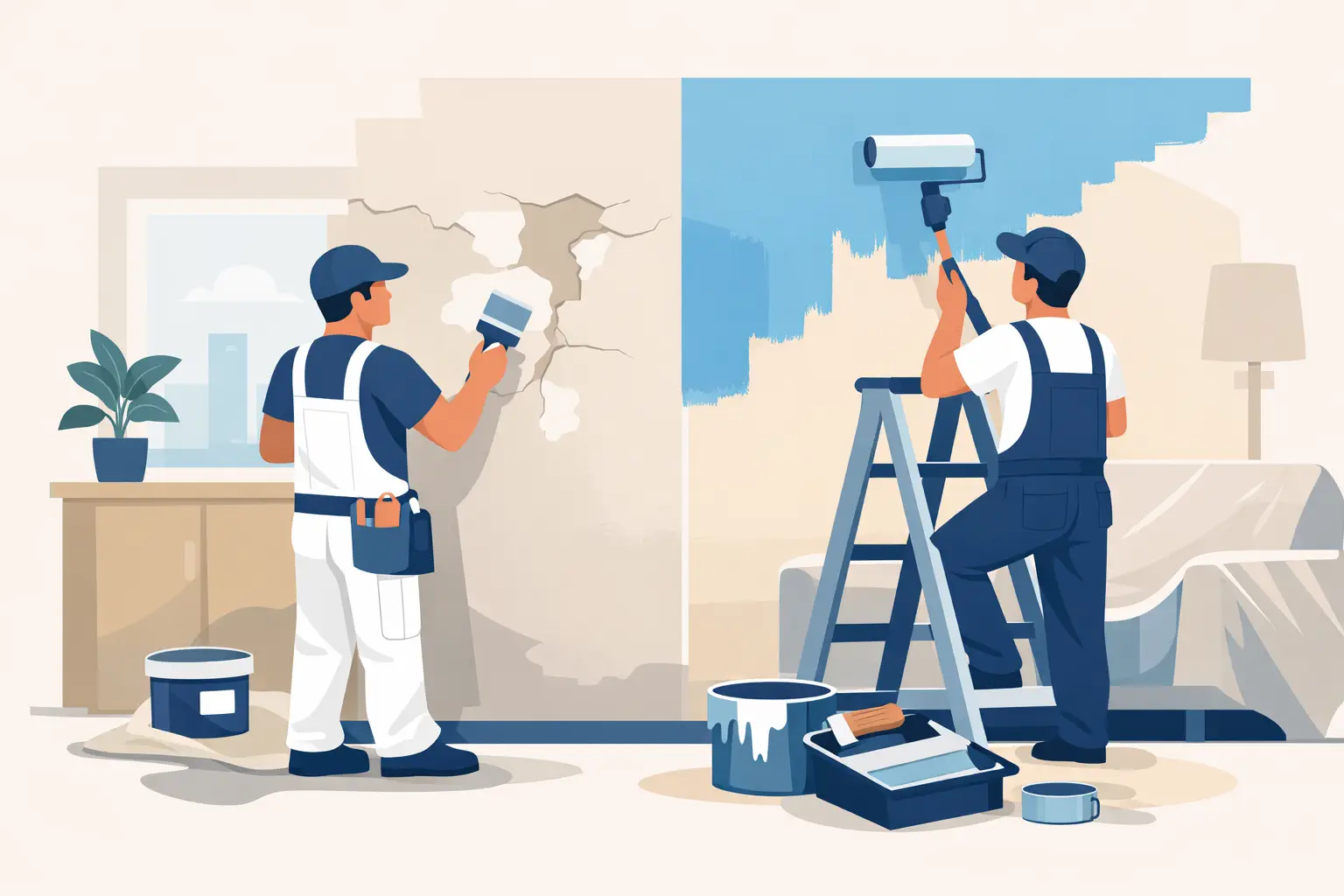
A freshly painted wall can look great for a few months even when the surface underneath is still in poor shape. Then the cracks come back, patch marks show through, or peeling starts again around old damage. That is why wall repair painting services matter. A proper result is not just about putting new paint on the wall. It is about fixing what caused the problem, preparing the surface properly, and applying the right products so the finish lasts.
For homeowners, landlords and business owners, damaged walls are more than a cosmetic issue. They make a room feel tired, can turn off tenants or customers, and often point to wear that needs attention before painting starts. Whether it is plaster cracks, dents from furniture, water-stained sections, bubbling paint or rough patchwork from old repairs, the job needs to be handled in the right order.
What wall repair painting services actually include
A lot of people hear the term and assume it means a quick filler job before repainting. In reality, good wall repair painting services involve inspection, surface preparation, repair work, sanding, sealing, undercoating and final coats. Each step affects the finish.
Small dents and scuffs are usually straightforward, but larger cracks or damaged plaster need more care. If a wall has movement cracks, the repair method matters. If a surface has water damage, the stain and the source of the problem both need attention. If old paint is flaking, loose material has to come off before any fresh coating goes on. Painting over these issues might save time on day one, but it rarely saves money.
The goal is a smooth, even wall that looks clean in normal daylight, under ceiling lights and from different angles. That only happens when the repair work is blended properly into the surrounding surface.
Why proper prep makes all the difference
This is the part that gets skipped when people are rushing. It is also the part that separates a decent-looking job from one you are still happy with years later.
Walls pick up more damage than most people realise. There are hairline cracks near cornices, dents around light switches, screw holes from old shelving, scuffing in hallways, and patched areas from previous work that were never feathered out properly. Once a new coat of paint goes on, those imperfections can stand out even more if the prep is poor.
A professional approach means checking adhesion, identifying weak spots, cleaning down the surface and choosing products that suit the wall condition. Some areas need fillers. Some need plaster repair. Some need stain-blocking primer. Some need sanding across a wider section so the repaired area does not flash through the topcoat. There is no single fix for every wall, and that is where experience counts.
Common problems that need wall repairs before painting
Cracks are one of the most common issues, especially in older homes and investment properties with years of wear. Some are minor settlement cracks and easy to repair. Others keep reopening because of movement or previous shortcut repairs. The repair method should match the problem, not just cover it.
Dents and chips are common in rental homes, busy family areas and commercial interiors. Door handles, moved furniture and general knocks leave marks that are too visible to ignore once the wall is painted in a lighter colour or low-sheen finish.
Peeling and bubbling paint usually points to moisture, poor adhesion or old coatings failing. This type of issue needs more than sanding the edges and hoping for the best. The unstable paint has to be removed, the surface stabilised and the area primed correctly.
Water stains are another one. Even after the leak is fixed, the wall can still hold staining, weakened plaster or bubbling paint film. If the stain is not sealed properly, it can bleed through fresh paint.
Then there are rough patch repairs from past jobs. These are common in rentals and older renovations where someone filled a hole, gave it a quick sand and painted over it. Under certain light, every patch stands out. A good repair should disappear into the wall, not announce itself.
Wall repair painting services for homes, rentals and commercial spaces
The best approach depends on the type of property and how the space is used.
In owner-occupied homes, the focus is usually on finish quality and long-term durability. Living rooms, bedrooms and hallways need walls that look clean and consistent, especially in spaces with lots of natural light. Homeowners also tend to care about colour guidance, neatness and making sure the work is done without leaving dust and mess through the house.
For rental properties, timing matters just as much as finish. Landlords and property managers often need repairs and repainting done quickly between tenancies, but still properly. Rushed patch jobs can lead to repeat maintenance and complaints from new tenants. A better result supports faster turnaround and a presentation that helps the property lease well.
In commercial premises, appearance and disruption are the main concerns. Office walls, retail spaces, receptions and shared areas cop a fair bit of wear. Repairs need to look professional, and the work often needs to be scheduled around trading hours or staff access. Flexibility matters, but so does doing the prep thoroughly.
When a repair can be spot-fixed and when the whole wall should be repainted
This is where honesty matters. Not every damaged wall needs a full repaint, but some do.
If the issue is isolated and the existing paint is in good condition, a localised repair and touch-up may be enough. That said, touch-ups are not always invisible. Paint ages, fades and changes slightly over time, even indoors. The original product may also be unknown. So while a spot repair can work in some cases, it depends on colour match, sheen level and wall location.
If there are multiple repairs across one wall, visible wear, mismatched paint or widespread flaking, repainting the full wall usually gives a cleaner and more consistent result. In some rooms, repainting adjoining walls makes sense too, especially if the new finish would otherwise highlight the older surfaces beside it.
A straight answer upfront saves frustration later. It is better to know where a perfect match is realistic and where a broader repaint is the smarter option.
What to expect from professional wall repair painting services
A proper service should start with a clear look at the condition of the walls, not a rushed price based only on square metres. Different surfaces, damage types and room conditions affect how much prep is needed.
From there, the work should follow a logical process. Protect floors and furniture. Remove loose material. Repair damaged sections. Sand and smooth the surface. Apply the right primers or sealers. Then finish with quality paint suited to the room and use of the space. Clean-up is part of the job too, not an extra.
Customers usually notice the difference in the finer details. Edges are sharper. Patch repairs are less visible. The finish sits evenly across the wall. The space feels fresher because the surface has been restored properly, not just painted over.
That is the standard we back at Shine Painters Adelaide – careful prep, honest advice and no shortcuts on the parts that determine how the job will hold up.
Choosing the right team for wall repairs and repainting
If you are comparing quotes, look beyond the final number. Ask what repair work is included, how damaged areas will be treated, whether stain-blocking or undercoating is allowed for, and what level of surface finish you can expect. A cheap quote can look very different once patching, extra prep and return visits are added back in.
It also helps to choose a licensed and insured team with real experience across homes, rentals and commercial properties. Wall repairs are rarely identical from one job to the next. Older plaster, water-damaged sections, rendered surfaces and previously patched walls all behave differently. A team that has seen those issues before is more likely to get the right result the first time.
Good communication matters as well. You want clear timing, tidy work practices and practical advice on whether to repair, repaint or do both. That is especially important when the property is tenanted, being prepared for sale, or needs to stay operational while work is carried out.
If your walls are marked, cracked, peeling or just plain tired, fresh paint alone will not fix the problem. Start with the surface, do the repair work properly, and the finished room will not just look better on the day – it will stay that way for longer.