
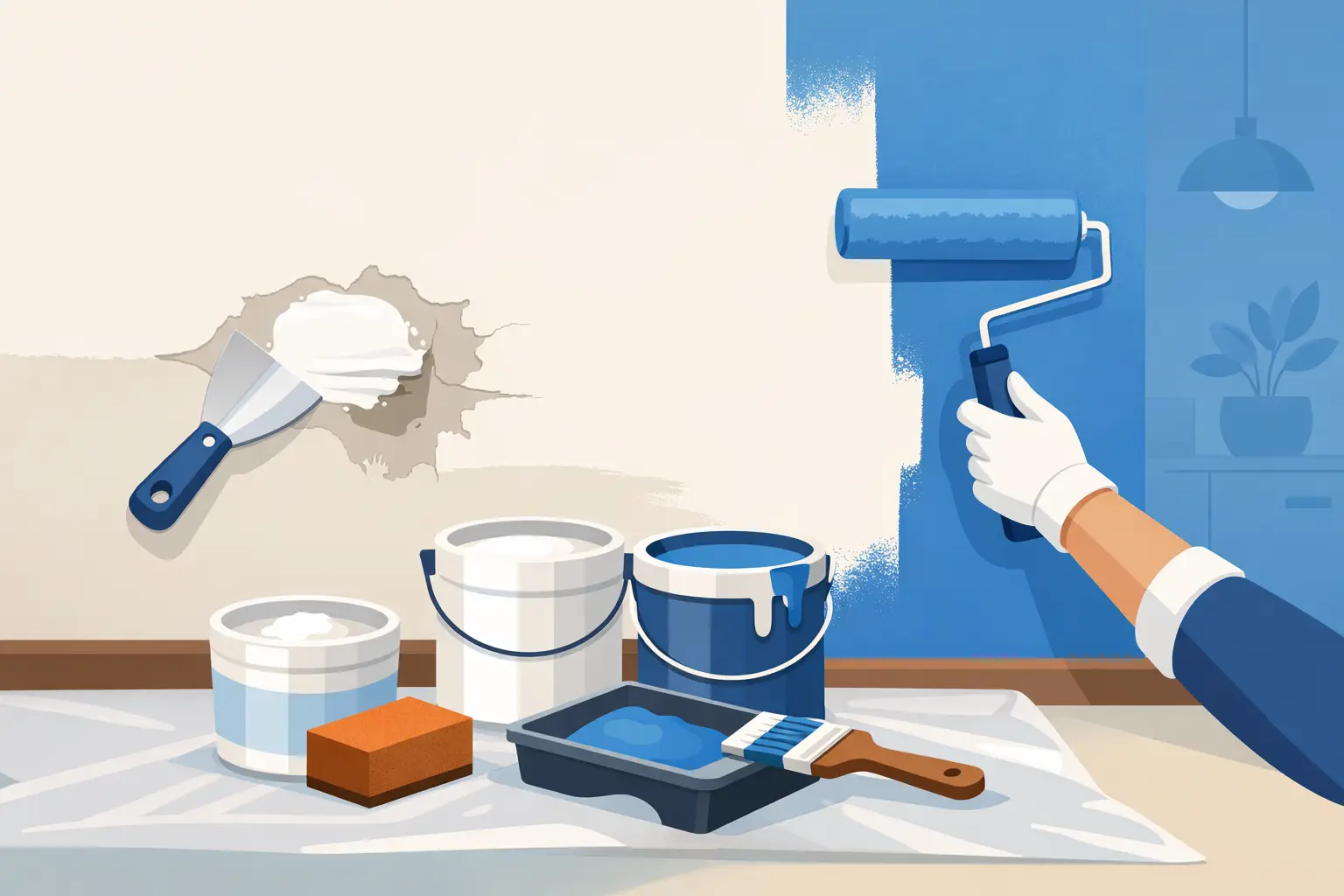
A scuffed hallway, a cracked corner or a patch where an old hook used to be can make the whole room look tired. This wall patching and repainting guide is for property owners who want to fix damage properly, not just cover it up for a few months and hope for the best. Done right, patching and repainting gives you a smoother finish, better paint adhesion and a result that actually lasts.
For homeowners, it is usually about presentation and pride in the place. For landlords and agents, it is often about getting a property ready for new tenants without delays or call-backs. For commercial spaces, wall repairs can make the difference between a premises that looks looked-after and one that feels run-down. The key is understanding that the paint is only as good as the surface underneath.
What a wall patching and repainting guide should start with
The first step is not paint selection. It is working out what sort of damage you are dealing with and why it happened in the first place. A small dent from furniture is one thing. A recurring crack above a doorway, bubbling paint or soft plaster is something else.
Hairline cracks, screw holes, chips and minor dents are generally straightforward repairs. Larger holes, loose joint tape, water staining, mould, flaking paint or movement-related cracking need more care. If the cause is moisture, structural movement or a failed previous repair, simply patching over it will not solve much. You might get a neat finish for a short time, but the defect often comes back through the new paint.
This is where many DIY jobs go wrong. The visible mark gets attention, but the underlying issue does not. Good preparation is slower upfront, but it saves time, money and frustration later.
Surface prep matters more than most people expect
Before any filler goes on, the area needs to be sound, clean and stable. That may mean scraping back loose paint, removing flaky material, sanding rough edges and checking whether the plasterboard or render underneath is still solid.
A proper repair usually involves cutting out any loose or crumbling section so the filler bonds to a firm surface. If you fill over dust, chalky paint or damaged material, the patch can fail, shrink or sit proud of the wall. That is when you end up with those obvious circles and ridges that catch the light from every angle.
For older properties, there can be a few extra variables. Previous paint layers may be thicker, surfaces may be less even, and old patch jobs can show through once you start sanding and repainting. In rental properties, there is often a mix of minor damage built up over time – hooks, bumps, scuffs, furniture marks and quick touch-ups in slightly different shades. Getting those walls back to one consistent finish takes more than a dab of filler and a roller.
Matching the repair method to the damage
Small nail holes and minor pin dents usually need a light fill, a sand and spot priming before repainting. Slightly deeper dents or chips may need two coats of filler because some products shrink as they dry.
Larger holes in plasterboard often need a more solid repair method, not just filler pushed into the gap. If the damaged area is unstable, a patch section may be required before the surface is skimmed and sanded smooth. Cracks can also vary. A fine cosmetic crack may only need opening slightly, filling and sanding, while ongoing movement cracks may need a more flexible approach and realistic expectations about future movement.
That is why there is no one-size-fits-all answer. The best repair depends on the wall type, the size of the damage, the room conditions and the standard of finish you need.
Why patched walls often flash through fresh paint
One of the most common complaints after repainting is patch flashing. That is when the repaired area stands out under light, even though the colour appears to match. It can look duller, shinier or slightly different in texture from the surrounding wall.
This usually comes down to porosity and surface profile. Filler absorbs paint differently to the original wall, and sanded repair areas can leave a smoother or rougher texture than the surrounding surface. If those patches are not sealed correctly, the topcoat can dry unevenly and make the repair obvious.
Spot priming is often essential, but in many cases a full repaint of the wall is the only way to get an even finish. Touching up one section may sound cheaper, but it can leave visible lap marks or sheen differences, especially on walls with flat natural light or darker colours. In living rooms, hallways, offices and open-plan spaces, those inconsistencies tend to stand out quickly.
Choosing the right paint finish after repairs
Low-sheen and washable interior paints are popular because they strike a good balance between appearance and practicality. Very flat paints can help disguise minor surface variation, but they may mark more easily in busy areas. Higher-sheen finishes are tougher to clean, though they also highlight every imperfection.
For rentals, family homes and commercial premises, durability usually matters as much as looks. A finish that handles cleaning and general wear can save repainting sooner than expected. Still, the smoother and better prepared the wall is, the better any finish will look.
The repainting stage: where neat work counts
Once repairs are dry, sanded and primed, repainting should bring the whole surface back together. This is where cutting corners shows up fast. If sanding dust is left on the wall, if patched sections are not feathered properly, or if the wrong roller nap is used, the final result can look patchy even with a good paint product.
A professional repaint is about consistency. That means consistent coverage, consistent texture and clean cut-in lines. In practical terms, it also means protecting floors and furniture, working neatly and keeping disruption to a minimum. For occupied homes, shops or offices, that side of the job matters just as much as the finish itself.
If only one wall is damaged, repainting that wall may be enough. If there has been fading, ageing or previous spot touch-ups, blending into adjacent walls can be difficult. White paint is a good example. People often assume white is white, but older painted walls can shift in tone over time. Even a correct original colour can look different next to a surface that has aged.
When DIY can work and when it usually does not
For very minor wall damage, a careful DIY repair can be fine. A couple of small picture-hook holes in a low-traffic spare room is one thing. The risk stays fairly low if you are patient with filling, sanding and priming.
The trouble starts when the repair is larger, the wall gets strong natural light, or the room is a main living space, entry, stairwell or commercial area where people notice every mark. It also gets harder when there are multiple defects across several walls, peeling paint, signs of moisture, textured surfaces or time pressure between tenants.
In those cases, professional help often saves money overall. You avoid buying the wrong materials, redoing failed patches and ending up with walls that still need to be fixed properly. An experienced team can usually assess whether it is a simple cosmetic repair or a sign of a broader issue that needs attention first.
Getting a durable finish for homes, rentals and businesses
A good result is not just about making damage disappear on the day. It is about leaving the wall stable, smooth and ready to wear well over time. That matters in family homes with regular knocks and cleaning, in rental properties where quick turnover should not mean rushed workmanship, and in commercial spaces where presentation reflects on the business.
For Adelaide properties, interior surfaces also deal with heat, seasonal movement and general wear that can expose weak preparation pretty quickly. That is why a proper patch-and-paint job should feel methodical from start to finish. Assess the damage, repair the cause where needed, prepare thoroughly, prime correctly and repaint for an even finish.
At Shine Painters Adelaide, that is the approach we back because it is the one that gives customers a result they can rely on. No shortcuts, no messy edges, and no pretending a rough patch will somehow disappear under a coat of paint.
If your walls are marked, cracked or simply looking tired, the right repair work can change the whole feel of the room. A fresh coat helps, but a sound surface underneath is what makes it worth doing.