
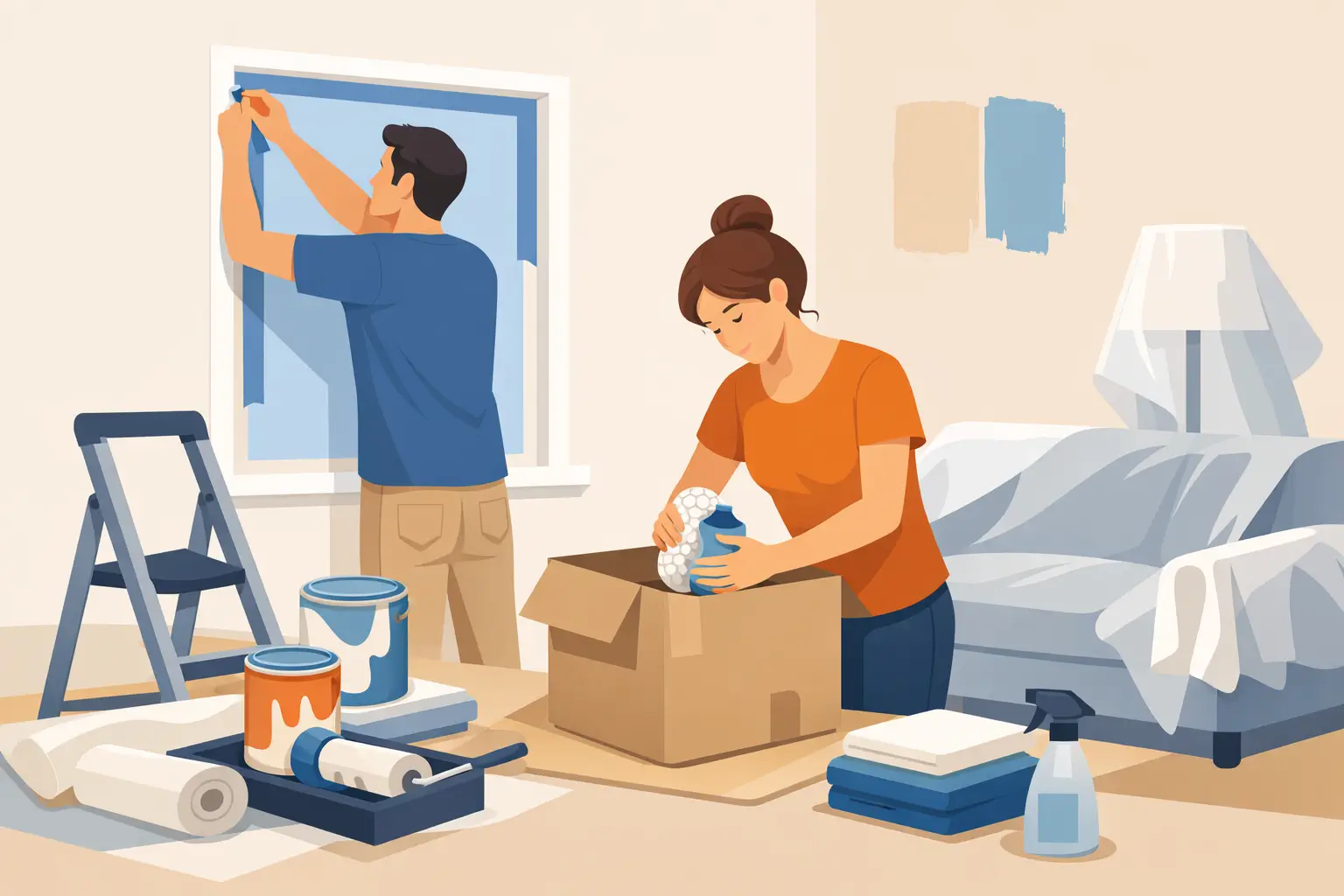
A good paint job is won before the first coat goes on. If the room is still full of furniture, the walls are dusty, and cracks or dents have been ignored, even quality paint will struggle to look its best. That is why knowing how to prepare for interior house painting matters so much, whether you are freshening up a family home, getting a rental ready, or improving a workspace.
Preparation is what separates a finish that looks clean and lasts well from one that starts showing problems too early. It affects how smoothly the paint goes on, how well it sticks, and how neat the final result looks around trims, ceilings, doors, and corners. If you want less mess, fewer delays, and better value from the job, this is the part to get right.
How to prepare for interior house painting properly
The first step is deciding what is actually being painted. That sounds obvious, but many people start with a rough idea and only realise halfway through that the ceiling also needs attention, the trims look tired next to the new walls, or old patch repairs are still visible. Before any prep begins, take a proper look at the room in daylight and note any peeling paint, stains, nail holes, water marks, scuffs, or movement cracks.
This early check helps set realistic expectations. A bedroom that only needs a fresh coat is very different from a rental property with wall damage, smoke staining, or years of wear. The more honest you are at this stage, the fewer surprises later.
Clear the space as much as possible
Painting around furniture slows everything down and increases the chance of dust, splatter, or accidental damage. The best approach is to move as much as you can out of the room entirely. Larger items that cannot be removed should be shifted to the centre and covered properly.
It is worth taking down wall art, curtains, blinds, shelves, hooks, and anything else fixed to the walls. Remove switch plates where practical as well. This gives a cleaner finish and avoids awkward cutting-in around fittings. Good preparation is not just about protecting the room. It is about giving the painter proper access to do the job neatly.
Protect floors and adjoining areas
Floors, built-ins, and nearby surfaces should be covered before any sanding, patching, or painting starts. Drop sheets are standard, but the type matters. Lightweight plastic can shift around and create more frustration than protection, while canvas or heavier coverings tend to stay put and handle foot traffic better.
Doorways and nearby rooms also need some thought, especially if the job is happening while the property is occupied. Dust travels. If you are painting more than one room, keeping a clear path in and out helps reduce disruption and keeps the rest of the house tidier.
Clean walls before you paint
One of the most overlooked parts of how to prepare for interior house painting is cleaning. Paint does not bond well to grease, dust, smoke residue, or everyday grime. Kitchens, laundries, hallways, and rental properties are usually the worst for this, but even bedrooms collect more dust and hand marks than people expect.
Walls should be washed where needed and allowed to dry fully before any sanding or coating begins. In some rooms, a light clean is enough. In others, especially where there are stains or residue, more thorough washing is needed. If mould is present, it must be treated properly first rather than painted over and ignored.
This is one of those areas where shortcuts often come back to bite. Paint may look fine at first, then start failing earlier because the surface underneath was never ready for it.
Deal with cracks, dents, and old damage
Fresh paint has a habit of making flaws stand out more, not less. Small dents, nail holes, chips in plaster, and hairline cracking should be repaired before painting begins. If there has been water damage or movement in the wall, the issue needs to be assessed properly instead of simply patched over.
Minor filling and sanding are normal parts of prep. Larger damage is different and may need more involved wall repairs before painting can even start. This is often where a professional team adds real value, because surface problems are easy to underestimate until the topcoat goes on and every imperfection shows through.
Sand for a smooth, even finish
Sanding helps remove loose material, smooth patched areas, and create a surface the new paint can adhere to properly. It is especially important where glossy paints, older coatings, or uneven repairs are involved. The goal is not to sand everything back aggressively. It is to create a sound, even base.
Dust from sanding then needs to be removed fully. There is no point smoothing a wall only to leave fine dust sitting on it before painting. A clean surface at this stage makes a real difference to the finished result.
Check what needs priming
Not every room needs full priming, but many jobs need spot priming at the very least. Patched areas, bare plaster, stains, repaired timber, and surfaces with major colour changes often require primer to seal the substrate and give the topcoat an even base.
This is where it depends on the condition of the room. If the existing paint is sound and the colour change is minor, the prep may be more straightforward. If there are repairs, water marks, or a dark wall being painted light, proper priming is part of doing the job once and doing it properly.
Skipping primer can lead to flashing, patchiness, or uneven coverage. It may save a little time upfront, but it often costs more in extra coats and a weaker finish.
Plan the room around the painting schedule
A practical part of how to prepare for interior house painting is making the space easier to work in on the day. That means arranging access, deciding where furniture will go, keeping children and pets out of the area, and allowing time for drying and curing.
If you are painting a lived-in home, timing matters. Bedrooms, kitchens, and busy shared spaces need a plan so the work does not cause unnecessary stress. For landlords and property managers, the main concern is often turnaround time. In those cases, having repairs, prep, and painting coordinated properly can help avoid delays between tenants.
Ventilation also needs consideration. Open windows where possible and make sure the room can dry properly, especially in cooler or damp conditions. A rushed job in a closed-up room can affect both drying times and finish quality.
Choose colours after checking the room conditions
Colour selection is often treated as the exciting part, but it should still be tied to preparation. Light in the room, wall condition, and the surfaces being painted all affect how the final colour reads. A shade that looks great on a sample card may appear completely different once it is on a full wall next to older trims or flooring.
If the room has imperfections, very flat or very dark finishes can highlight them more than expected. That does not mean avoiding bold choices. It just means balancing style with the condition of the surfaces and the use of the room.
When professional preparation makes more sense
Some homeowners are happy to handle clearing rooms and basic cleaning themselves. That can work well if the surfaces are already in good condition. But if there are repairs, peeling paint, heavy staining, or multiple rooms involved, professional preparation often saves time and leads to a noticeably better finish.
That is because prep is not just labour. It is knowing what the surface needs, what can be painted over, what needs sealing, and what should be repaired first. A tidy, long-lasting job depends on those decisions. At Shine Painters Adelaide, preparation is treated as part of the job, not an afterthought, because that is what gives the final result the standard most property owners are actually paying for.
If you are getting ready for interior painting, think beyond the paint chart. Clear access, clean surfaces, proper repairs, and realistic planning will do more for the outcome than any shortcut ever will. A room that is prepared properly gives you the best chance of a finish you will still be happy with long after the brushes are packed away.