
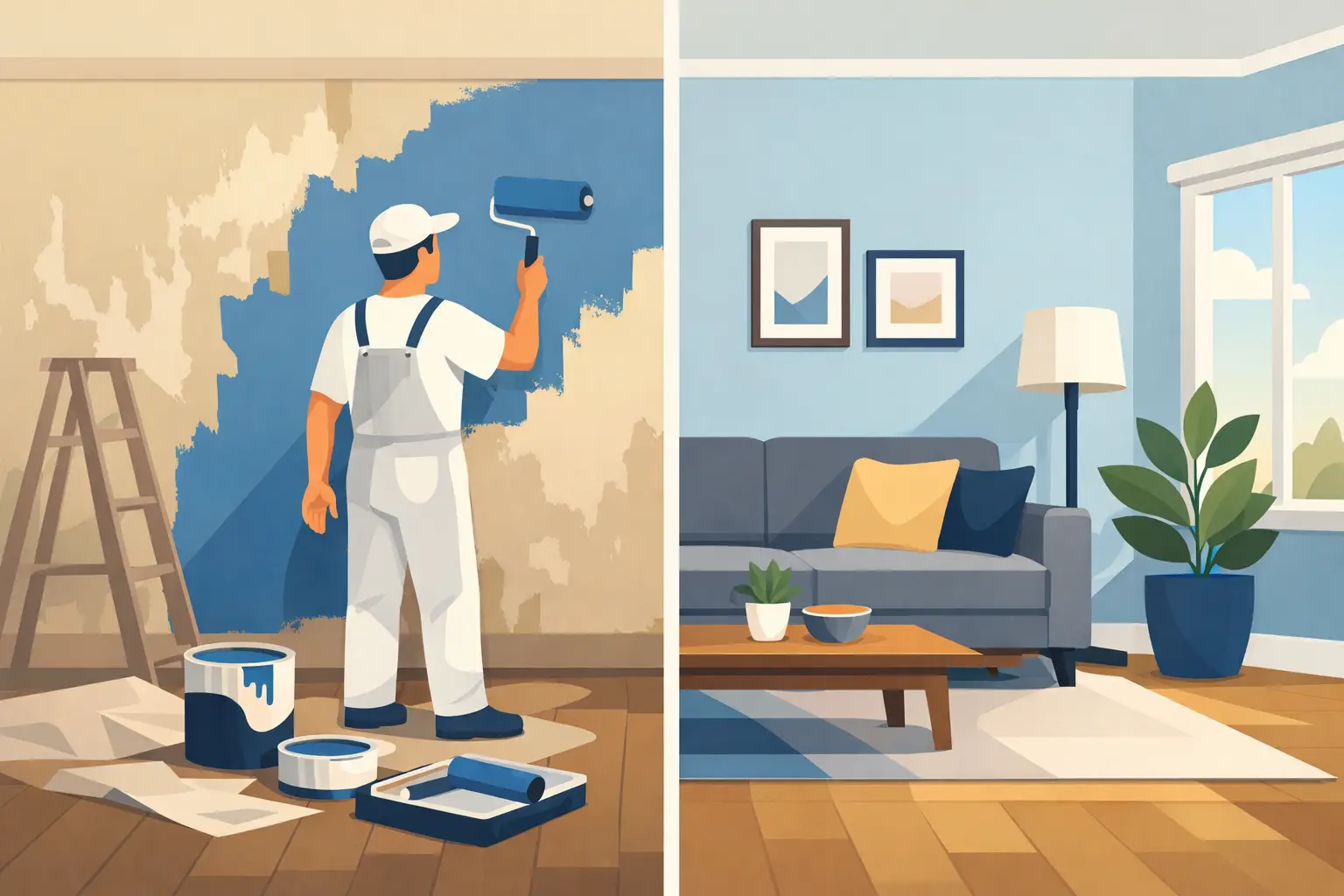
A room can look tired long before the paint fully fails. Scuff marks near the light switch, patched dents that never blended in, faded colour on the sunnier wall, stains that keep showing through – these are the details people notice every day. That is why interior house painting before and after results matter so much. They show more than a fresh coat of paint. They show what proper preparation, repairs and a clean finish can do for the way a home feels.
For homeowners, the change is often about comfort and pride. For landlords and property managers, it is about presentation, durability and getting a place ready for the next tenant without unnecessary delays. In both cases, the biggest difference is rarely the paint tin itself. It is the standard of the work behind it.
What interior house painting before and after really reveals
Good before-and-after results are not just about going from dark to light or old to new. They reveal whether the job was done properly. A freshly painted room can look impressive in a photo, but the real test is in the details – smooth walls, straight cutting in, even coverage, and no rough patches where damage was painted over instead of repaired.
This is where many painting jobs go wrong. People focus on the final colour and underestimate the condition of the surface underneath. If walls have nail holes, hairline cracks, water marks, flaking paint or old patch jobs, those issues do not disappear because a new colour went on top. In some cases, fresh paint makes them stand out more.
A strong interior result should make the room feel cleaner, brighter and more finished. It should also hold up well after the painters have packed up and left. That means the before-and-after difference is not only visual. It is practical too.
The biggest changes happen before the paint goes on
When customers look at interior house painting before and after examples, they often notice the colour first. Fair enough – colour has a big impact. But experienced painters know the biggest transformation usually starts with preparation.
Walls take a lot of wear over time. Furniture knocks corners, kids leave marks, tenants patch holes in a hurry, and older homes can have uneven surfaces from years of repainting. If those areas are not properly sanded, filled and sealed, the finished result will always look second rate.
Preparation can include washing down surfaces, scraping loose paint, sanding rough areas, repairing plaster damage, sealing stains, and applying the right undercoat where needed. None of it is glamorous, but it is what separates a neat, lasting finish from a job that starts showing flaws within months.
For lived-in homes, preparation also helps protect everything around the work area. Floors, furniture and fixtures need to be covered properly, and the job needs to be organised in a way that keeps disruption manageable. That matters just as much as the painting itself.
Before and after is not just about colour choice
Colour can completely change how a room reads, but it is not always about choosing something bold. In many Adelaide homes, the best after result comes from correcting an outdated or inconsistent palette and replacing it with something cleaner and more balanced.
Warm whites can make a dim room feel more open. Soft neutrals can calm down a busy space. A crisper trim colour can sharpen the whole room without making it feel sterile. On the other hand, going too bright can highlight wall imperfections, while going too dark in a small space can make it feel boxed in if the lighting is poor.
That is why colour advice should be practical, not trendy for the sake of it. What works in a display home does not always suit a family house, a rental property or an office fit-out. The right choice depends on natural light, room size, surface condition and how the space is used day to day.
Where the transformation is most noticeable
Some rooms show dramatic change faster than others. Living areas often benefit because they get the most use and the most visible wear. Hallways are another big one. They cop constant traffic, hand marks and bumps, so a proper repaint can make the whole house feel cleaner the minute you walk in.
Bedrooms usually respond well to a repaint because softer finishes and updated colours can make them feel calmer and better maintained. Kitchens and laundries can also improve sharply, especially when walls, ceilings and cabinetry have started looking dull or greasy.
Ceilings are often overlooked in before-and-after conversations, but they make a major difference. A yellowed or marked ceiling can drag down the entire room. A clean ceiling paint lifts the space and helps the wall colour read properly.
Trim, doors and skirting boards deserve the same attention. When these areas are scuffed, chipped or uneven, they can make the room feel unfinished no matter how fresh the walls are.
Why rentals and sale prep benefit so much
For rental properties, a repaint is often one of the quickest ways to improve presentation without carrying out a full renovation. If walls are marked, patched badly or covered in years of wear, prospective tenants notice straight away. Fresh interior painting can help a property look cleaner, brighter and easier to maintain.
The same applies when preparing a home for sale. Buyers do not just see the paint. They read the overall condition of the property through it. Clean, well-finished walls suggest the place has been looked after. Rough edges, peeling paint and obvious patchwork suggest the opposite.
This is where professional turnaround matters. A rushed repaint can create new problems – roller marks, splatter, poor adhesion, messy edges. A properly managed job keeps the process efficient while still doing the preparation needed for a result that actually adds value.
What a professional finish should look like
A good after result should not scream for attention. It should simply make the room look right. Walls should be even in sheen and colour. Corners should be neat. Repairs should blend into the surrounding surface instead of standing out like a map.
There should be no paint on floors, fittings or hardware, and no obvious flashing where patches absorb paint differently. Doors should close properly, switch plates should sit cleanly, and the room should feel finished rather than just repainted.
That comes down to method, experience and not cutting corners. An experienced team knows when a wall needs more repair work, when stains need extra sealing, and when the chosen finish will or will not suit the condition of the surface. That practical judgment is what customers are really paying for.
At Shine Painters Adelaide, that is the standard the work is built around – proper prep, tidy application and a finish that holds up in real homes and working properties.
The trade-off between speed and quality
Every customer wants the job done promptly, and that is reasonable. But interior painting always involves a balance between speed and finish quality. If a room needs patching, sanding, stain blocking or extra coats for full coverage, rushing the work usually shows.
That does not mean the project has to drag on. It means the quote and timeline should reflect the actual condition of the space. A straightforward repaint of sound walls is one thing. A home with damage, nicotine staining, water marks or heavy wear is another.
Honest advice matters here. Sometimes a room only needs a refresh. Sometimes it needs repairs before painting makes sense. The best result comes from dealing with what is in front of you, not pretending every wall is in perfect condition.
Why before-and-after results last longer with proper products
Paint quality matters, but product choice should fit the room. High-traffic hallways need durable finishes that can handle cleaning. Ceilings need products that reduce lap marks and give a flat, even look. Kitchens and bathrooms need systems that can cope better with moisture and regular wiping.
Using the wrong product can spoil a good-looking finish over time. Marks become harder to remove, sheen becomes patchy, or paint starts failing earlier than it should. A lasting result is built on both workmanship and selecting coatings that suit the surface and how the room is used.
That is one reason before-and-after photos only tell part of the story. The best jobs still look good well after the after photo was taken.
If you are looking at tired interiors and wondering whether a repaint is worth it, the answer is usually clear the moment the work is done properly. A fresh interior does more than improve appearance. It makes the space feel cared for, easier to live in, and ready for whatever comes next.