
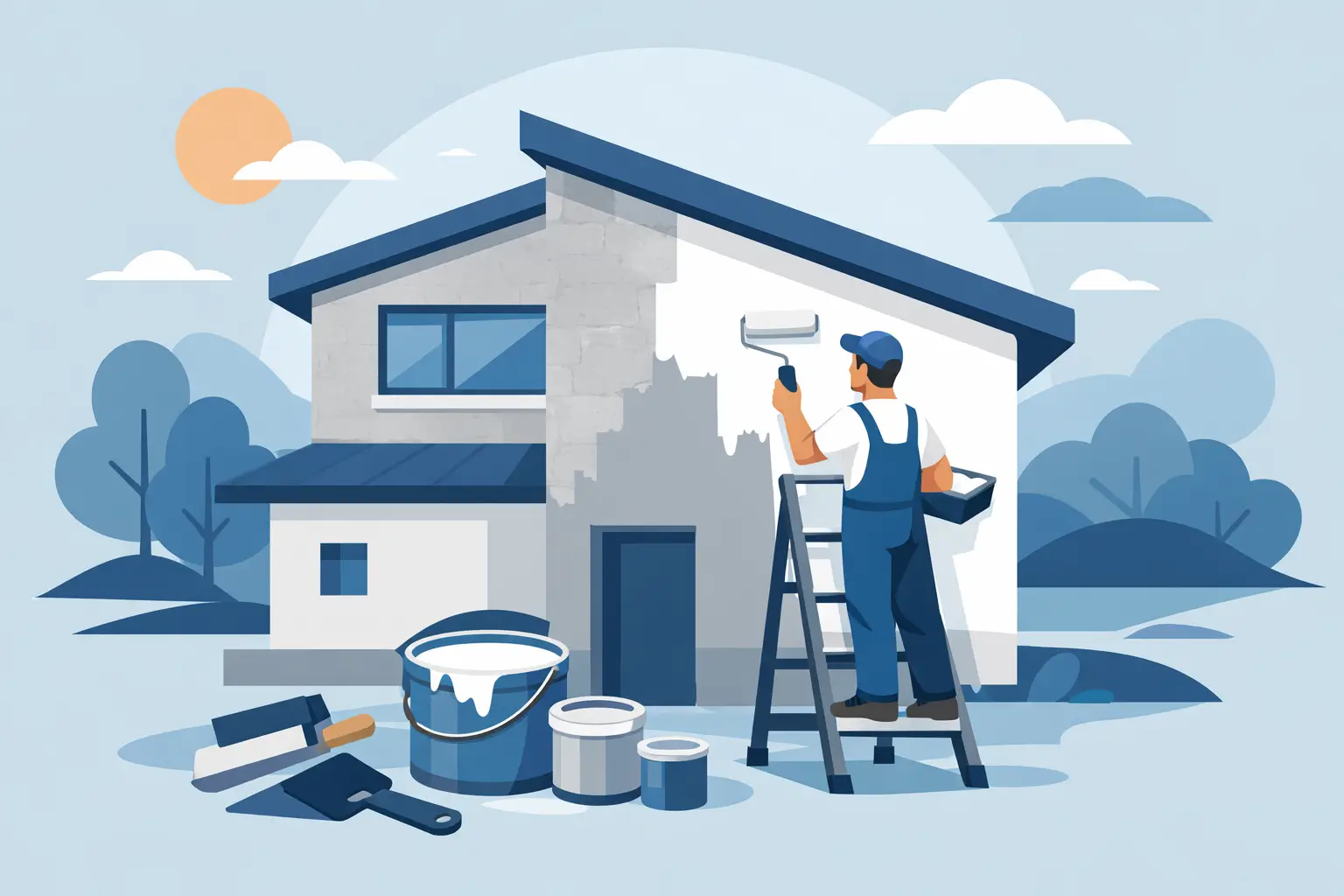
Fresh render can make a property look sharp, but once it starts looking patchy, chalky or stained, the same question comes up every time – can you paint over render? The short answer is yes. The more useful answer is that it depends on the age of the render, its condition, and whether the surface has been prepared properly before any paint goes on.
That is the part that catches people out. Render is not the same as a standard plastered wall inside the house. It sits outside in Adelaide weather, takes on moisture, bakes in the sun, and can develop hairline cracking, salts and surface breakdown over time. If you paint over those issues without fixing them first, even good paint will struggle.
Can you paint over render without problems?
You can paint over render and get a long-lasting finish, but only when the render is sound. If it is new, it needs time to cure fully. If it is old, it needs to be checked for cracks, loose areas, powdery residue and moisture problems.
A lot of people assume paint will cover flaws and make the wall look finished. Sometimes it does – for a while. But if the render underneath is unstable, damp or contaminated, the coating can blister, peel or wear unevenly. That is why proper render painting is really a preparation job first and a painting job second.
New render vs old render
The biggest difference is timing. New render should never be painted too early. It needs enough time to cure so trapped moisture and alkalinity do not interfere with the coating. Depending on the render type and the weather, that curing period can vary.
Cement render usually needs more patience than people expect. Acrylic render systems can behave differently, and some products are designed to be coated sooner than traditional cement-based finishes. The safe approach is always to follow the product specifications rather than guessing.
Older render has a different set of issues. It may already have paint on it, or it may have years of dirt, mould, efflorescence and sun damage built up on the surface. In those cases, the question is not just can you paint over render, but whether the existing surface is actually ready to hold new paint.
What needs checking before painting render
Before any painting starts, the wall needs a proper inspection. Hairline cracks are common and not always a major concern, but wider cracks can point to movement or failed render sections. If those are simply painted over, they tend to come back through.
Chalkiness is another warning sign. Run your hand over the render and if it leaves a fine dusty residue, the surface may be breaking down. Paint does not bond well to that. It usually needs cleaning and sealing with the right primer before top coats go on.
Moisture is the big one. If there are signs of damp, bubbling, staining or mould, painting straight over it is rarely the answer. You need to work out where the water is coming from first. It could be rising damp, poor drainage, leaking gutters or failed seals around windows. Until that is fixed, repainting is often just a temporary cosmetic patch.
How to paint over render properly
If the render is in suitable condition, the process is straightforward, but it needs to be done thoroughly.
First comes cleaning. Exterior render collects dust, pollution, cobwebs, algae and loose material, and all of that needs to come off. Pressure cleaning is common, but it has to be done with care. Too much force can damage weak render or drive water into cracks.
After cleaning, the wall needs time to dry fully. This part gets rushed all the time, especially when people are trying to squeeze work in between weather changes. Painting over damp render is one of the quickest ways to cause coating failure.
Any cracks or damaged sections should then be repaired with the right filler or patching compound. Once repairs are cured and sanded back where needed, the wall may need a sealer or primer, depending on the porosity and condition of the render.
Then the top coats can go on. For most exterior render, a high-quality masonry or exterior acrylic paint is the right choice. It needs to cope with UV exposure, temperature changes and normal building movement. Cheap paint can look acceptable on day one, but the difference usually shows up later in fading, patchiness and reduced life.
Can you paint over render that has already been painted?
Yes, provided the existing paint is still well bonded. This is where adhesion matters. If the old coating is flaking, blistering or peeling, the loose areas need to be removed and the edges feathered back before repainting.
It also helps to know what type of paint is already there. Most modern exterior coatings on render are acrylic, which are generally easier to recoat. Older or incompatible products can create adhesion issues if the new system is not matched properly.
This is one reason professional painters spend time testing and assessing before quoting. The wall might look simple from the street, but the surface history often tells a different story once you get up close.
The common mistakes that shorten the life of the paint
The most common problem is painting too soon after rendering. The second is skipping repairs and hoping thicker paint will hide defects. The third is using the wrong product for an exterior masonry surface.
There is also a tendency to focus only on appearance. A freshly painted rendered wall can look great even if the prep was poor. The issue is what happens six months later, after heat, rain and general exposure have had time to test the finish.
Another mistake is underestimating how much render absorbs. Very porous surfaces can drink in paint unevenly, which affects both coverage and final appearance. That is where primers and sealers earn their keep.
Choosing the right finish for rendered walls
Low-sheen and matte finishes are popular on render because they soften surface imperfections and suit modern exteriors. That said, the right finish depends on the look of the property, how exposed the wall is, and how easy you want it to be to maintain.
Lighter colours can help reduce heat absorption, which is worth considering on sun-exposed elevations in Adelaide. Darker colours can look striking, but they may show fading sooner and place more stress on the coating system. It is not that dark colours are wrong – they just need the right product and realistic expectations.
When DIY can work and when it usually does not
A small rendered garden wall in good condition is one thing. A full exterior facade with cracks, patching, access issues and weather exposure is another.
DIY can work when the render is stable, the area is manageable and the preparation is done properly. Where people get into trouble is assuming render painting is just a weekend rolling job. Once repairs, washing, drying times, sealing and access equipment come into the picture, it becomes a more technical project.
For landlords, agents and business owners, there is also the time factor. Delays from weather, rework or the wrong paint system can cost more than the initial savings. Getting it done properly the first time is usually better value.
Why professional prep makes such a difference
Experienced painters look beyond the surface finish. They check whether cracks are cosmetic or structural, whether stains point to moisture, whether old coatings are sound, and what products will hold up best on that specific wall.
That matters because render does not forgive shortcuts. Good workmanship is what gives you an even finish, clean edges, repaired defects and paint that actually lasts. A proper team also manages the mess, protects surrounding areas and works to a schedule that suits the property, whether it is a family home, a rental or a commercial site.
At Shine Painters Adelaide, render work is treated the same way as every other painting project – no shortcuts, no guesswork, and no rushing past the prep.
If you are looking at a rendered wall and wondering whether it just needs paint or something more, trust what the surface is telling you. A clean, sound wall can come up beautifully with the right system. A tired or damaged one needs more care first, and that extra attention is what turns a quick refresh into a result you can be proud to show off.