
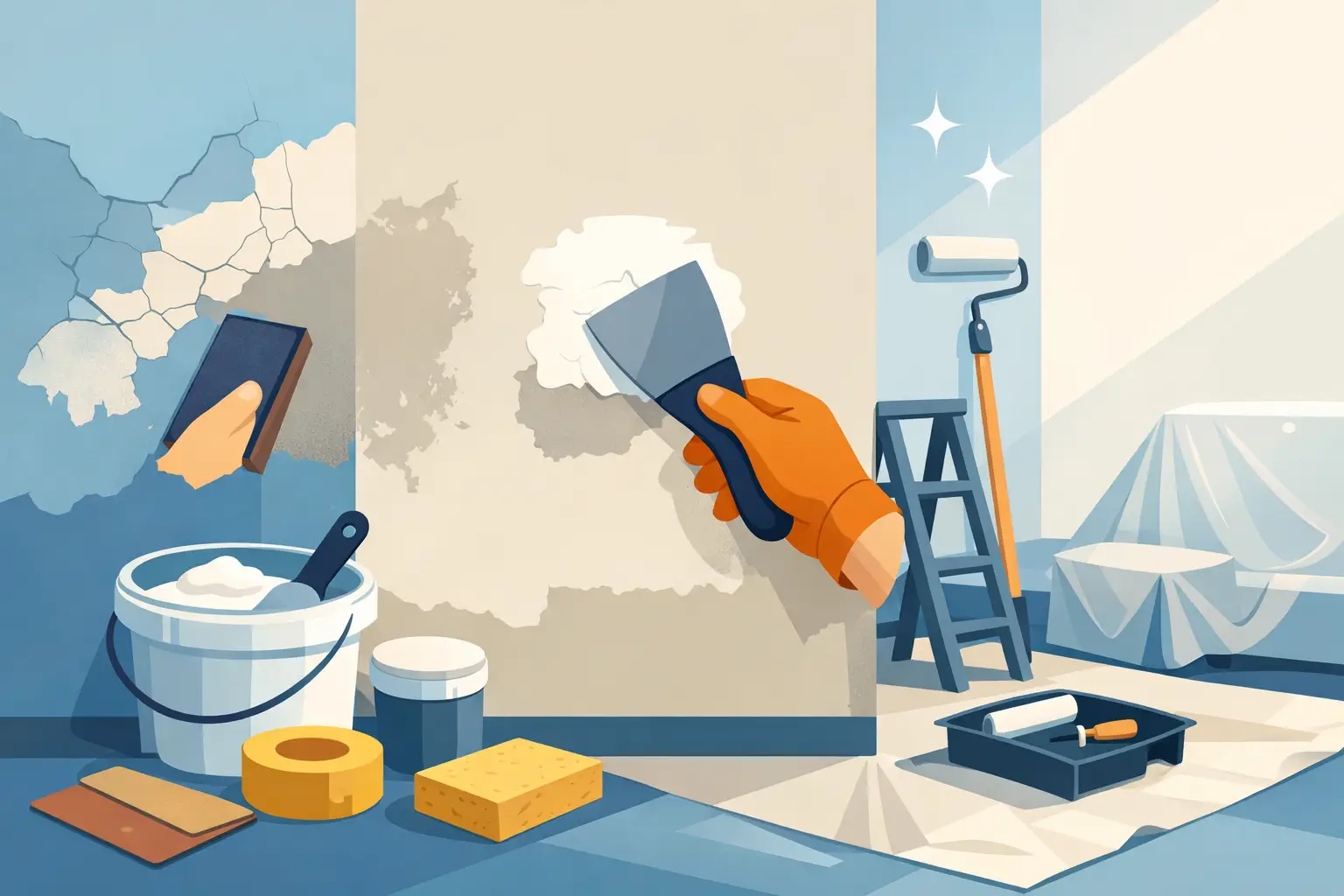
A paint job usually looks good or bad long before the first coat goes on. If the wall is dusty, cracked, greasy or flaking, fresh paint will only highlight the problem. That is why knowing how to prepare walls before painting matters so much, whether you are freshening up a family home, turning over a rental, or getting a commercial space ready for business.
Good preparation is what gives you a smooth finish, cleaner lines and paint that actually lasts. It also helps avoid the common frustrations people run into after painting – patchy coverage, peeling, bubbling, visible repairs and stains bleeding through. The painting itself is the visible part, but the prep work is what makes the result hold up.
How to prepare walls before painting the right way
The first step is working out what condition the walls are in. Not every wall needs the same level of preparation. A fairly sound internal wall in a newer home might only need a wash, a light sand and spot filling. An older wall with dents, peeling paint or water staining needs more attention before any primer or topcoat goes near it.
Start by clearing the room as much as possible and covering floors and furniture properly. Remove wall hooks, picture nails, switch plates and anything else that will get in the way. This part often gets rushed, but a tidy setup makes the whole job cleaner and quicker.
Then inspect the surface closely in natural light if you can. Look for cracks, nail holes, dents, old patch jobs, peeling paint, mould, water marks and greasy areas. Kitchens, hallways, rentals and commercial premises often have more hidden wear than people expect. If you paint over those issues, they usually show through.
Clean before you sand or fill
Walls need to be clean before any repair work starts. Dust, cobwebs, cooking residue and general grime can stop filler, primer and paint from bonding properly. In living rooms and bedrooms, a sugar soap wash or a mild wall cleaner is often enough. In kitchens, laundries or high-traffic rental properties, you may need a more thorough clean to remove grease and built-up residue.
Let the walls dry fully before moving on. Painting over damp surfaces can cause blistering or poor adhesion, and it can trap moisture where you do not want it.
Scrape off anything loose
If existing paint is flaking, bubbling or lifting, it has to come off. Use a scraper to remove all loose material until you reach a sound edge. This is especially common around windows, in bathrooms with poor ventilation, and on older walls that have seen a few quick repaint jobs over the years.
There is no point painting over loose paint to save time. It rarely saves time in the end, because the new coat will fail with it.
Repairing wall damage before painting
Once the wall is clean and stable, repairs come next. Small nail holes and minor dents can usually be filled with a suitable patching compound. Larger cracks, damaged plaster or repeated movement around joints may need a more durable repair approach. This is where experience matters, because some cracks are cosmetic and some point to movement that should not just be covered up.
Apply filler neatly and do not overbuild it if you can avoid it. Thick, rushed patching often creates more sanding and a more visible repair later. Once the filler has dried, sand it back until it sits flush with the wall.
If the wall has significant damage, old water intrusion, crumbling plaster or failed previous repairs, a basic patch-up may not be enough. In those cases, proper wall repairs before repainting are worth doing. A clean final coat cannot hide a poor substrate.
Sanding for a smooth, even finish
Sanding is not only for repaired areas. Even walls that look fairly decent often benefit from a light sand to remove minor texture, knock down old roller fluff, and improve adhesion for the new coating system.
Use a fine grit sandpaper for general wall prep and a slightly more aggressive grit only where needed for rough patches or scraped edges. The aim is not to gouge the wall. It is to smooth transitions and create a surface the primer and paint can grip to evenly.
After sanding, remove dust thoroughly. This part gets missed all the time. Dust left on the wall can affect finish quality and leave a gritty feel under the paint. Vacuuming followed by a wipe-down usually does the job.
Do all walls need primer?
Not always, but many do. Primer is especially important over fresh filler, repaired plaster, stained areas, bare surfaces and walls with major colour changes. It helps even out porosity, improves adhesion and gives the topcoat a more consistent base.
If you skip primer where it is needed, you can end up with flashing, where patched areas show through as dull or shiny spots once painted. That is one of the most common signs of rushed preparation.
Stain-blocking primer is also important for water marks, smoke staining and other discolouration. Standard wall paint often will not hold these back on its own.
Special cases that need extra attention
Some surfaces need more than basic prep. Mould needs to be treated properly before repainting, not just painted over. Grease-heavy walls in kitchens or commercial settings need deeper cleaning. Glossy existing finishes may need stronger sanding or a bonding primer. New plasterboard or fresh skim coat work needs sealing before topcoats go on.
Exterior-facing internal walls can also behave differently if they have had moisture issues. If there is an ongoing leak or rising damp problem, painting is not the first fix. The source of the moisture needs to be sorted first.
How to prepare walls before painting in rentals and commercial spaces
In rental properties and commercial premises, wall preparation often needs to balance speed with durability. Turnaround times are tighter, but that does not mean preparation should be cut back. In fact, these jobs often need better prep because the walls have more wear, more impact marks and more spot repairs from years of use.
For rentals, the focus is usually on getting walls clean, presentable and hard-wearing without overcomplicating the process. For offices, shops and other commercial spaces, a neat finish matters because customers and staff notice details. A patchy wall or visible repair can make an otherwise fresh paint job look unfinished.
This is why professional prep can save money over time. A job done properly tends to last longer, look cleaner and need fewer touch-ups between tenants or fit-outs.
Common mistakes people make when preparing walls
The biggest mistake is underestimating how much the prep affects the final look. People often think good paint will cover everything. It will not. Paint highlights defects more than it hides them, especially with low-angle light, lighter colours and smoother finishes.
Another common issue is painting too soon after washing or filling. Surfaces need time to dry and cure properly. Rushing that stage can cause adhesion issues or visible patching.
Using the wrong filler, not sanding enough, leaving dust behind and skipping primer are also regular problems. None of them seem major in the moment, but together they can drag down the whole finish.
When it makes sense to bring in a professional
If the walls are in poor condition, if there is water damage, peeling paint, extensive cracking or multiple repairs across a property, getting a professional in is usually the smarter option. The same goes for larger homes, rental repaints and commercial jobs where time, presentation and durability all matter.
A proper painter does not just roll colour onto a wall. They assess the surface, repair what needs repairing, prepare it correctly and use the right products for the conditions. That is a big part of why the finish looks better and lasts longer.
At Shine Painters Adelaide, preparation is treated as part of the job, not an optional extra. That matters because no shortcuts at the start means fewer problems after the paint has dried.
If you are planning to repaint, the best thing you can do is slow down at the preparation stage. A well-prepared wall gives every coat after it a fair chance to do its job, and that is what turns a fresh paint job into a finish you are happy to live with.