
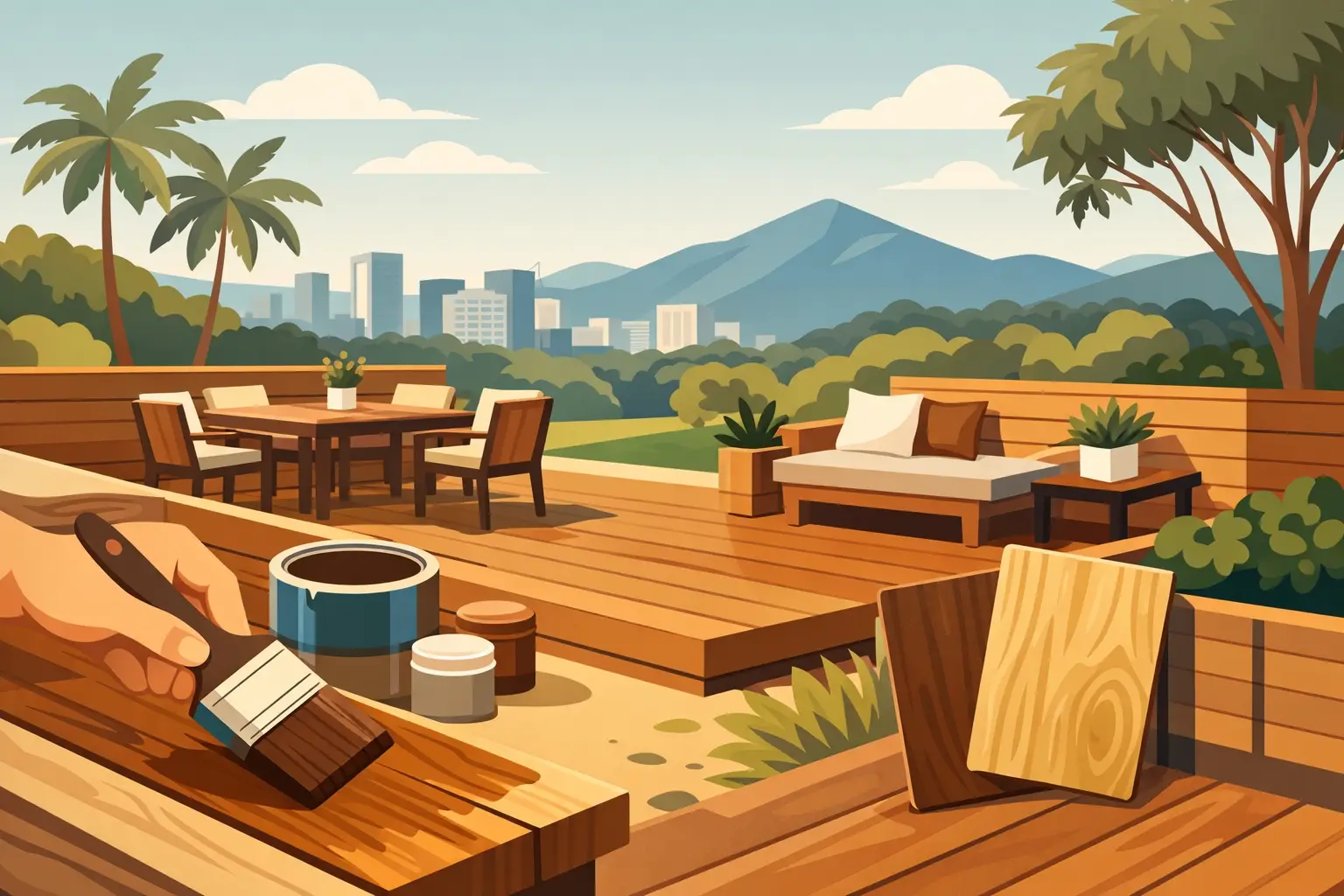
A timber deck can look tired long before the boards are actually worn out. Adelaide sun dries and fades exposed surfaces, winter rain gets into unprotected joins, and everyday foot traffic takes its toll around doors, pools and outdoor entertaining areas. Choosing the best coatings for outdoor timber is less about finding one magic product and more about matching the coating to the timber, its condition and the way the area is used.
The right finish should protect the timber, look good from the street or backyard, and be realistic to maintain. A glossy finish may suit a sheltered entry door, for example, but it is usually a poor choice for a heavily used deck. Proper preparation matters just as much as the coating itself. No shortcuts here: a quality product applied over damp, dirty or unstable timber will not deliver a long-lasting result.
What outdoor timber needs protection from
External timber expands and contracts as temperatures and moisture levels change. UV exposure breaks down the timber surface and causes greying, while water can lead to swelling, splitting and decay if it gets through exposed end grain or gaps in a failed coating. On decks, furniture and handrails, abrasion adds another layer of wear.
Adelaide conditions make UV protection especially valuable. North- and west-facing timber can cop the harshest afternoon sun, while shaded areas may stay damp longer after rain. The best choice depends on whether you need a coating that soaks into the timber, forms a protective film on top, or provides a fully opaque painted finish.
Best coatings for outdoor timber by application
Penetrating decking oils
A quality decking oil is often the practical choice for timber decks, steps, screens and outdoor furniture. It penetrates the timber rather than building a thick surface film, helping repel moisture while allowing the timber to move naturally.
Oils are popular because they leave a natural appearance and are generally straightforward to refresh. When the coating starts to look dry or faded, the surface can usually be cleaned and recoated without stripping back layers of peeling film. That makes oil a sensible option for high-traffic decks where ongoing maintenance is expected.
The trade-off is that oil needs more regular attention than some other finishes. Depending on exposure, a deck may need a maintenance coat every 6 to 12 months. Clear oils also offer less UV defence than tinted products. A lightly pigmented decking oil generally holds its colour better and gives the timber stronger protection from sun damage.
Exterior timber stains
Exterior stains are a strong middle ground when you want to keep the grain visible but need better colour and UV protection. Semi-transparent stains add colour while still showing the character of the timber. They work well on cladding, fencing, pergolas, screens and decks where a natural timber look is part of the appeal.
Because pigments help block UV, a deeper stain colour will normally last better than a clear or very pale finish in direct sun. That does not mean every timber surface should be dark. Dark colours can absorb more heat, which may be uncomfortable underfoot and can place extra stress on exposed boards.
Stains vary widely. Some behave like penetrating oils, while others build a thin film. The right preparation and application method will depend on the product. It is worth testing a small, inconspicuous area first, particularly on mixed timber species or older boards with uneven weathering.
Exterior paint systems
For maximum colour coverage and a clean, uniform finish, exterior paint is one of the best coatings for outdoor timber. It is particularly useful for weatherboards, fascias, window frames, timber trim, gates and older structures with inconsistent colour or repairs.
A properly specified exterior primer and topcoat system provides excellent UV protection because the timber is fully covered. It can also give a tired fence, pergola or façade a sharp new look without replacing sound timber. Paint is a good option where appearance, colour matching and low day-to-day upkeep are priorities.
The catch is that paint relies on sound preparation. Loose or flaking coatings need to be removed, bare timber must be primed correctly, and gaps, cracks and damaged sections should be repaired before painting. If moisture is trapped behind a painted surface or the coating loses adhesion, peeling can follow. This is why painting timber is never just a matter of applying a fresh topcoat.
Clear exterior varnish and marine-style finishes
Clear varnish can give doors, balustrades and protected outdoor furniture a rich, polished appearance. High-quality exterior varnishes are designed to resist UV and water, and they can be suitable for timber features that are not constantly walked on or exposed to full weather.
For decks and broad exposed horizontal surfaces, however, clear film-forming finishes are usually high maintenance. Once they crack or peel, repairs often require considerable sanding to restore an even result. A clear finish may look excellent at first, but it needs careful maintenance in Adelaide’s sun. For a front door under a porch, it can be a good fit. For an exposed backyard deck, a penetrating oil or stain is normally the more sensible option.
Water-based or oil-based coatings?
Water-based exterior coatings dry faster, have lower odour and make cleanup easier. They can be a practical choice for occupied homes, rental turnovers and commercial sites where minimal disruption matters. Many modern water-based paints and stains provide strong colour retention and flexibility when used within the right system.
Oil-based and solvent-based products can penetrate certain timbers well and may provide a traditional appearance that some homeowners prefer. They often take longer to dry and can have a stronger smell, so timing, ventilation and weather conditions need more consideration.
There is no automatic winner. The best system is one that suits the existing coating, timber species and exposure level. Applying a new product over an incompatible old finish can cause adhesion problems, so identifying what is already on the surface is an important first step.
Preparation decides how long the coating lasts
Even premium products fail when preparation is rushed. Timber needs to be dry, clean and stable before coating. That may involve pressure washing carefully, treating mould, removing failed finishes, sanding splinters and rough patches, punching down protruding nails, filling suitable defects and replacing boards affected by rot.
On a deck, special attention should go to board ends, handrails, stair edges and areas around pot plants or outdoor furniture where moisture sits. On exterior timber trim, failed caulking and open joints should be addressed before painting. Fresh timber may also need time to weather or dry sufficiently before it is coated, depending on the species and product instructions.
Merbau deserves particular care. Its natural tannins can bleed and stain surrounding surfaces if the timber has not been prepared correctly. Treated pine, hardwood and previously painted timber all have different needs. A coating system that works well on one surface is not automatically right for another.
Choosing a finish that suits your property
Start with the purpose of the timber. A family deck needs a finish that handles foot traffic and can be refreshed without major disruption. A heritage-style front door may justify the extra care of a clear varnish system. Weatherboards or timber fascias may be better protected and easier to maintain with exterior paint.
Then consider exposure. Fully exposed timber needs stronger UV protection and more frequent maintenance than an undercover pergola. Also think about the finish you are prepared to maintain. Natural oils and stains reward regular care. Painted timber can have longer intervals between repaints, but when it does fail, repairs may be more involved.
Colour also affects performance. Very light and clear coatings preserve a natural look but tend to offer less protection from fading. Mid-tone stains often provide a good balance. Dark painted or stained decks can become hot in summer, particularly in open areas with little shade.
When professional application is worth it
Outdoor timber coating is a job where experience can save both time and costly rework. The challenge is not simply applying the product evenly. It is assessing moisture, identifying old coatings, dealing with weathered timber, selecting compatible primers and timing the work around Adelaide weather.
For larger decks, external timber cladding, rental properties or commercial premises, professional preparation also helps keep the job tidy and organised. At Shine Painters Adelaide, the focus is on preparing the surface properly, repairing what needs attention and applying a coating system suited to the timber and exposure – not covering up problems for a short-term improvement.
Before choosing a colour or finish, look closely at where water lands, where sun hits hardest and how the timber is used. That simple assessment will point you towards a coating that protects the surface properly and still looks good when guests step outside.