
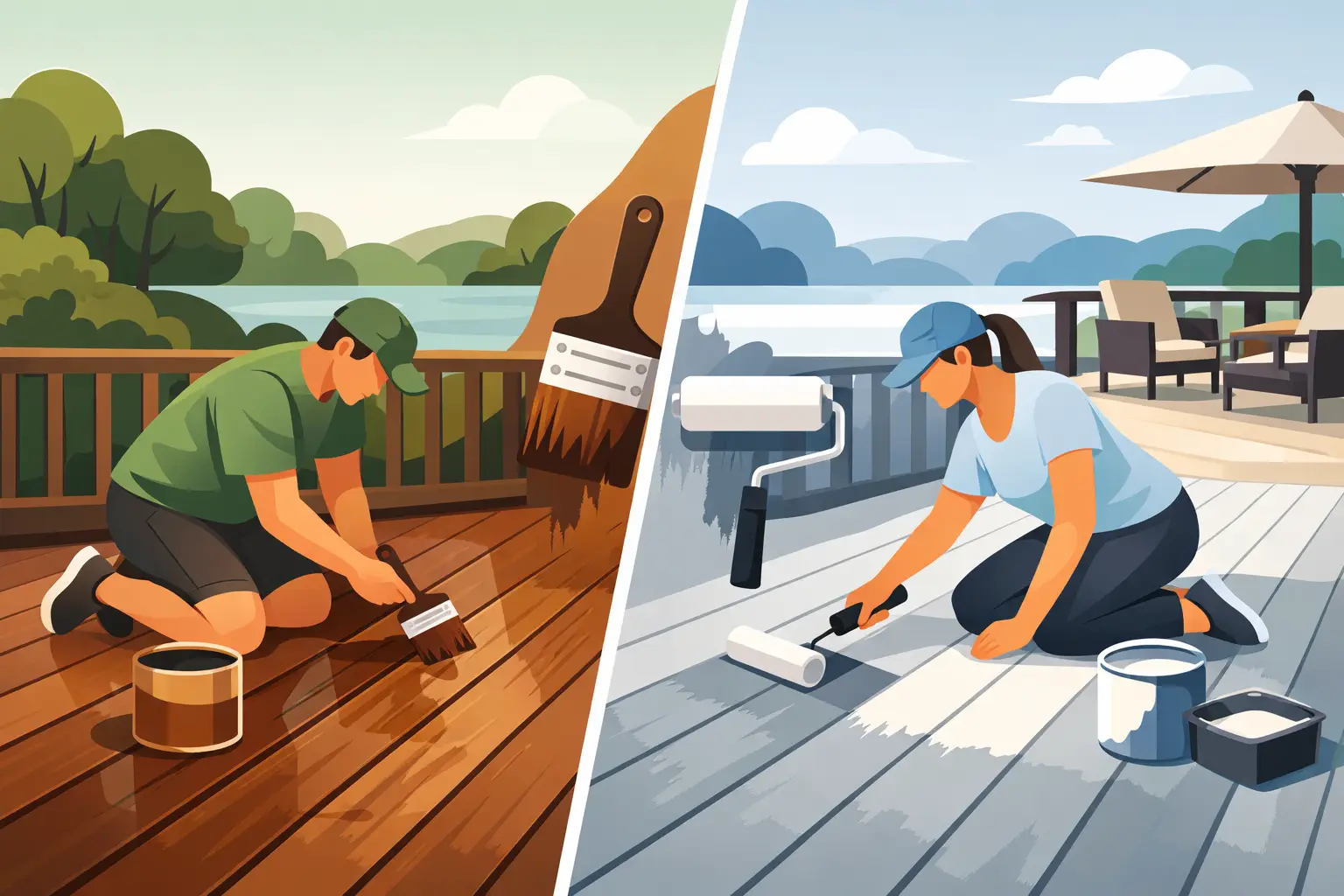
A deck can look solid from the back door and still be taking a hiding from sun, rain and foot traffic. That is usually when people start asking, is deck staining better than painting? The short answer is that staining is often the better fit for timber decks, but not every deck is in the same condition and not every owner wants the same result.
If you want a natural timber look, easier maintenance and a coating that works with the grain rather than hiding it, stain usually comes out in front. If you want a fully coloured finish that covers patchy boards and gives a more uniform look, paint can make sense. The right choice comes down to the condition of the timber, how much upkeep you are willing to do, and how you use the space.
Is deck staining better than painting for most homes?
For most timber decks, yes – staining is generally the more practical option. Deck stain is designed to soak into the timber and protect it while still showing off the grain. That matters on outdoor surfaces where expansion, contraction and moisture movement are part of normal life.
Paint sits on top of the timber and creates a film. That can look neat at first, especially if the deck boards are tired or mismatched, but it is also more likely to peel, crack or wear in traffic areas over time. Once paint starts failing, repairs are rarely tidy. You are not just touching up a small patch. You are often chasing peeling edges and preparing far more of the deck than expected.
Stain tends to fade gradually instead of lifting off in sheets. That makes maintenance simpler and usually less frustrating. For property owners who want a deck to keep looking presentable without a major strip-back every few years, that is a real advantage.
The biggest difference is how each finish behaves
The main reason this question matters is not appearance alone. It is performance.
How stain works on timber
Stain penetrates the surface of the wood. It adds colour, weather protection and UV resistance without completely sealing the timber under a heavy surface layer. Because it sinks into the boards, it usually wears more naturally. On a working outdoor deck, that is often what you want.
Stain is especially well suited to decks made from timber with attractive grain or natural character. If the boards are in decent condition, a good stain can lift the whole area without making it look artificial.
How paint works on a deck
Paint forms a coating over the timber. It gives stronger colour coverage and can hide more imperfections, repairs and old discolouration. If your deck boards are heavily marked, mismatched or have already been painted in the past, repainting may be the more realistic path.
The trade-off is maintenance. Outdoor deck surfaces get dragged chairs, wet shoes, direct sun and pooled water. Those conditions are hard on paint films. When they break down, they tend to do it visibly.
Appearance comes down to the style you want
If you like the look of real timber, stain is hard to beat. It enhances the boards instead of covering them. You still see the grain, the texture and the natural variation. That suits many Adelaide homes, especially where the deck connects with a garden, pergola or outdoor entertaining area.
Paint gives a cleaner, more solid colour. Some people prefer that, particularly on older homes where the deck is part of a broader exterior colour scheme. It can also help if the timber has lots of visual flaws that stain would only highlight.
There is no point pretending one always looks better than the other. It depends on whether you want a natural finish or a more uniform painted surface. What matters is choosing a coating that suits the deck, not forcing the deck to suit the coating.
Durability in Adelaide conditions
Adelaide weather can be tough on exterior timber. Long dry spells, strong sun, heat and winter moisture all take their turn. A deck finish needs to do more than look good for a few months.
Why stain often lasts more gracefully
A quality stain usually handles weathering better in a practical sense because it does not rely on a thick top film staying perfectly intact. It can fade and thin with exposure, but it is less likely to blister or peel dramatically. Recoating is usually more straightforward, provided the deck has been cleaned and prepared properly.
Where paint can struggle
Paint can still protect a deck, but it is less forgiving when the timber moves or moisture gets underneath. Horizontal outdoor surfaces take more punishment than weatherboards or fascia boards. If preparation is rushed or drainage is poor, paint failure can happen sooner than expected.
That does not mean paint is wrong every time. It means it needs the right conditions, the right product and careful prep. No shortcuts.
Maintenance is where many owners change their mind
A lot of people choose based on the first result, then regret the upkeep later.
With stain, maintenance usually means cleaning the surface, checking for worn areas and applying another coat when needed. It is still work, but it is often manageable and predictable.
With paint, maintenance can become more involved. Once sections begin to wear through or peel, proper repairs usually need scraping, sanding, priming and repainting. Spot fixes can stand out. On rental properties or busy family homes, that can become a nuisance fast.
If you want the lower-drama option over the life of the deck, stain often wins.
Cost is not just the first invoice
People often ask which is cheaper. The honest answer is that it depends on the condition of the deck and what has already been applied to it.
If you are starting with bare or previously stained timber in fair condition, staining is often more cost-effective over time. Preparation may be simpler, future recoats are usually easier, and maintenance tends to be less labour-heavy.
Painting can involve more prep, especially if the timber surface needs substantial filling, sanding or priming. It may also cost more later if peeling or flaking means bigger restoration work. So even if the upfront price looks comparable, the long-term cost can shift.
The cheapest option on day one is not always the best value three summers later.
When painting a deck does make sense
There are situations where painting is the better call.
The deck has already been painted
If the existing coating is paint and it is bonded well overall, repainting may be the most practical route. Stripping an old painted deck back to raw timber can be labour-intensive and expensive, and results are not always perfect.
The timber is heavily patched or visually inconsistent
Some decks have had board replacements, repairs or years of wear that leave them looking uneven. A stain may only draw more attention to that. Paint can give a more even appearance.
You want a very specific colour finish
If the goal is to match trims, exterior features or a particular design style, paint offers stronger colour control. Stain colours are more limited because the timber still influences the final look.
When staining is usually the smarter option
Staining is usually the better choice when the deck is structurally sound, the timber still has character worth showing, and you want protection without a high-maintenance surface coating.
It is also a strong option for owners who understand that decks are exposed working surfaces, not showroom floors. A stained deck can age honestly and still look well cared for. That suits many households better than a painted finish that looks sharp early but demands more attention later.
Preparation matters more than the product label
Whether you stain or paint, preparation is what decides how long the finish lasts. Dirty boards, old failing coatings, trapped moisture and rough repairs will shorten the life of any system.
A proper job usually means cleaning the deck thoroughly, removing loose material, sanding where needed, checking for damage, and making sure the timber is dry enough to coat. Product choice matters, but surface prep is what gives that product a fair chance.
That is one reason many owners bring in professionals. It is not just about getting the coating on. It is about knowing what the timber can actually take and what result is realistic.
Shine Painters Adelaide handles deck coating work with the same approach as any exterior surface – prepare it properly, use the right system, and aim for a finish that lasts rather than a quick cosmetic fix.
So, is deck staining better than painting?
For most timber decks, yes. Staining is usually better than painting if you want a natural look, easier upkeep and a finish that copes better with outdoor wear. Painting can still be the right choice for older, patchy or previously painted decks, especially where full colour coverage matters more than showing the grain.
The best decision is not based on trends. It is based on the timber in front of you, the level of maintenance you are comfortable with, and how you want the deck to look a few years from now, not just next weekend.
If you are unsure, start by looking at the boards honestly. Good coating work does not hide every problem. It works with the surface, protects it properly and leaves you with a result you are still happy to show off after the weather has had its say.