
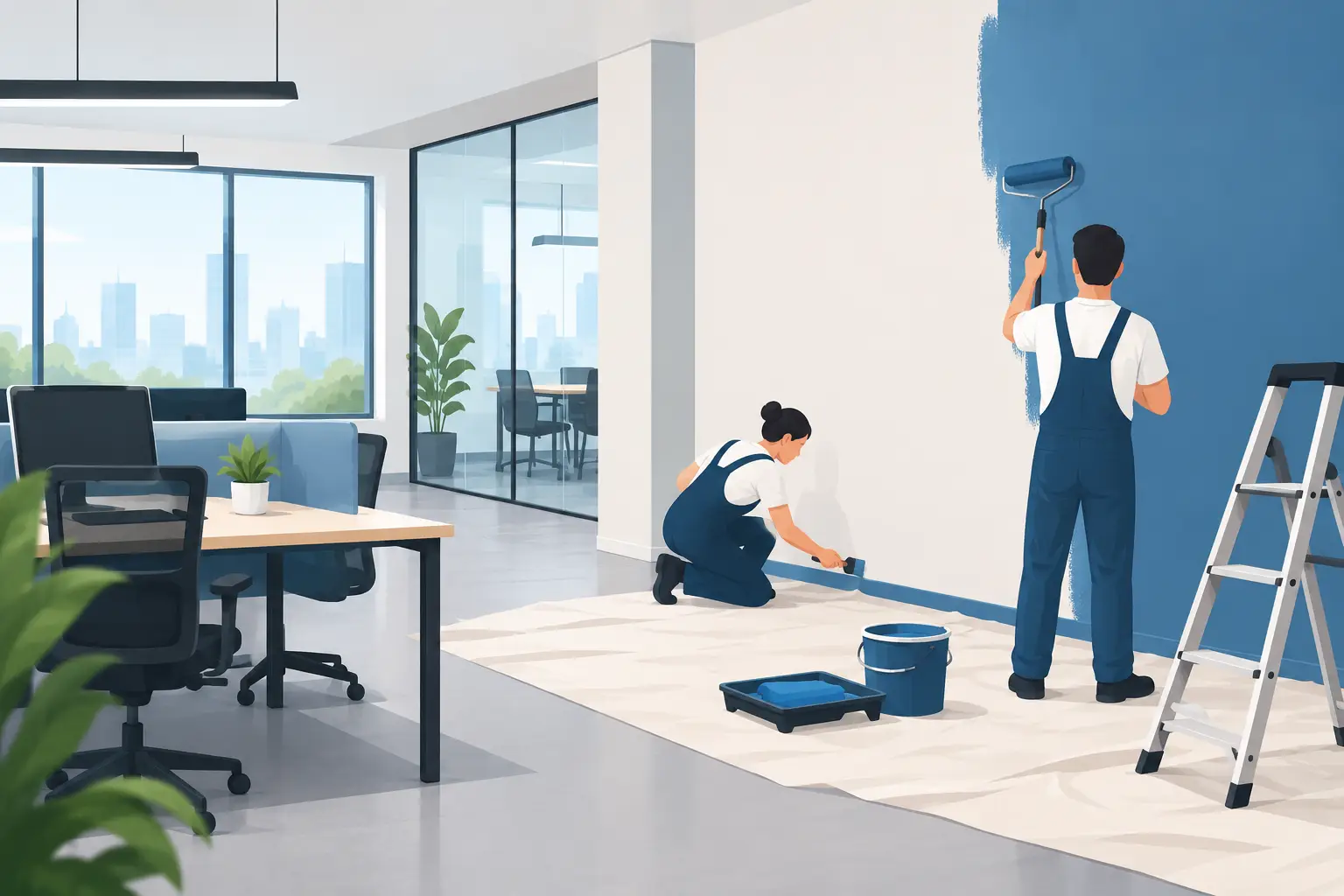
A tired reception wall, scuffed corridors and marked meeting rooms can make an otherwise well-run business feel neglected. Knowing how to repaint office walls properly is about more than choosing a fresh colour. It means planning around your staff, protecting equipment, fixing the surface underneath and using coatings that will stand up to daily traffic.
For Adelaide businesses, the best result is one that looks sharp without bringing work to a halt. A proper repaint should leave the office clean, professional and ready for use – not covered in dust, paint smell or last-minute touch-ups.
Start with a realistic office repaint plan
Before a brush or roller comes out, assess the space honestly. Walk through the office at different times of day and note where the damage is most visible. Entry points, lunchrooms, hallways, boardrooms and areas around desks usually need more attention than low-traffic storage rooms.
Look for scuffs, peeling paint, nail holes, dents, stains, water marks and cracks. These issues affect both the finish and the paint system required. A simple scuff may only need cleaning and spot priming, while peeling paint or recurring water marks need the underlying cause dealt with first. Painting over moisture damage without finding the leak is a short-term fix that will soon show through again.
It also pays to decide whether the whole office needs repainting. Sometimes a full repaint delivers the most consistent result, especially if the existing colour has faded unevenly. In other cases, repainting feature walls, common areas and client-facing spaces is a practical way to refresh the premises while keeping costs and downtime under control.
Scheduling matters just as much as scope. Many office repainting jobs are best completed after hours, over a weekend or in stages. This lets painters finish one zone, allow it to dry and return furniture before moving to the next. For a larger workplace, section-by-section painting keeps essential teams operating.
Choose colours and finishes that work hard
Office paint needs to do more than look good on a sample card. Colour changes how a workplace feels, but the sheen level affects how easily the walls can be cleaned and how much surface damage shows up.
Warm whites, soft greys and light neutral tones remain dependable choices for most Adelaide offices because they keep rooms bright and work with changing furniture or signage. A deeper brand colour can work well on a reception wall, in a meeting room or behind a company logo. Using it across every wall, however, can make a smaller office feel enclosed or quickly date the space.
For the finish, low-sheen acrylic is often a sound choice for general office walls. It has a subtle finish, hides minor wall imperfections better than glossier paint and is generally easier to wipe down than flat paint. In high-contact areas such as corridors, lunchrooms and reception spaces, a washable low-sheen or durable commercial-grade coating is worth considering.
The trade-off is straightforward: higher sheen finishes are tougher to clean but reveal more patches, dents and uneven repairs. If the walls are rough or heavily repaired, better preparation and a lower sheen finish will usually give a more professional result.
How to repaint office walls the right way
The final coat only looks as good as the preparation underneath it. Rushing this stage is where many office repainting jobs go wrong. Fresh paint can temporarily hide faults, but patched areas, stains and loose old paint will soon become visible again.
Protect the workplace before preparation starts
Move desks, chairs and loose equipment away from the walls where possible. Items that cannot be moved should be carefully covered, along with computers, printers, screens and cabinetry. Floors need drop sheets, while skirting boards, door frames, glass and fixtures should be masked neatly.
A professional crew will also plan access routes so workers are not walking paint and dust through active office areas. Good site protection is not an extra. It is part of a tidy job.
Clean, repair and sand the walls
Office walls collect more grime than most people realise. Finger marks around switches, cooking residue near kitchenettes, dust around air vents and scuffs from chairs can all stop paint from bonding properly. Wash the walls with a suitable sugar soap or surface cleaner, then allow them to dry fully.
Next, scrape away loose or flaking paint. Fill nail holes, dents and cracks with the right filler, allow it to cure, then sand the repairs smooth. Run a hand across repaired areas rather than relying only on what you can see. A patch that feels raised will show once light hits the finished wall.
Stains from water, ink, nicotine or old adhesive often need a stain-blocking primer. Skipping this step can allow the discolouration to bleed through a new topcoat, sometimes within days. If mould is present, it must be treated correctly and the source of moisture addressed before painting.
Prime where the surface needs it
Not every sound, previously painted wall requires full priming. But bare plaster repairs, exposed gyprock, patched sections, strong colour changes and stain-affected areas do. Primer creates a consistent base, improves adhesion and helps the topcoat look even.
This is particularly important when changing from a dark feature colour to white or a pale neutral. Without the right primer or enough coverage, the old colour can alter the appearance of the new one and force extra coats later.
Apply even coats and allow proper drying time
Cut in carefully around ceilings, frames, switches and corners before rolling the larger areas. Use quality rollers suited to the wall texture and maintain a wet edge to reduce visible lap marks. Most office walls need two finish coats for solid coverage, durability and a consistent sheen.
Do not judge a wall while it is still wet. Paint can look patchy as it dries, particularly under mixed natural and artificial lighting. Check the finish after the recommended drying time, then inspect from several angles for missed spots, roller marks or rough patches.
Drying time and curing time are not the same thing. A wall may be dry enough for careful use within hours, but it can take longer to reach full hardness. Avoid pushing furniture tightly against freshly painted walls or cleaning them aggressively in the first few days.
Keep disruption and paint odour under control
A well-planned repaint should work around the business, not the other way around. Ventilation is essential, especially in enclosed offices. Open windows where practical, use suitable ventilation and select low-odour, low-VOC paints where the project and surface allow.
If staff need to remain onsite, isolate work zones and communicate the schedule clearly. Let people know which rooms will be unavailable, where equipment has been moved and when areas can be used again. This is especially useful in medical practices, professional offices, retail back rooms and shared workspaces where privacy or access matters.
For occupied premises, staged work is often safer than trying to finish everything in one rushed day. It may take a little longer, but it avoids crowded work areas, reduces accidental damage and gives each coat the time it needs.
Check the finish before the job is signed off
Once the paint has dried, remove masking carefully and inspect the room in normal lighting. Check edges along ceilings and frames, look for paint on fittings or floors, and make sure repaired areas have blended properly. Doors, skirtings and wall-mounted items should be clean and free from overspray.
A worthwhile office repaint includes proper clean-up. Furniture should be returned carefully, rubbish removed and the work area left ready for staff and clients. The goal is not simply a newly painted wall. It is an office that feels cared for from the moment people walk through the door.
For businesses that cannot afford messy work, missed repairs or extended downtime, an experienced commercial painter can manage the preparation, scheduling and finishing details from start to finish. Shine Painters Adelaide approaches office repainting with the same standard: no shortcuts, tidy work and a finish built to handle everyday use.
A fresh coat of paint is one of the simplest ways to lift a workplace, but the difference is in the preparation. Get that right, plan the work around your people and the walls will keep making a strong impression long after the paint has dried.