
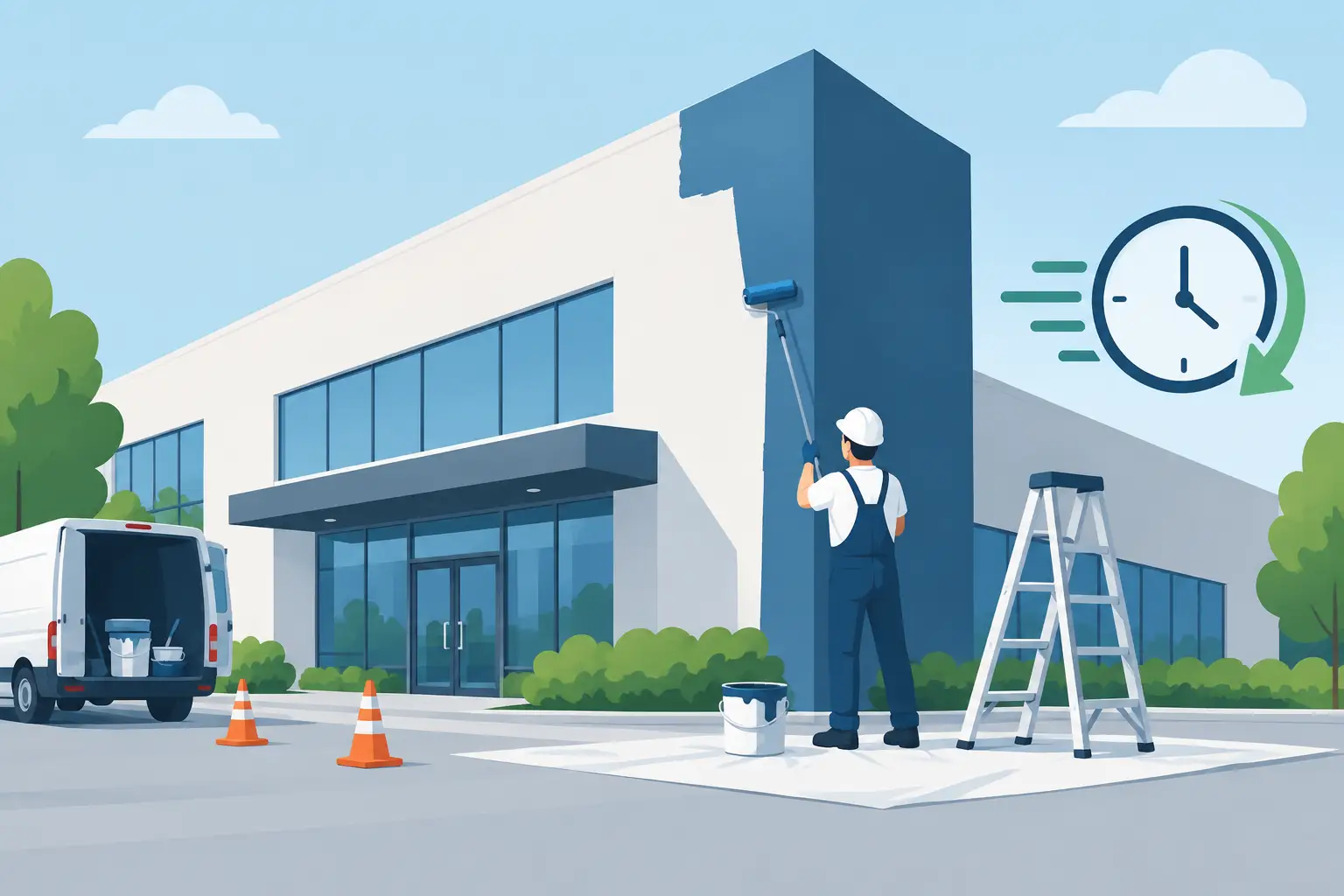
A repaint should improve your premises, not bring business to a standstill. This commercial repainting downtime reduction guide is for Adelaide business owners, property managers and tenants who need a professional result while keeping customers, staff and operations moving.
The key is not rushing the painting. It is planning the work properly before a brush comes out. A clear scope, realistic drying times, staged access and proper surface preparation reduce the chance of last-minute closures, repeat visits and avoidable mess.
Start with the parts of the business that cannot stop
Every commercial site has areas where disruption costs more than others. A retail counter, reception desk, medical waiting room, commercial kitchen, warehouse dispatch zone or shared building entrance may need to remain accessible throughout the project. Identify these spaces first, then build the painting schedule around them.
Walk through the site with your painter before work is booked. Point out customer paths, delivery times, emergency exits, staff-only areas, security requirements and any equipment that cannot be moved. This gives the painting team the information needed to organise the job in sensible stages rather than making decisions on the run.
For some premises, painting one room or one wall section at a time is the best approach. For others, after-hours or weekend work may be more practical. There is no single right answer. A quiet office can often be completed in sections during business hours, while a busy café may be better suited to work after closing.
Plan around actual trading patterns
Do not base the schedule on standard business hours alone. Think about when the site is busiest and when staff need access. A showroom may be quiet on weekday mornings but full on Saturdays. A warehouse may have trucks arriving before dawn. A rental building may need common areas kept clear for residents.
A good painting plan works around these patterns. It may involve completing preparation during quieter hours, applying paint after customers leave, and allowing curing time before furniture and equipment return. This approach can take a little more coordination, but it usually prevents far greater disruption later.
Get the scope right before work begins
Unexpected repairs are one of the main causes of commercial repainting delays. Peeling paint, water staining, cracked render, damaged plaster, loose sealant and failed coatings cannot simply be painted over if the finish is expected to last.
A proper inspection should identify these issues early. That includes checking walls, ceilings, doors, trims, metalwork, external cladding and high-traffic areas. If repairs are needed, they should be allowed for in the quote and programme rather than treated as a surprise once the site is already set up.
Be clear about what is included. Confirm the surfaces being painted, the paint system, colour selections, repair work, access arrangements and whether furniture moving is required. Clear decisions upfront mean fewer pauses during the job.
Colour approval matters too. Test colours can look different under LED lighting, natural light and shop lighting. Choosing and approving colours before the start date avoids holding up the work while everyone waits for a final decision. For larger sites, a small sample area is often worthwhile.
Use staging to keep the premises functioning
Staging means dividing a repaint into manageable zones, with each zone prepared, painted, dried and reopened before the next begins. It is one of the most effective ways to reduce downtime without compromising workmanship.
A typical staged project may begin with low-use offices or back-of-house areas, followed by corridors, meeting rooms, customer spaces and entry points. The order depends on how your site operates. The painter should protect finished areas and maintain clear access routes as work progresses.
For exterior work, staging is equally useful. Rather than closing an entire frontage, painters can work across sections while maintaining access to the front door where safe. Safety barriers, signage and careful equipment placement help keep customers away from active work areas without making the premises look closed.
Some work cannot be staged without a short shutdown. Spray application in an enclosed area, extensive ceiling repairs or painting around fixed machinery may require temporary closure for safety and drying. The honest approach is to identify this early and schedule it for the least disruptive time.
Choose products for the job, not just the quickest dry time
Fast-drying paint can help, but it is not a cure-all. The right coating needs to suit the surface, the use of the area and the conditions on site. High-traffic corridors need durable, washable finishes. Bathrooms and kitchens may need moisture-resistant coatings. Exterior surfaces need products that can handle Adelaide sun, weather changes and exposure.
Dry to touch is not the same as ready for hard use. Paint may feel dry within hours but still need more time before shelves are reinstalled, doors are heavily used or cleaning begins. Pushing a freshly painted surface too soon can mark the finish and create unnecessary touch-up work.
Ventilation, temperature and humidity also affect drying. Internal areas with poor airflow may need extra time, while exterior painting depends on suitable weather. A reliable painter will not promise unrealistic turnaround times when conditions are working against a quality finish.
Prepare the site so painters can start straight away
Lost time often comes from a site not being ready when the team arrives. Before work starts, arrange for valuable items, loose stock, paperwork and personal belongings to be removed from the work zone. Decide who will move desks, shelving and light furniture, and make sure access is available to locked rooms or service areas.
Painters should still protect floors, fixed furniture and nearby surfaces with drop sheets, masking and careful setup. But clearing the immediate work area lets the team focus on preparation and painting rather than waiting for items to be relocated.
For commercial properties, nominate one contact person who can make decisions quickly. That person should be available to answer access questions, approve minor changes and coordinate staff. A simple point of contact avoids mixed messages and keeps the programme moving.
It also helps to notify staff, tenants and customers before work begins. Let them know which areas are affected, where alternative access is available and whether there will be any changes to parking or deliveries. Clear communication reduces frustration and helps everyone work around the painters safely.
Do not cut preparation to save a day
The quickest-looking job is not always the quickest completed job. Skipping cleaning, sanding, patching or priming can lead to poor adhesion, uneven sheen and paint failure. Then the area has to be repaired and repainted, often after staff or customers have already returned.
Proper preparation is what makes the new coating look clean and last. It is particularly important in commercial settings where walls are touched, cleaned and knocked about every day. A neatly repaired wall with the correct primer and finish coat will cope far better than a rushed paint-over.
This is also where an experienced, licensed and insured team makes a difference. They know when a surface needs further attention and when it is ready for coating. Honest advice before paint goes on can prevent a much bigger interruption down the track.
Keep safety and cleanliness part of the programme
A tidy site is not just about appearance. It helps reduce risk and allows business to continue around the work. Walkways should remain clear, wet paint areas should be clearly marked, and tools, ladders and materials should be packed away or secured when not in use.
For businesses open to the public, the painter needs to manage dust, fumes and access carefully. Low-odour products may be suitable for occupied interiors, but suitability depends on the product and the space. Areas with vulnerable customers, food preparation or strict hygiene requirements may need additional controls or out-of-hours work.
Final clean-up should be planned as part of each stage, not left until the end. Once a section is complete, it should be checked, cleared of masking and rubbish, and handed back ready for normal use. That gives you confidence that the next area can begin without the whole site feeling like a work zone.
Build a little contingency into the schedule
Commercial painting involves variables: weather, drying conditions, access delays and hidden surface damage. A sensible programme allows room for these without affecting your opening date, handover or tenant move-in.
If the repaint is tied to a lease start, sale campaign, refurbishment or major event, book the work early. Leaving painting until the final few days gives everyone less room to solve problems properly. A small buffer protects the finish and your peace of mind.
The best way to reduce downtime is to treat repainting as a planned maintenance project, not an interruption to squeeze in at the last minute. With clear staging, proper preparation and a painter who respects how your business operates, your premises can look refreshed without putting daily trade on hold.