
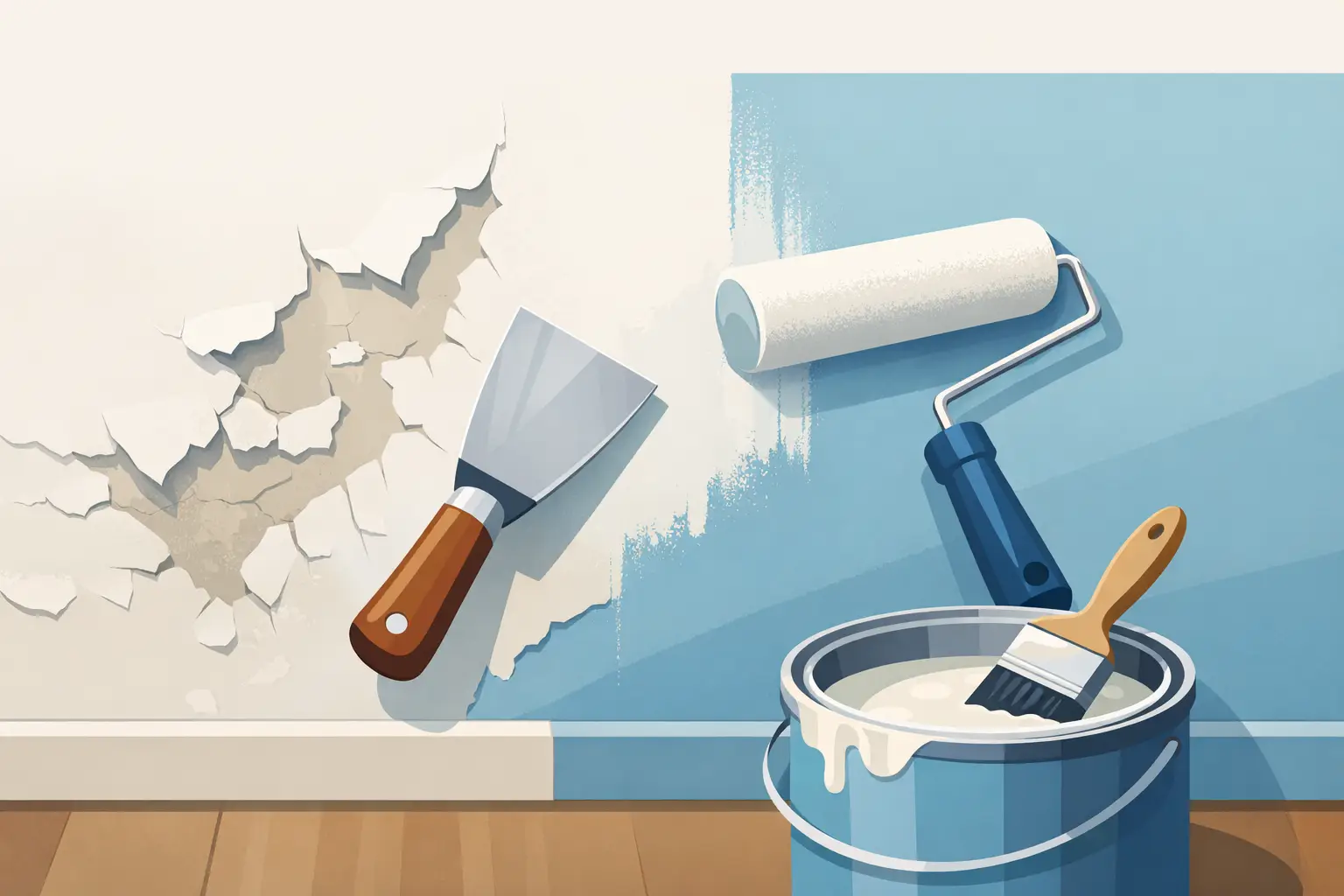
Can peeling paint be painted over? Technically, yes, but it is rarely the right way to fix the problem. A fresh coat applied over loose, cracked or bubbling paint may look better for a short time, then fail along with the old layer underneath. For a finish that holds up in Adelaide conditions, the damaged coating needs to be removed, the cause addressed and the surface prepared properly before new paint goes on.
Whether it is a sun-baked exterior wall, a bathroom ceiling, rental property skirting boards or a shopfront, peeling paint is a warning sign. Treating the visible paint without dealing with what caused it is where shortcuts become repeat work.
Why paint starts peeling
Paint only performs as well as the surface it is bonded to. When that bond breaks down, new paint cannot reliably hold the old coating in place. It may cover the problem, but it cannot strengthen a layer that has already lost adhesion.
Moisture is one of the most common causes. A leaking gutter, cracked render, failed sealant, rising damp or poor bathroom ventilation can allow water behind the paint film. On exterior surfaces, years of UV exposure and Adelaide heat can make paint brittle, particularly on west-facing walls, timber fascia boards and metalwork.
Poor preparation is another regular culprit. Paint applied over chalky surfaces, dirt, mould, greasy kitchen walls or glossy enamel without suitable sanding and priming may peel sooner than expected. In some cases, incompatible paint systems are to blame, such as applying a water-based coating over an unstable old oil-based surface without the correct primer.
Can peeling paint be painted over safely?
Only if the peeling area is very minor and all loose material has been completely removed. That distinction matters. You can paint over a sound, firmly bonded existing coating after cleaning and preparation. You should not paint over paint that is lifting, flaking, blistering or soft to the touch.
Run a scraper across the area and press masking tape firmly onto the surrounding paint before pulling it away. If flakes come off easily, the coating is not stable enough to paint over. The repair needs to extend until you reach a solid edge, even if that means the affected patch becomes larger than it first appeared.
Painting directly over failure often creates a patchy finish. The edges of the peeling paint telegraph through the new coating, and the freshly painted area can begin lifting within weeks or months. For landlords and commercial property owners, that can mean avoidable disruption and another round of maintenance far sooner than planned.
Find the cause before preparing the wall
Removing loose paint is essential, but it is only half the job. Before sanding or priming, look for the reason the surface failed.
On an exterior wall, check gutters, downpipes, roof flashings, window seals and cracks in render or masonry. If timber is peeling, inspect for rot, splitting boards and exposed end grain. On a metal fence or balustrade, look for rust forming under the coating. Rust must be removed and treated, not simply hidden under paint.
Inside, pay close attention to bathrooms, laundries, kitchens and ceilings below plumbing. Condensation can cause recurring peeling around showers and exhaust fans, while a water stain may point to an active roof or pipe leak. Paint is a protective finish, not a waterproof repair material. The source of moisture needs to be fixed and the surface allowed to dry thoroughly first.
Mould should also be treated properly rather than painted over. Clean it with an appropriate mould treatment, following the product directions, and improve the ventilation or moisture control that allowed it to grow. Otherwise, it can return beneath the new paint.
Take care with older paint
Homes built before the 1970s may contain lead-based paint, especially on old timber windows, doors, weatherboards and trims. Dry sanding, scraping or using high-pressure cleaning on suspect paint can create hazardous dust or debris. Keep children and pets away from the area, avoid creating dust and arrange appropriate professional advice before starting extensive preparation.
The proper process for repairing peeling paint
A durable repaint follows a clear sequence. The exact products vary between plaster, render, timber, brick, metal and previously painted surfaces, but the preparation principles remain the same.
First, protect nearby floors, gardens, furniture and fittings. Then scrape back every loose edge with the right tool. The aim is not to remove sound paint unnecessarily, but to remove all material that is no longer firmly attached.
Next comes cleaning. Exterior walls may need washing to remove dirt, salt, spider webs, chalking and surface contaminants. Interior areas need grease, dust and residue removed. Allow the surface to dry completely, especially after rain, washing or moisture repairs.
The sound paint edges are then feather-sanded so they blend into the surrounding surface rather than leaving a ridge. Any holes, cracks or damaged sections should be repaired with a filler suited to the substrate. Larger wall damage, failed render and rotten timber may need more substantial repairs before coating can begin.
Primer is not an optional extra on a repaired peeling area. A quality bonding, sealing or stain-blocking primer helps stabilise the repaired surface and gives the topcoat something reliable to grip. Bare timber, exposed metal, powdery masonry and patched plaster all need the right primer for their condition. Using one product for every surface may seem simpler, but it can compromise the result.
Once the primer has dried as specified, apply suitable topcoats at the recommended spread rate and drying time. Two even coats usually provide better colour consistency, coverage and protection than one heavy coat. Avoid painting exterior surfaces when rain, strong wind, extreme heat or cold conditions will interfere with drying.
When a quick repaint can be enough
Not every scuff or chip requires a full repaint. If a small area has been knocked, the surrounding paint is sound and there is no moisture issue, a local repair can work well. Clean the surface, sand the edges smooth, spot-prime exposed material and touch up with matching paint.
The trade-off is colour matching. Even when the original colour name is known, older paint may have faded from sunlight, cleaning or general wear. A spot repair can be more visible on large, light-filled walls or weathered exterior elevations. In these situations, repainting the full wall, panel or section often gives the neater finish.
For rental properties, a targeted repair may be practical between tenants when the remaining coating is in good condition. If peeling is widespread, however, a proper preparation and repaint is usually better value than repeated touch-ups that never quite blend in.
Exterior peeling needs a tougher approach
Adelaide exteriors face hot summers, UV exposure, wind-driven rain and changing temperatures. These conditions place extra pressure on paint, particularly on timber, eaves, rendered walls, metal fences and north- or west-facing elevations.
Exterior preparation needs to be thorough because water can enter through even small gaps. Cracked caulking around windows, unsealed joints, failing fascia boards and damaged render should be repaired before painting. On masonry, check whether the wall is retaining moisture from drainage or plumbing issues. On timber, make sure the moisture content is suitable before applying primer and topcoat.
Choosing exterior-grade products matters, but product quality cannot make up for poor preparation. The longest-lasting paint system starts with a dry, clean, stable surface and the right coating for the material.
When to call a professional painter
A professional assessment is worthwhile when peeling covers a large area, keeps returning, involves water damage, mould, lead paint concerns, rust or rotten timber. It is also a sensible option for high exterior walls, commercial premises and properties where a clean, reliable turnaround matters.
An experienced painter can identify whether the issue is surface failure or a building maintenance problem, repair damaged areas, select compatible primers and coatings, and leave the site tidy. That saves the frustration of buying paint twice and seeing the same failure reappear.
At Shine Painters Adelaide, we treat preparation as part of the painting job, not an add-on. From wall repairs and render painting to timber coatings, metal painting and rental property repaints, the focus is on stable surfaces and finishes built to last.
If paint is peeling, do not let a quick coat hide a bigger issue. Fix the cause, prepare the surface properly and the next coat has a fair chance of looking good for years rather than months.