
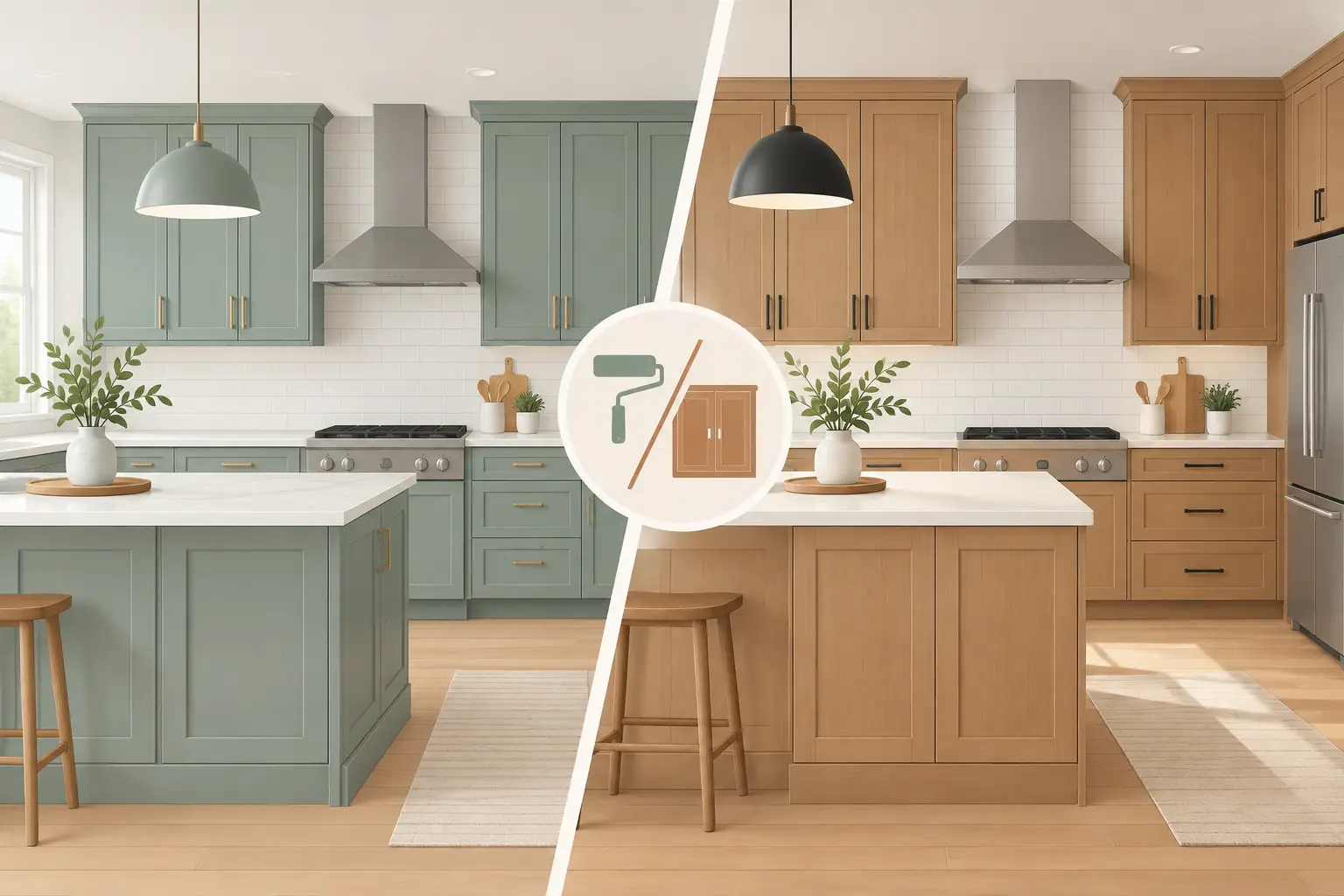
A dated kitchen can make an otherwise well-kept home feel tired. When doors are scratched, timber has yellowed, or an old colour is dragging down the room, the big question is often painted cabinets or new cabinets. The right answer is not always the more expensive one. It comes down to the condition of your existing cabinetry, how you use the kitchen, your budget, and whether the layout still works for your household.
For many Adelaide homeowners, professionally refinishing sound cabinet boxes and doors can deliver a major visual change without the cost, mess and downtime of a full kitchen replacement. But painting is not a cover-up for every problem. If the cabinets are failing, poorly designed or no longer practical, new cabinetry may be the better long-term investment.
Start With the Condition of Your Existing Cabinets
The first question is simple: are your cabinets structurally sound? Open every door and drawer, look inside the cupboards, and check beneath the sink. Strong cabinet boxes, intact hinges and straight doors are good signs that refinishing is worth considering.
Solid timber, painted timber and many MDF doors can be excellent candidates for cabinet painting. Minor chips, dents, old handle holes and surface scratches can usually be repaired during preparation. A quality paint system can then give the kitchen a clean, consistent finish in a colour that suits the rest of your home.
There are limits. Water damage around sinks and dishwashers, swollen particleboard, delaminating surfaces, cracked doors and loose cabinet boxes need more than paint. A fresh coat will not stop moisture-damaged material from breaking down. In those cases, replacing affected sections or installing new cabinetry is usually the sensible call.
Not Every Surface Takes Paint the Same Way
Laminate, melamine and vinyl-wrapped doors can sometimes be repainted, but they need careful assessment and the right preparation. Glossy or non-porous surfaces must be properly cleaned, sanded or deglossed, then coated with a suitable adhesion primer. Skipping these steps is how cabinet paint starts peeling around handles, drawer fronts and frequently used doors.
Vinyl wrap is a particular case. If the wrap is lifting or bubbling, painting over it may not provide a durable result. Removing the failed wrap, replacing doors or choosing new cabinets may give you better value than trying to paint a surface that has already lost adhesion.
When Painted Cabinets Make Good Sense
Cabinet painting is often the practical choice when you like the size and layout of your kitchen but not its appearance. It can refresh dark timber tones, dated cream doors or worn painted finishes without pulling apart the room.
It is also useful when the rest of the kitchen is still in good order. If the benchtop, splashback, appliances and flooring are working well, replacing all cabinetry can be unnecessary. Updating the cabinet colour, handles and perhaps tapware can make the whole space feel more current for a fraction of a full renovation.
For landlords and property managers, refinishing can be a smart turnaround option where cabinets are sound but visibly tired. A neat, durable finish helps a rental property present better for inspections and new tenants, while avoiding the extended disruption of a complete kitchen fit-out.
Painting can also be a good choice before selling. Neutral whites, warm off-whites, soft greys and muted greens can make an older kitchen look cleaner and more cared for. The aim is not to chase every trend. It is to create a finish that feels fresh, tidy and easy for buyers to live with.
What Proper Cabinet Painting Involves
Cabinet painting is detailed work, not a quick weekend coat with a brush. Kitchen surfaces collect grease, cooking residue and hand oils, even when they look clean. If those contaminants are not removed, paint will struggle to bond properly.
A professional process starts with protecting floors, benchtops, appliances and nearby rooms. Doors and drawers may be removed and labelled so everything goes back where it belongs. Surfaces are cleaned thoroughly, defects are repaired, and the existing finish is sanded or prepared to create a suitable key for primer.
After priming, the chosen cabinet coating is applied in controlled coats, with sanding between coats where required. The goal is an even, smooth finish with good coverage around profiles, edges and high-touch areas. Hardware is refitted once the coating has cured enough for careful handling.
Dry paint is not necessarily fully cured paint. Cabinets need time to harden properly, particularly around doors and drawers that rub together. Treating freshly painted cabinetry with care in the early period helps protect the finish and gives it the best chance of lasting well.
When New Cabinets Are Worth the Cost
New cabinetry is usually the better option when the kitchen has practical problems that paint cannot solve. Perhaps you do not have enough storage, the drawers are shallow, the corner cupboards are difficult to access, or the layout makes cooking and cleaning frustrating. A new kitchen allows you to change the room, not just its colour.
Replacement also makes sense if you are moving plumbing, changing appliance locations, adding an island or fitting a new benchtop that requires different cabinet dimensions. Trying to keep old cabinets in a redesigned space can lead to awkward compromises and extra repair work.
If your cabinet boxes are made from swollen or crumbling particleboard, replacement is generally more reliable. The same applies where hinges have repeatedly pulled loose or doors cannot be aligned because the cabinets have shifted. These are functional issues, and a premium paint finish will not correct them.
New cabinets give you more freedom with door profiles, internal storage, soft-close hardware and materials. That flexibility comes with a larger budget, longer lead times and more disruption. Removal creates waste, trades may need to coordinate around plumbing and electrical work, and you may be without a functioning kitchen for part of the project.
Painted Cabinets or New Cabinets: Compare the Real Costs
The upfront price is usually the clearest difference. Painting existing cabinets generally costs less because the cabinet boxes, doors and layout remain in place. You are paying for detailed preparation, repairs and specialist coating work rather than demolition, manufacture and installation.
But the cheapest option is not always the best value. Painting cabinets that are already water-damaged or poorly built can mean paying twice when replacement becomes necessary a year or two later. On the other hand, replacing solid, well-built cabinetry simply because the colour is dated can put unnecessary pressure on the renovation budget.
Think about the whole project. New cabinetry often leads to extra spending on benchtops, splashbacks, flooring repairs, electrical adjustments and plumbing changes. A cabinet repaint may allow you to keep those items untouched, which can make a significant difference to the final figure.
Durability also depends on use. A family kitchen with young children, pets and constant cooking needs a tough coating system and realistic care. Painted cabinets can perform very well when they are correctly prepared and finished, but sharp impacts, harsh abrasive cleaners and repeated moisture exposure can still damage any painted surface. New cabinetry is not indestructible either, especially if low-grade materials are used near water.
Choose a Colour That Will Still Work in Five Years
A cabinet colour affects the light, scale and feel of the entire kitchen. In smaller or darker rooms, lighter colours can help the space feel more open. Warm whites often suit Adelaide homes with timber floors and natural light, while deeper greens, charcoal or navy can work beautifully on a kitchen island or lower cabinets when balanced with lighter walls and benchtops.
Consider the fixed elements before selecting a colour. Benchtops, tiles, flooring and appliances are expensive to replace, so the cabinet finish needs to work with them. Take samples into the room and view them in morning, afternoon and artificial light. A grey that looks soft in a showroom can appear blue or cold in a south-facing kitchen.
Also consider maintenance. Very dark colours can show dust, fingerprints and scratches more readily. Bright white can look crisp but may need more frequent wiping near handles and cooking areas. A practical mid-tone or warm neutral often gives a forgiving, long-lasting look.
Make the Decision With an Honest Inspection
If your kitchen layout works, your cabinet boxes are solid and the doors are in repairable condition, painting is often a cost-effective way to achieve a high-end refresh. The key is thorough preparation and a coating system suited to cabinetry, not a rushed paint job that looks good only on day one.
If the cabinets are damaged, the layout frustrates you daily or you are planning wider changes to the room, new cabinetry can be money well spent. It gives you the chance to fix the parts of the kitchen that are genuinely holding the home back.
A proper inspection can save a costly wrong turn. Shine Painters Adelaide can assess whether your existing cabinets are suitable for refinishing and explain the preparation needed for a durable result. Choose the option that improves how your kitchen looks and works, rather than simply choosing the biggest renovation.