
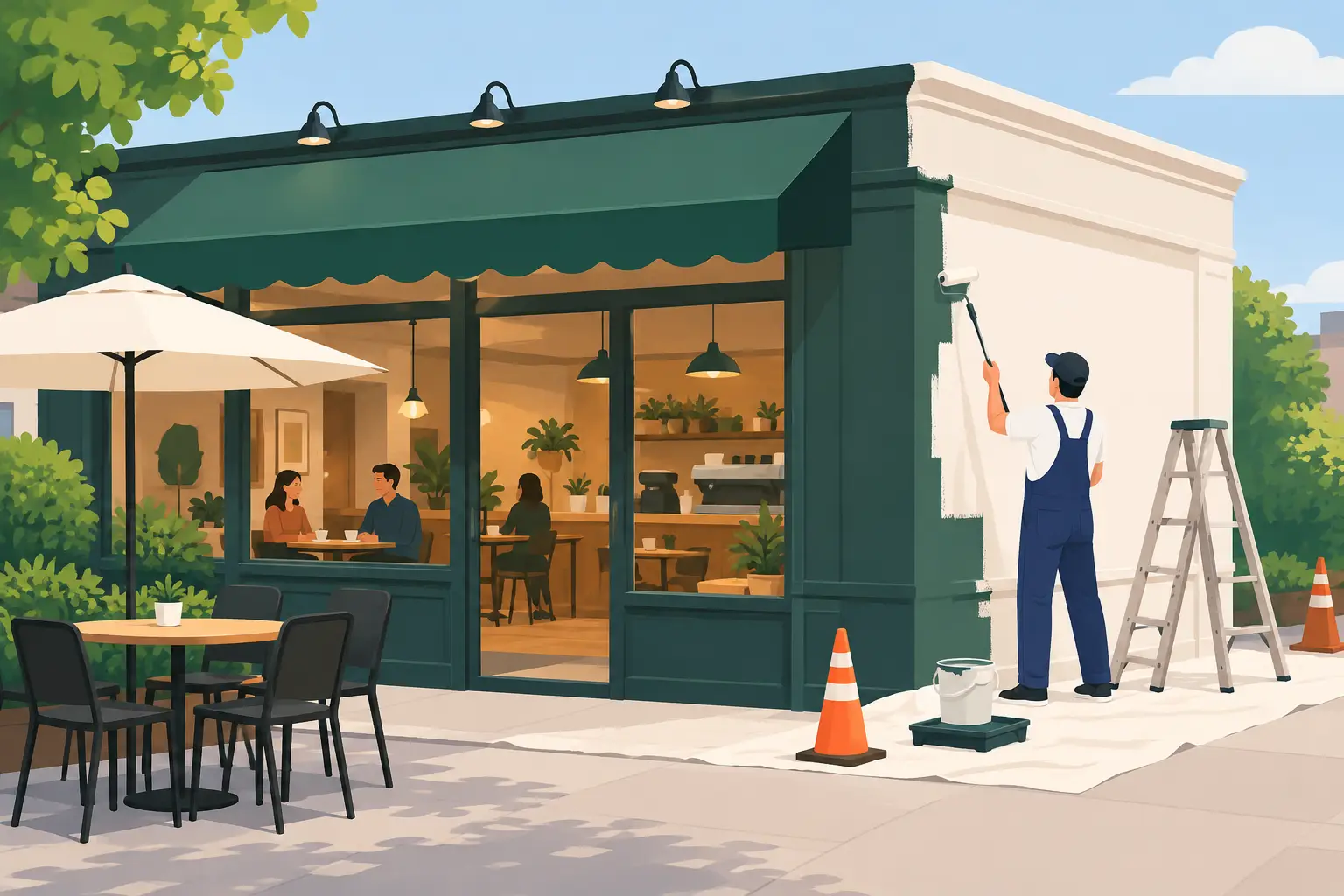
A tired feature wall, scuffed skirting boards and peeling paint around the counter can make even a great café feel neglected. Knowing how to plan café repainting properly means improving the space without closing the doors longer than necessary, upsetting regulars or leaving staff to work around wet paint.
For Adelaide café owners, repainting is not simply a colour decision. It is a practical maintenance job that affects hygiene, customer perception, staff comfort and daily takings. The best results come from planning the work around your busiest periods, fixing damaged surfaces before painting starts and choosing finishes built for a hospitality environment.
Start with the reason for repainting
Walk through the café as a customer would, from the footpath to the counter, seating area and toilets. Look for marks around tables, handprints near doors, damage from chairs, flaking paint, water stains and greasy residue near food preparation zones. These details affect how clean and cared-for the business feels.
It also helps to decide what the repaint needs to achieve. A full colour change can refresh a dated fit-out or better match your brand. A maintenance repaint may be more focused, covering high-wear walls and repairing chips without changing the whole look. If you are taking over a tenancy, the scope may be driven by lease conditions and the condition report.
Do not paint over a problem just because it is visible. Damp patches, mould, cracked plaster and bubbling paint need to be assessed first. Otherwise, fresh paint may fail early and the same repair work will need to be done again.
How to plan café repainting around your trading hours
The main challenge is keeping disruption low while still giving the painter enough time to prepare and coat surfaces properly. In many cafés, work can be staged after closing, before opening or across quieter days. The right approach depends on the size of the venue, ventilation, the number of coats needed and how much furniture can be moved.
A small dining area may be completed in sections over several nights. For a larger repaint, a short planned closure can be more efficient and may cost less than repeated call-outs. The key is to compare lost trade against the cost and inconvenience of a longer project. Rushing the work to avoid one quiet day is rarely worthwhile if preparation or drying time is compromised.
Build the schedule around more than opening hours. Allow time for moving furniture, protecting equipment, cleaning surfaces, patching repairs, drying coats and putting the café back in order. If walls near the coffee machine, display cabinet or POS area are being painted, plan how staff will operate safely while that zone is unavailable.
A clear work plan should cover the following practical points:
- which rooms or zones will be painted first
- when tables, artwork, menus and movable equipment will be removed
- how food, crockery and coffee equipment will be protected from dust
- when staff can safely return to each area
- who will inspect the finished work before reopening.
Let staff know the plan early. They often know where customers queue, which doors take the most knocks and which areas cannot be taken out of use during service.
Choose colours that work in real café conditions
Paint colours need to support the character of the business, but they also need to cope with daily wear. Very pale walls can make a small café feel brighter, yet they show chair scuffs and fingerprints quickly. Deep colours can create warmth and contrast, but they may make narrow spaces feel darker and often need more careful touch-ups.
Consider how natural light changes throughout the day, along with the colour temperature of pendant lights, downlights and display lighting. A colour that looks soft and inviting in a sample pot can appear much cooler or darker across a full wall. Test larger sample areas and view them during early morning service, lunch trade and after dark before making the final choice.
For most hospitality spaces, it makes sense to use a more forgiving mid-tone on high-contact walls and reserve lighter or bolder colours for feature areas. Ceiling colour matters too. A clean light ceiling can lift the room, while a darker ceiling may suit a high, industrial-style space but can feel heavy in a compact café.
If the café has existing timber, tiles, brickwork or metal finishes, choose colours that sit comfortably beside them. Repainting should make the fit-out feel intentional, not create a clash that makes good materials look dated.
Select paint finishes for cleanability and durability
A café needs more than a good-looking finish. Walls around entrances, seating, bins and service areas are regularly bumped, wiped and marked. A quality washable low-sheen finish is often a sensible choice for customer areas because it is easier to clean than a flat finish while avoiding excessive glare.
Semi-gloss or gloss finishes are generally better suited to trims, doors and other hard-wearing surfaces. They are durable and easy to wipe down, though they highlight dents, rough patches and poor preparation. This is why filling, sanding and priming are not optional steps.
Kitchen-adjacent walls and areas exposed to moisture, grease or frequent cleaning may require a more specialised coating system. The product choice depends on the substrate, ventilation and how the area is used. A professional painter can recommend a suitable finish without over-specifying paint where a standard commercial system will do the job.
Ask about low-odour, low-VOC options where staff and customers will return soon after painting. Good ventilation and sensible drying time still matter. Low-VOC paint can reduce odour, but it does not remove the need for proper site preparation and safe access arrangements.
Preparation is where repainting jobs succeed or fail
Fresh paint will not hide every flaw. It can actually draw attention to poorly patched holes, uneven walls and peeling edges once light hits the surface. Proper preparation usually includes cleaning, scraping loose material, filling cracks and dents, sanding smooth, spot-priming repairs and masking adjoining surfaces.
Cafés can have unusual surface issues. Steam near dishwashing areas, oily residue near cooking equipment, adhesive marks from old signage and constant chair contact can all affect adhesion. These areas need the right cleaning and primer before top coats are applied.
If the premises are older, ask the painter to check the condition of previous coatings. Paint that is cracking or failing across large areas may need more extensive removal or repair than a straightforward repaint. It is better to identify this during quoting than once the room is covered in drop sheets.
Protect the café, not just the walls
Painting in a live hospitality venue calls for neat site management. Floors, benches, joinery, equipment and windows should be covered and masked carefully. Dust from sanding must be contained, particularly around food service areas, and rubbish should be removed as work progresses.
Before work starts, remove or secure anything that is difficult to replace: framed prints, wall-mounted menu boards, loose shelving, plants and decorative lighting. Discuss fixed items with the painter. Sometimes they can be carefully masked; other times, removing them produces a cleaner finish behind the fitting.
Do not forget exterior painting if the awning, front door, window frames or outdoor seating area look weathered. The street-facing finish shapes first impressions before customers have seen the coffee menu. Exterior work in Adelaide also needs to account for heat, wind and rain, as poor weather can affect application and drying.
Get a quote that shows the real scope
A useful café repainting quote should explain what is included, not just give a lump sum. Check whether it covers surface repairs, preparation, primer, the number of coats, protection of furniture and equipment, access requirements, cleanup and paint products.
Be upfront about after-hours access, alarm systems, body corporate rules, loading access and parking. These details can affect the schedule and prevent delays on the first night of work. If you need the job completed before an event, inspection or reopening date, raise that at the quoting stage rather than assuming it can be fitted in.
The cheapest quote is not always the best value if it leaves out repairs or relies on one quick coat over damaged surfaces. A durable finish costs less disruption over time because it is less likely to need early patching and repainting.
Plan the final handover before reopening
Allow a final walk-through in good lighting before furniture goes back. Check wall edges, trims, repaired sections, doors and any areas that received a colour change. Minor touch-ups are easiest to complete while the painter is still on site and the space is clear.
Keep a record of the paint colours and finishes used. It makes future touch-ups simpler, especially in busy areas where a chair scrape or delivery bump is inevitable. Your painter can also advise when the coating has cured enough for regular cleaning, as fresh paint needs time to reach its full toughness.
A well-planned repaint should leave customers noticing the café at its best, not noticing the work that went into it. With careful scheduling, proper preparation and a finish suited to hospitality wear, the result is a cleaner, more welcoming space that is ready for the next busy service.