
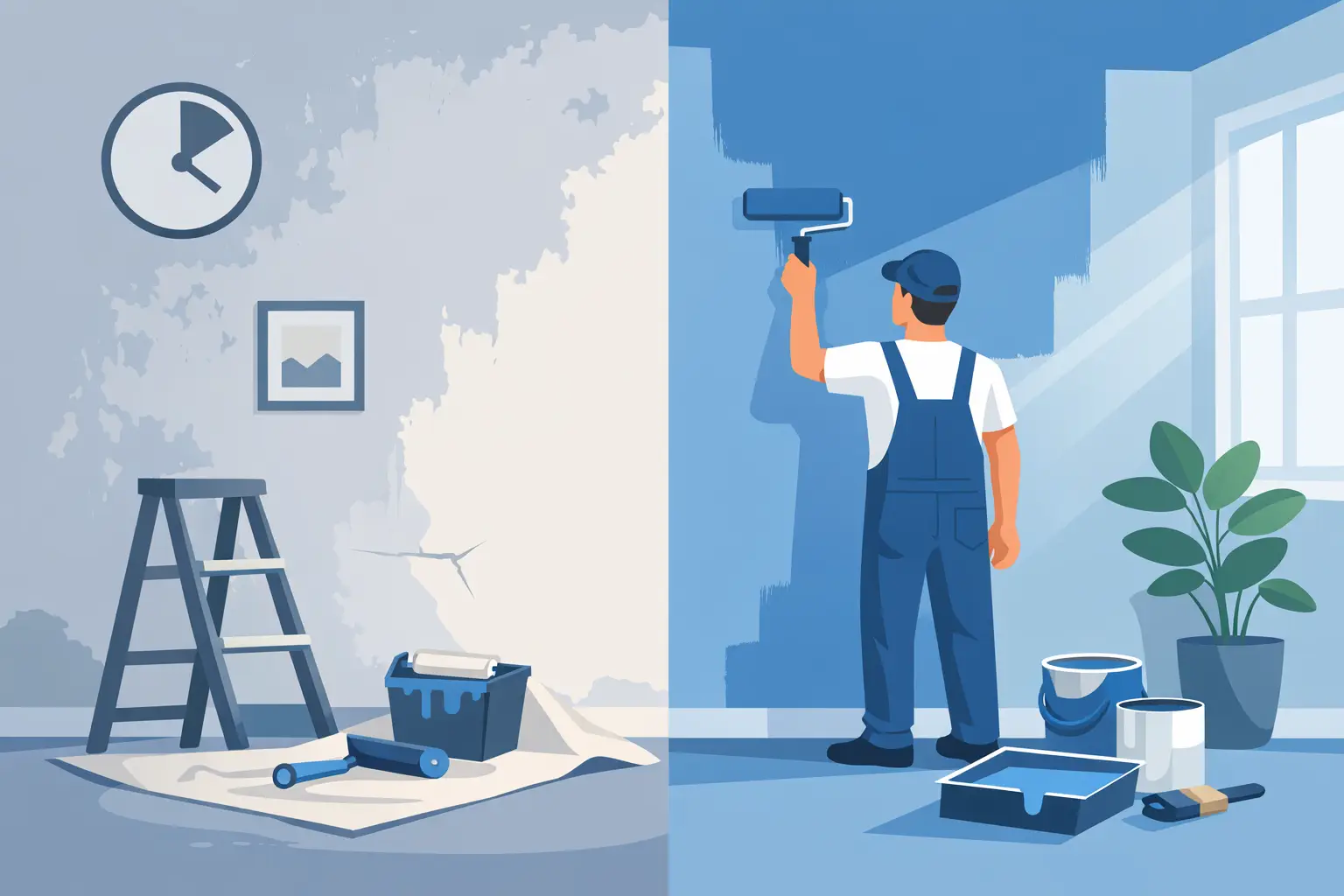
A wall does not need to be falling apart before it needs repainting. More often, the early signs are everyday ones – scuff marks that will not wash off, faded colour near windows, hairline cracks, peeling around damp spots, or a room that simply feels tired no matter how clean it is. If you are asking when should walls be repainted, the real answer comes down to wear, moisture, sunlight, surface condition, and how long you want the finish to keep doing its job.
For some properties, repainting is mainly about presentation. For others, it is about protection. In Adelaide homes and commercial spaces, paint is not just there to look neat. It helps seal surfaces, covers repairs, and gives walls a finish that is easier to clean and maintain. Leave it too long and the job can shift from a straightforward repaint to a bigger repair project.
When should walls be repainted in most properties?
There is no single timeline that suits every room. A formal lounge that sees little traffic might still look good after seven to ten years. A hallway, stairwell or rental property wall can look worn much sooner. As a general guide, interior walls often need repainting every five to seven years, but high-use areas may need attention in three to five.
That said, timing is not only about age. A poor-quality previous paint job, rushed preparation, or existing wall damage can shorten that lifespan fast. On the other hand, properly prepared surfaces and quality products usually hold up much better. That is why a professional repaint often lasts longer than a quick cover-up.
The signs your walls are ready for repainting
Most people notice the appearance first. Marks, chips and patchy colour are hard to ignore, especially in natural light. But there are also practical signs that repainting should not be put off.
If paint is peeling, bubbling or cracking, there is usually more going on than cosmetic wear. Moisture, movement in the wall, or paint failing to bond can all be behind it. In that case, painting straight over the top is rarely the right fix. The wall needs to be checked, repaired and prepared properly first.
Fading is another common sign, especially in rooms with strong sun exposure. Even good paint can lose depth over time. Whites can dull, darker colours can wash out, and touch-up areas can start to stand apart from the rest of the wall.
Then there is the issue of cleaning. If a wall still looks grubby after a proper wash, the finish may be worn out. Flat paints in busy areas tend to hold marks, while older paint can become harder to clean without damaging the surface. Once that happens, repainting is usually the more practical option.
High-traffic rooms need repainting sooner
Some rooms simply take more punishment than others. Hallways, entryways, kitchens, children’s bedrooms and living areas usually show wear first. Hands brush past corners, furniture knocks skirting lines, and daily use leaves its mark.
Rental properties often need repainting more regularly for the same reason. Even with careful tenants, turnover adds wear. Fresh paint can make a big difference before a new lease, not just visually but in showing the property has been maintained properly. For landlords and agents, timing matters here. Repainting before walls become heavily damaged is usually more cost-effective than waiting until repairs stack up.
Commercial interiors have a similar pattern. Offices, reception areas, retail spaces and shared corridors all need to stay presentable. A tired paint finish can drag down the whole look of the premises, even if the rest of the fit-out is in good condition.
Kitchens, bathrooms and laundries are different
These rooms are less about traffic and more about moisture, grease and ventilation. Bathroom walls can develop peeling paint, mould staining or soft spots if steam is lingering for too long. Kitchens pick up cooking residue that settles on surfaces over time. Laundries cop humidity and temperature swings.
In these areas, repainting may be needed sooner than in a bedroom or study. The key is not just applying a fresh coat, but using the right paint system and making sure the underlying surface is sound. If mould, water staining or peeling is already present, the cause needs to be dealt with first. Otherwise, the new paint will fail again.
When should walls be repainted after damage?
As soon as repairs are done properly. That sounds obvious, but this is where many repaint jobs go wrong. Holes, dents, cracked plaster, water damage and patched sections need more than a quick sand and topcoat. If the repair is not level, sealed and blended correctly, it will still show through the new finish.
Water damage needs particular care. A stain on the wall might look minor, but if the moisture source is still active, repainting is only hiding the problem for a short time. Once the leak or damp issue is fixed, the affected area can be repaired, sealed and repainted to restore a clean, even result.
This is also why wall repairs and repainting often belong together. One without the other rarely gives a lasting finish.
Repainting for style versus repainting for protection
Not every repaint is driven by wear. Sometimes the wall is still serviceable, but the colour no longer suits the room, the property is being prepared for sale, or a business wants a cleaner, more modern look. That is a valid reason to repaint too.
Still, there is a difference between repainting for style and repainting because the existing finish is failing. If the paint is in good condition, changing colour is usually a simpler job. If there are cracks, flaking, stains or adhesion issues, the preparation becomes much more important. Skipping that step might save time on day one, but it usually costs more later.
How Adelaide conditions can affect paint life
Local conditions matter. Adelaide properties deal with strong sun, dry heat, dust, and in some areas, extra exposure to coastal air or changing winter moisture. Even indoors, these conditions can affect how paint ages. Rooms with big west-facing windows often fade faster. Older homes may show movement cracks more readily. Poor ventilation can shorten the life of paint in wet areas.
That is why repaint timing is never only about the calendar. Two houses painted in the same year can age very differently depending on occupancy, exposure and how well the surfaces were prepared in the first place.
Is it better to spot-paint or repaint the whole wall?
It depends on the extent of the wear and the age of the existing paint. Small, isolated marks can sometimes be touched up, but touch-ups do not always disappear. Differences in sheen, roller texture and paint fade often leave patchy sections that are more obvious than the original damage.
If the wall has multiple scuffs, uneven fading or several repair areas, repainting the full wall usually gives the better result. In larger spaces, it may even make sense to repaint the whole room so the finish stays consistent from one wall to the next.
For property owners trying to balance appearance and budget, this is where honest advice matters. A good painter should tell you whether a smaller repair is worthwhile or whether a full repaint will save you chasing the same problem again in six months.
A good repaint starts well before the first coat
People often focus on the final colour, but the finish depends heavily on the work before painting starts. Cleaning, scraping loose paint, sanding, patching, sealing stains, caulking gaps and priming where needed all affect how the wall looks and how long it lasts.
This is the difference between a repaint that looks fresh for years and one that starts showing flaws not long after the furniture goes back in. Proper preparation is not the glamorous part of the job, but it is where quality workmanship shows.
For homes, rentals and commercial spaces alike, that matters. A neat finish is one thing. A durable finish that stands up to daily use is another. Experienced painters know how to assess the wall first, not just how to put paint on it.
If your walls are looking tired, harder to clean, or starting to show peeling, cracking or patchy fading, it is usually better to act earlier rather than later. A well-timed repaint keeps the space looking cared for, helps protect the surface underneath, and avoids bigger repair work down the track. If you are not sure whether your walls need a touch-up, repairs or a full repaint, getting clear advice from a local professional is often the smartest place to start.