
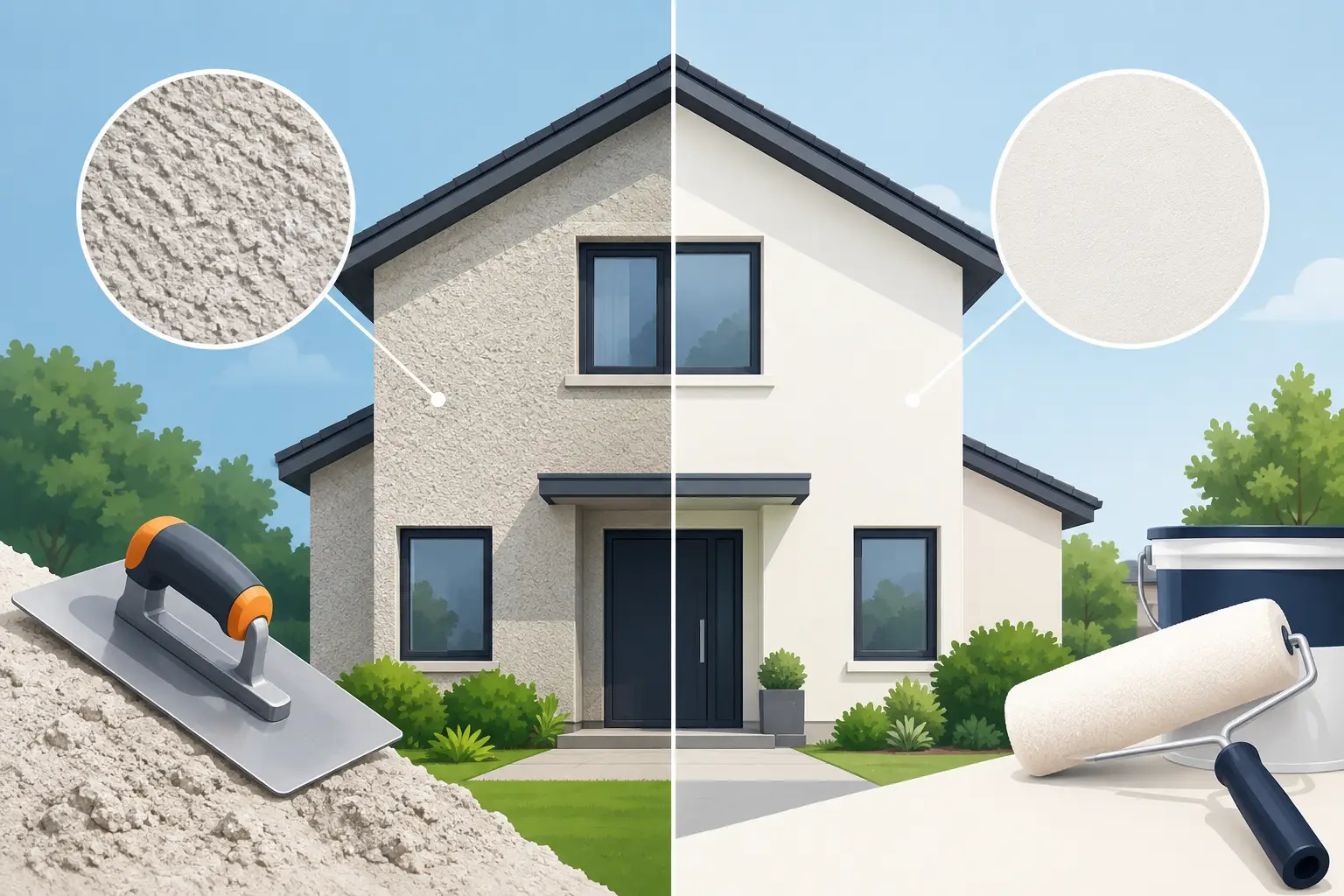
A rendered wall can look tired long before the render itself has failed. Fading, hairline cracks, chalky residue and patchy repairs are common around Adelaide homes, particularly on walls exposed to strong sun and winter rain. When comparing render painting vs render coating, the right answer comes down to the condition of the render, the wall’s exposure and how much protection it needs – not simply which option has the lowest upfront price.
A good finish starts well before the first coat goes on. If cracks, loose render or moisture problems are painted over, even premium products will struggle to last. The job needs proper assessment, repair and preparation so the completed surface looks clean and stays protected.
What is render painting?
Render painting is the application of exterior paint over a rendered wall. It is normally the best choice where the render is sound, stable and mostly free of cracking. The paint refreshes the colour, improves street appeal and creates a protective barrier against dirt, sun and moisture.
A professional render painting system usually involves cleaning the surface, removing loose or flaking material, treating affected areas, filling minor imperfections, applying a suitable primer or sealer where needed, then finishing with quality exterior paint. The paint must suit cement render, acrylic render or the existing coating already on the wall.
For many properties, this is all that is required. A well-prepared and professionally painted rendered façade can look sharp, resist weathering and be easier to maintain. It is also generally more economical than a heavier coating system.
However, standard exterior paint has limits. It can bridge very fine surface texture, but it is not designed to solve movement cracks or cover widespread deterioration. If the render is continually cracking, absorbing water or breaking down, painting alone may only provide a short-term cosmetic improvement.
What is render coating?
Render coating usually refers to a thicker, high-build coating system designed for rendered and masonry surfaces. Depending on the product, it may be acrylic-based, elastomeric or membrane-forming. These coatings are made to provide more flexibility and a stronger weather-resistant layer than conventional exterior paint.
The key advantage is their ability to accommodate slight movement in the surface. Buildings expand and contract with temperature changes, and rendered walls can develop fine cracks over time. A flexible coating may help bridge stable hairline cracks and reduce the chance of them showing through as quickly.
Render coatings can also provide improved resistance to wind-driven rain. That matters on exposed elevations, parapets, boundary walls and older homes where the render has become more porous. They are not a cure for leaks coming from flashing, gutters, failed waterproofing or major structural movement, but they can form an effective part of a properly planned exterior maintenance job.
Product names can be confusing. Some suppliers use the terms paint, coating and membrane interchangeably. Rather than relying on the label, ask what the product is designed to do: whether it is flexible, what crack width it can bridge, how it handles moisture vapour, and what preparation it requires.
Render painting vs render coating: the practical difference
The simplest difference is that paint is primarily a decorative protective finish, while a render coating is usually a more substantial protective system with added flexibility. Both can look excellent when applied correctly. The better option depends on the wall in front of you.
Choose render painting when the surface is sound, previous coatings are well bonded, and the aim is to refresh colour and provide normal weather protection. It is a sensible option for newer render, well-maintained homes and walls with only minor surface imperfections.
A render coating is worth considering when there are recurring hairline cracks, a highly exposed wall, fading and chalking across a large area, or render that has become porous but remains structurally stable after repairs. The extra material and labour can cost more, yet it may offer better value where a standard paint system would need attention sooner.
Neither option should be used to hide serious problems. Cracks wider than a hairline, hollow-sounding render, rust stains, bubbling paint, damp patches or render falling away from the wall need investigation first. The cause could be water ingress, failed movement joints, poor drainage, corroding metal, salt contamination or building movement. Coating over the symptoms is not quality workmanship.
Preparation decides how long the finish lasts
The condition of the existing surface matters more than the colour selected. Render often holds dust, pollution, mould, salts and loose paint, all of which can interfere with adhesion. A wall that looks clean from the driveway may still need thorough washing and close inspection before work begins.
First, loose and flaking coating needs to be removed. Areas of damaged or drummy render should be repaired or replaced, not simply filled over. Fine stable cracks can be prepared with a suitable flexible filler or crack treatment, while larger cracks may require a more detailed repair approach. The repaired areas must be allowed to dry and cure properly before coating.
Priming is equally important. Bare patches, powdery render and repairs may need a compatible sealer or primer to create an even, stable base. Skipping this step can lead to uneven sheen, poor adhesion and premature peeling. It is one of those areas where shortcuts often become visible within a few seasons.
Weather also affects the result. Exterior products should not be applied to a wet wall, during rain, in very hot conditions or when the coating will not have enough drying time. Adelaide’s hot, dry days can make scheduling tricky, particularly on north- and west-facing walls. Working in suitable conditions helps the coating flow properly and cure as intended.
How Adelaide conditions affect rendered walls
Adelaide homes deal with more than sunshine. Intense UV exposure can fade darker colours and slowly break down inferior coatings. Winter rain can find its way into cracks and unprotected areas. Coastal suburbs may also face salt-laden air, while older inner-suburb homes can have a mix of original render, later patch repairs and several generations of paint.
That is why one approach does not suit every property. A sheltered rendered wall in good condition may only need a quality repaint. A sun-baked front elevation with fine cracking may benefit from a flexible coating system. For a rental property, the priority may be a tidy, durable finish that improves presentation without unnecessary work, provided the render is genuinely sound.
Colour choice plays a part too. Dark colours absorb more heat, which can increase thermal movement on exposed walls. They can look great, but on a wall with existing fine cracking, a lighter colour or a suitable flexible coating system may be the more sensible long-term choice.
Questions to ask before choosing a system
Before approving a quote, ask whether the render is sound, what repairs are included and whether the proposed product is paint, a high-build coating or a flexible membrane. You should also know how cracks will be treated, whether bare or powdery areas will be primed, and how the painter will protect paths, windows, gardens and neighbouring surfaces.
A clear quote should describe the preparation as well as the finish coats. A price based only on square metres can miss the work that makes the result last. If one quote allows for cleaning, crack repairs, primer and multiple coats while another simply says “paint rendered walls”, they are not offering the same job.
For commercial properties, access and disruption should also be considered. Rendered shopfronts, offices and strata buildings may need work scheduled around trading hours, tenants or public access. A tidy site and sensible planning are just as valuable as the coating itself.
When to bring in a professional painter
A small, sound rendered wall can sometimes be repainted by a capable homeowner. But larger elevations, recurring cracks, repairs at height and uncertain moisture issues are better handled by an experienced exterior painter. The risk is not just an uneven finish. Choosing the wrong preparation method or product can leave you paying to strip and redo the work much sooner than expected.
At Shine Painters Adelaide, the focus is on assessing the render first, carrying out the repairs that are needed and recommending a system suited to the wall rather than selling a one-size-fits-all answer. That means clear preparation, neat application and a finish built for local conditions.
The best result is a rendered wall that looks freshly finished without hiding a problem underneath. Give the surface the repair work and coating system it actually needs, and it will keep doing its job long after the paint smell has gone.