
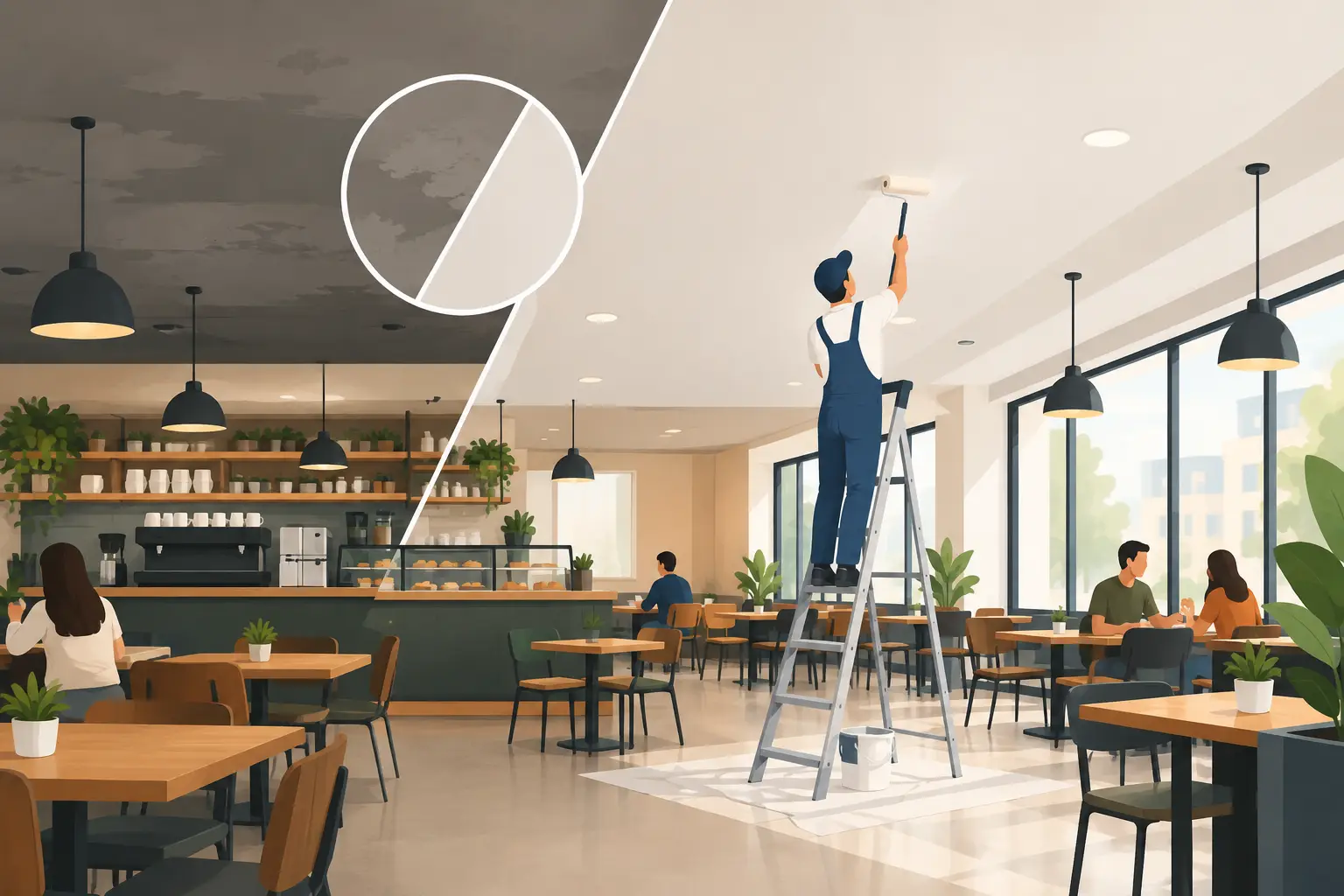
A ceiling can quietly make a café look tired long before customers notice the walls. Steam from the coffee machine, kitchen residue, dust around air-conditioning vents and everyday scuffs all build up over time. This café ceiling repaint case study follows a representative Adelaide hospitality project, showing why the best result came from careful preparation and practical scheduling, not simply rolling on a fresh coat.
The café was trading well and had a loyal local customer base, but the ceiling had become visibly patchy under its pendant lighting. Water staining around an old air-conditioning issue, yellowing near the kitchen pass and uneven touch-ups made the space feel less clean than it was. The owner needed a neat, durable finish without closing the venue for a lengthy renovation.
Café ceiling repaint case study: the starting point
The first step was inspecting the whole ceiling, not just the obvious stains. In commercial spaces, a stain is usually a symptom rather than the full problem. Before painting, the cause of any moisture mark needs to be fixed. Otherwise, even good-quality paint can discolour again, blister or peel.
In this case, the café owner had already arranged repair work to the air-conditioning condensate line. Once that was confirmed dry, the ceiling could be assessed properly. The painted plasterboard was sound overall, but several areas showed fine cracking at joints, small dents from previous maintenance work and a chalky surface around the worst staining.
The lighting made the defects more noticeable. Bright downlights and pendant fittings throw light across the ceiling at an angle, which can highlight every roller mark, filled patch and uneven sheen. This mattered when choosing both the preparation standard and the paint finish.
A flat ceiling paint would hide minor imperfections better than a higher-sheen coating. However, the selected product also needed to be washable enough for a hospitality setting. That trade-off is common in cafés. A completely flat finish can look excellent, but a slightly washable low-sheen system may be the better long-term choice where steam or airborne residue is likely.
Planning work around service hours
For a café, lost trading time can cost more than the painting itself. The job was planned in stages so the painting team could work after closing and before the morning rush, with the heavier preparation completed when the venue was quietest.
The work area was carefully protected before any sanding or painting began. Tables, display equipment, coffee machines and floor finishes were covered, while light fittings, vents and smoke detectors were masked where appropriate. Furniture that could be moved was shifted away from the work zone rather than painted around. It takes more time at the start, but it produces a cleaner line and reduces the risk of overspray or dust settling where it should not.
Ventilation also needed thought. Low-odour, low-VOC water-based coatings are generally a sensible choice for occupied commercial interiors, but paint still needs adequate drying conditions. The café’s air-conditioning was managed around the coating process so airflow did not blow dust onto wet paint or cause it to dry too quickly in isolated areas.
A staged schedule will not suit every venue. A small café with a simple ceiling may be completed over one or two evenings. Larger venues, ceilings with extensive staining, or spaces with detailed cornices and exposed services can require more time. An honest quote should allow for the actual condition of the surface rather than promise an unrealistic overnight turnaround.
Preparation made the difference
The ceiling was cleaned to remove surface dust and light residue, particularly around vents and the kitchen-facing areas. Cleaning is not an optional extra on a commercial repaint. Paint applied over grease, grime or chalking may appear fine at first, then fail earlier than it should.
Loose material was removed and the damaged areas were repaired with suitable filler. The filled sections were sanded smooth once dry, then dust was removed before priming. Fine cracks at plasterboard joints were treated as repairs, not painted over and hoped for. Paint can improve the look of an old crack temporarily, but it will not fix movement or poor joint condition beneath it.
The water-stained sections required a stain-blocking primer. This was one of the most important stages of the project. Standard ceiling paint alone can allow brown or yellow staining to bleed back through, especially after a few weeks of heat and moisture changes. A compatible stain blocker creates a barrier, then the finish coats can provide consistent colour and sheen across the ceiling.
Preparation also included checking previous paint adhesion. Where an old surface is unstable or has been affected by moisture, the right primer can be just as valuable as the topcoat. Skipping this stage might reduce the upfront price, but it can lead to early failure and another disruption to the business.
Applying a clean, even finish
After repairs and primer had dried, the ceiling received two even coats of quality interior ceiling paint in a clean white tone. White was chosen to brighten the room, improve light reflection and support the café’s existing timber and black feature finishes.
The application method mattered. Large, open ceiling areas were kept wet along a consistent edge to avoid lap marks. Cutting-in around fittings and walls was completed neatly, then the larger areas were rolled in a controlled sequence. Rushing this stage can leave visible variations, particularly under direct lighting.
Paint colour selection for ceilings is often simpler than choosing walls, but it should still be deliberate. A stark blue-white can make warm café lighting look harsh, while a warmer white can soften the room but may look dull beside bright cabinetry. The right choice depends on the lighting, surrounding finishes and the atmosphere the business wants to create.
The result was a ceiling that looked uniform from the entrance through to the service counter. The repaired areas disappeared into the surrounding surface, the old stains no longer drew attention, and the brighter finish helped the café feel cleaner and more open without changing its character.
What café owners can take from this project
The visible improvement was immediate, but the real value was in avoiding a repaint that would need to be redone too soon. The project reinforced several practical lessons for hospitality venues.
First, identify and repair moisture issues before booking painters. Second, allow enough time for cleaning, patching, sanding and priming. Finally, select coatings for how the space is used, not only for how they look on the first day. Kitchen-adjacent ceilings, high-traffic service areas and spaces with heavy air-conditioning use all place different demands on paintwork.
For owners preparing for a repaint, it helps to tell the painter about trading hours, equipment that cannot be moved, prior leaks and areas that receive regular steam or cooking residue. Those details shape the quote, the paint specification and the safest way to complete the work with minimal interruption.
Shine Painters Adelaide approaches commercial repainting with the same principle used on every job: do the preparation properly, protect the premises, and leave a finish the owner is proud to show customers. A ceiling repaint may seem like a small update, but when it is handled well, it changes how the whole venue feels from the moment people walk in.
If your café ceiling is showing stains, peeling paint or uneven patches, address it before it becomes the first thing customers notice. A properly planned repaint can refresh the space around your service hours and give the venue a clean, professional backdrop for the work that matters most.