
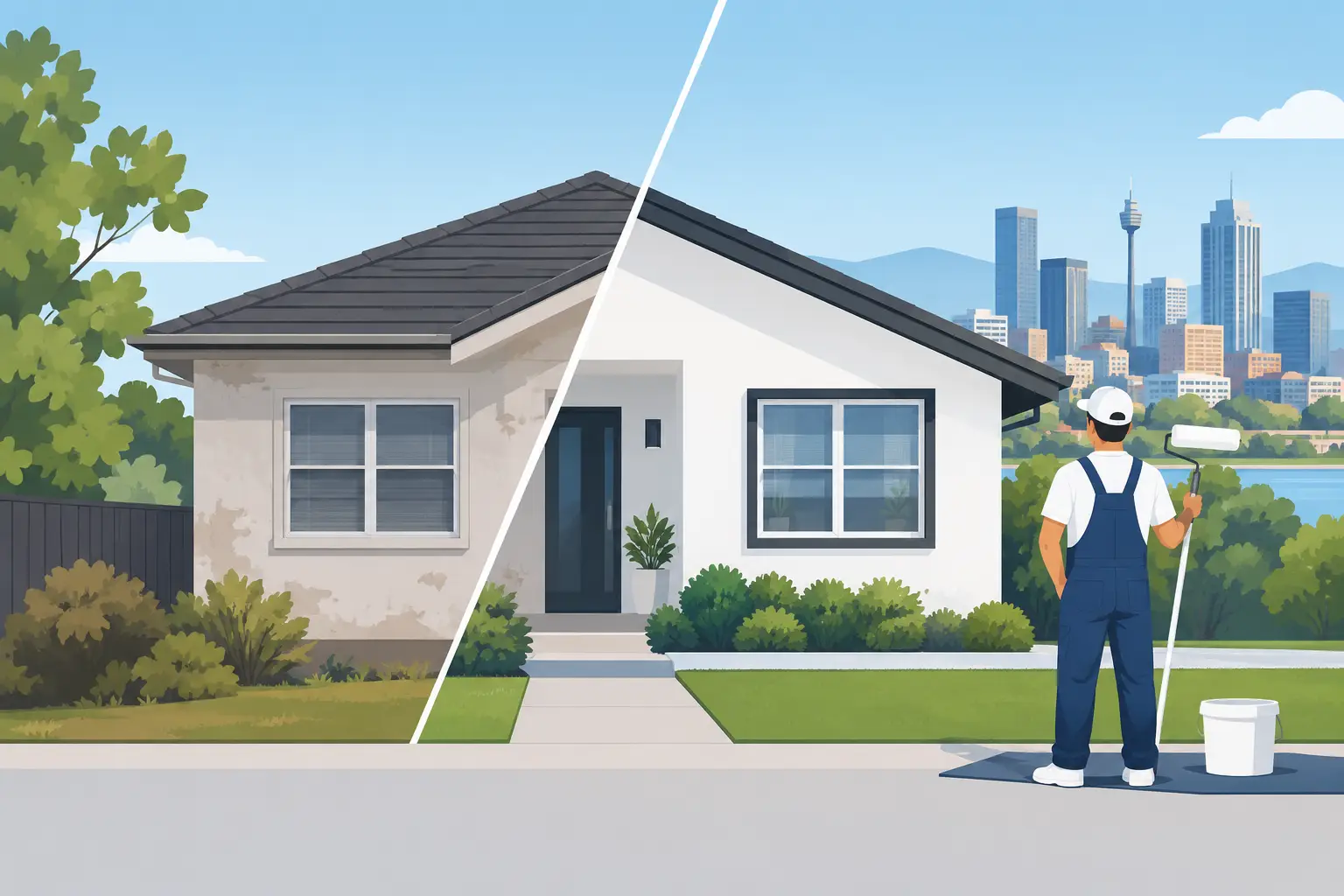
A rental repaint is rarely just a matter of rolling fresh white paint over a few marked walls. This rental repaint example shows what a proper between-tenancy refresh can involve: assessing the condition of the property, repairing the damage that will show through a new coat, choosing practical colours, and leaving the home clean and ready to present.
For landlords and property managers, the goal is straightforward. The property needs to look well cared for, photograph well for advertising, and stand up to the next tenancy without creating avoidable maintenance work. Getting there quickly matters, but rushing the preparation is usually where repaint jobs fall short.
A rental repaint example from inspection to handover
Consider a three-bedroom Adelaide rental property after a four-year tenancy. The walls were generally sound, but the home showed the usual signs of daily living: scuff marks through hallways, picture-hook holes in bedrooms, greasy marks near switches, chipped paint around a bathroom door frame, and uneven touch-ups left from earlier repairs.
At first glance, it looked like a simple repaint. A closer inspection showed why preparation needed to come first. Several wall patches sat proud of the surface, one cornice join had opened slightly, and a small moisture-stained area near a window needed checking before it was painted. Applying new paint over these issues may cover the colour difference for a short time, but it will not produce a smooth or durable finish.
The work began with a clear scope. The landlord chose to repaint the main living areas, hallway, bedrooms and internal trim, while the kitchen cabinetry and tiled bathroom walls remained outside the job. This kept the budget focused on the surfaces that would make the greatest difference to presentation and tenant appeal.
Step one: Protect the property and prepare every surface
Before painting starts, floors, fixed furniture and fittings need protection. Drop sheets, masking and careful removal or covering of switch plates help keep paint where it belongs. A tidy work area is particularly valuable during a short vacancy, when cleaners, carpet installers, photographers and agents may all need access to the property.
The painters then clean the walls where required, especially around light switches, kitchen entry points and high-traffic areas. Dust, hand oils and surface grime can affect paint adhesion. Glossy trim and previously painted doors may also need sanding so the new coating has a sound surface to bond to.
Preparation is not the glamorous part of a repaint, but it is what separates a quick cover-up from workmanship that lasts. Shine Painters Adelaide approaches rental work with the same care as an owner-occupied home: protect the property, fix what needs fixing, and do not paint over problems that should be addressed first.
Step two: Repair holes, dents and failing paint
In this example, the bedrooms had a mix of small nail holes and larger anchor holes from wall-mounted shelves. Small holes were filled, while larger damaged areas were repaired, allowed to dry and sanded flush with the surrounding wall. Any repair that is not feathered properly can become obvious once light hits the finished wall from a window or ceiling fitting.
The chipped paint on the bathroom door frame was scraped back to a stable edge, filled where necessary, sanded and spot-primed. This matters because bare or damaged areas can absorb paint differently from the surrounding surface. Without the correct primer, the repair may flash through as a dull patch or fail sooner in a damp area.
The moisture mark near the window was not simply painted over. The cause needed to be identified first. If it came from an active leak, failed sealant or damaged external surface, that issue should be fixed before redecorating. Once the area was dry and stable, a stain-blocking primer could be used before repainting. Paint is a finish, not a cure for building defects.
Choosing colours that work for a rental property
For most rental repaints, neutral does not have to mean bland. The best colour choice depends on the property, its natural light, existing flooring and the type of tenant it is likely to attract. In this case, a warm off-white was selected for walls because it freshened the rooms without looking cold against the timber-look floors. A clean, durable white was used on ceilings and trim to sharpen the overall result.
A full change to a dark or highly personalised wall colour can add labour and paint costs, particularly when the existing colour is much lighter. It can also make future touch-ups harder if records are not kept. On the other hand, an accent wall may suit a higher-end rental or a property with a clear design style. There is no single colour formula. The sensible choice balances appearance, maintenance and the expected life of the repaint.
For high-use areas, a washable low-sheen wall finish is often practical. It gives a softer appearance than a higher-gloss coating while making routine cleaning easier than a flat finish. Doors, skirtings and architraves generally need a tougher enamel or water-based trim coating that can handle knocks, cleaning and regular use.
Application: where the finish starts to show
Once repairs were smooth, primed and dust-free, the walls received the required coats for even coverage. Painters cut in carefully around ceilings, doors, windows and fixtures, then roll broad wall areas in a consistent pattern to reduce lap marks and uneven texture.
The difference is most noticeable in natural light. A wall can look acceptable at night yet reveal poor patching, roller lines or missed edges during an inspection the next morning. That is why experienced painters check surfaces from different angles rather than relying on one quick look.
In the rental repaint example, the trim was painted after wall preparation and repair work had been completed, with attention given to the door frames that tenants and prospective renters see up close. Clean lines around the frames, skirtings and ceiling edges make a home feel maintained. It is a small detail with a large effect on first impressions.
What this kind of rental repaint can change
By the time the work was complete, the property did not look newly built, nor should a repaint promise to erase every sign of an older home. It looked clean, cared for and ready for its next tenant. The repaired walls were smooth, the dated patchwork touch-ups were gone, and the consistent colour scheme made the rooms feel brighter and more spacious.
That result helps in several practical ways. Good presentation can support stronger listing photos and more confident inspections. A clean, durable finish also gives incoming tenants a clear standard for the property’s condition at the start of their lease. For landlords, documented repairs and a professional repaint can make future maintenance decisions easier because the surfaces have been properly reset.
When a touch-up is enough and when to repaint fully
Not every vacant property needs a full internal repaint. If the existing paint is in good condition and the colour is current, targeted repairs and touch-ups may be the more cost-effective option. The catch is that touch-up paint must match both the original colour and the aged finish. Even paint from the same tin can look different after years of sunlight, cleaning and wear.
A full repaint is usually worth considering when there are widespread scuffs, multiple old patches, faded walls, inconsistent colours between rooms, peeling paint, or a long gap since the last proper maintenance coat. It is also the better option when the property is being repositioned for a higher rental return or sale.
Timing matters as well. Painting should be organised after dusty repair work and before final cleaning, carpets or window coverings where possible. If other trades are involved, clear scheduling avoids fresh paint being damaged by later work. Flexible planning can keep vacancy time down without compromising the finish.
A rental property does not need expensive styling to make a strong first impression. It needs sound repairs, sensible paint choices and careful work from the first preparation step through to the final clean-up. That is the kind of repaint that gives landlords, agents and new tenants confidence when the keys change hands.