
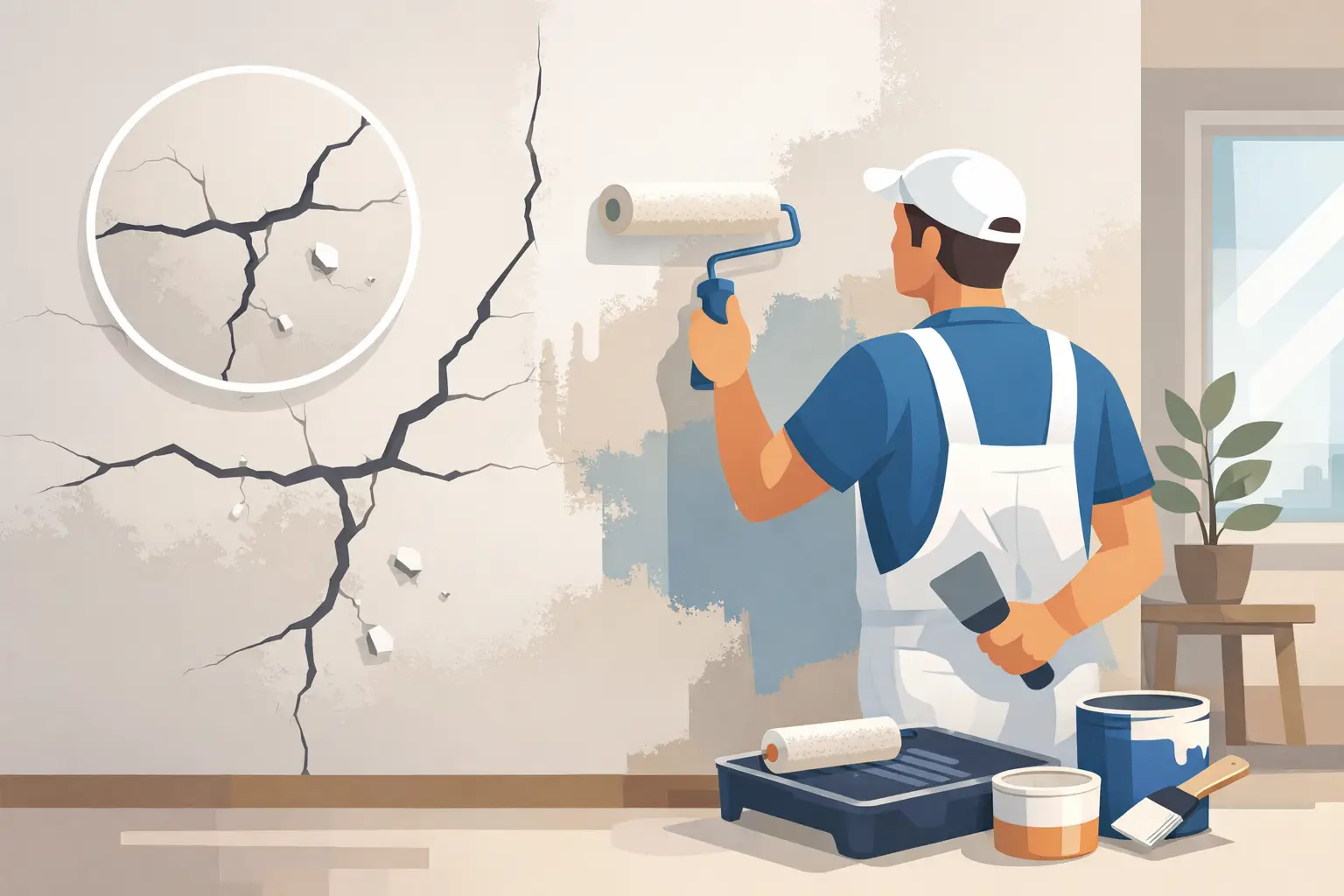
A fresh coat of paint can make a room look cleaner, brighter and more cared for – but if there are visible cracks in the wall, painting straight over them usually ends in disappointment. So, can cracked walls be painted? Yes, but only if the crack is assessed properly and repaired the right way first. If the prep is rushed, the crack often comes straight back through the new paint.
That is the part many property owners do not see until later. The paint might look fine on day one, then a few weeks or months on, the line reappears, the surface lifts, or the finish starts to look uneven in certain light. Good painting is never just about colour. It is about getting the surface right underneath.
Can cracked walls be painted without repairs?
In most cases, no. Painting over a crack without repairing it is usually a short-term cosmetic fix at best. Paint is designed to cover and protect surfaces, not bridge movement or fill damaged areas properly. Even thicker paints have limits, and they will not hide a wall that is already failing underneath.
Hairline cracks are where people are most tempted to take shortcuts. They can look minor, especially in older homes or rental properties where general wear and tear has built up over time. But even small cracks can show through new paint if the surface is not opened, filled, sanded and sealed correctly.
Wider cracks, recurring cracks or cracks that run along joints are a different story again. Those often point to movement, poor plaster joins, settling, moisture issues or past patch repairs that have let go. In those cases, painting is the final step, not the fix.
What causes wall cracks in the first place?
Not every crack means there is a serious structural problem, but not every crack is harmless either. The cause matters because it affects how the wall should be repaired and whether painting will hold up.
In Adelaide properties, cracked walls can come from normal building movement, age, seasonal expansion and contraction, drying of plaster, minor settlement, impact damage or moisture getting into the wall system. Older homes often develop fine cracking around cornices, door frames and plaster joins. Commercial spaces and rental properties can also cop knocks, poor patching and repeated repainting over surfaces that were never properly stabilised.
The size, shape and location of the crack tell you a lot. A thin surface crack in plaster is different from a crack that keeps reopening. A diagonal crack near a window may need more attention than a small straight crack in a low-traffic internal wall. If the wall feels loose, sounds hollow or shows staining, then the issue may go beyond basic cosmetic repair.
When a crack is paintable and when it is not
Some cracks can be repaired, sanded, primed and painted with a durable result. Others need more than a painter alone should cover up.
A wall is usually paint-ready when the crack is superficial, the surrounding surface is stable, and the cause has been addressed or ruled out. That includes standard plaster shrinkage cracks, minor joint movement and small impact-related damage that has not affected the integrity of the wall.
A wall is not ready for painting if the crack is still moving, if there is water damage, or if sections of plaster are loose or crumbling. The same applies if there are repeated cracks in the same spot after previous repairs. Painting over that sort of issue may improve the appearance briefly, but it will not last and it can end up costing more when the job has to be redone.
How cracked walls should be prepared before painting
This is where the finish is won or lost. Proper repair is not just a matter of smearing filler over the line and hoping for the best.
First, the crack needs to be inspected and cleaned out. In many cases, the damaged area is opened slightly so loose material can be removed and the filler can bond properly. If you fill over dust, flaky paint or weak plaster, the repair has very little chance of staying put.
Once the area is sound, the right repair compound is applied. Depending on the crack, this may include joint compound, a flexible filler or reinforcing tape for plasterboard joints. The aim is to create a stable, smooth surface that can handle minor movement without flashing through the paint later.
After that, the repair needs time to dry fully. Then it is sanded smooth and checked under light. This step matters more than most people realise. Walls can look flat until the sun hits them from the side, and suddenly every patch, ridge and dip stands out.
Priming is the next step. Fresh repairs often absorb paint differently to the surrounding wall, so skipping primer can leave dull patches or uneven sheen. A quality primer helps seal the repair and gives the topcoat an even base to sit on. Only then should the wall be painted.
Why cracks often show through fresh paint
One of the most common frustrations is paying for a repaint and seeing the crack again not long after. Usually that comes back to one of three things: poor prep, the wrong repair method, or an underlying issue that was never resolved.
If the crack was not opened and cleaned properly, the filler can fail. If the wrong product was used, it may shrink, harden too much or separate from the wall. If the surface was not sanded and primed correctly, the repair can telegraph through the final finish. And if the wall is still moving, no standard paint job will permanently hide that.
This is why no-nonsense preparation matters. A neat finish is not only about making the wall look smooth on the day. It is about making sure it still looks right after the room is back in use.
Interior and exterior cracked walls are different jobs
Internal wall cracks are one thing. External cracks bring in weather, substrate movement and moisture exposure, which makes the repair process more demanding.
On exterior walls, especially render or masonry, cracks can let water in. Once moisture gets behind the paint film, you can start seeing bubbling, flaking and wider deterioration. In that case, the repair needs to do more than improve appearance. It needs to protect the surface and help prevent further damage.
That is why exterior crack repair often involves different fillers, sealers and coatings to what would be used inside. The wall material also matters. Render, brick, plasterboard and cement sheeting all behave differently, and they should not be treated as if one repair method suits every surface.
Is it worth fixing cracked walls before selling or renting?
Usually, yes. Cracked walls stand out straight away during inspections, open homes and tenancy handovers. Even when the damage is minor, it can give the impression that the property has not been maintained properly.
For landlords and property managers, this matters because presentation affects rental appeal and turnaround time. For homeowners, it affects how clean and finished the home feels. And for commercial premises, wall condition plays into the overall standard clients and customers notice when they walk in.
A proper repair and repaint can lift the whole space, especially when it is done cleanly and with minimal disruption. It is one of those jobs that looks simple from a distance but makes a big difference up close.
Should you DIY or get a professional?
Small, isolated hairline cracks can sometimes be handled as a DIY job if you have the right products, enough patience and a good eye for surface finishing. The problem is that many crack repairs look easy until the paint goes on. That is when poor sanding, overfilling or missed movement starts to show.
If the crack is large, keeps coming back, affects multiple walls, involves render, or sits in a high-visibility area, it is usually better to have it properly assessed and repaired. The same goes for rental properties, sale preparation and commercial spaces where a patchy result creates more hassle than the original crack.
An experienced painting team will know whether the wall needs simple filling, reinforcing, broader patch repair or further investigation before painting starts. That saves guesswork and helps avoid paying twice for the same wall.
At Shine Painters Adelaide, wall repairs and repainting are treated as one job, not two separate tasks. That means the repair work is done with the final finish in mind, so the surface looks right and performs properly after painting.
The real answer to can cracked walls be painted
They can – but only when the repair work matches the cause and the condition of the wall. A crack is not just a line to hide. It is a sign that the surface needs attention before any topcoat goes on.
If you want the paint to last, the wall has to be stable, properly repaired and prepared with care. That is what gives you a finish worth paying for, whether it is one room, a rental refresh or a full property repaint. When cracked walls are handled properly from the start, the end result looks better, lasts longer and saves a lot of frustration later.