
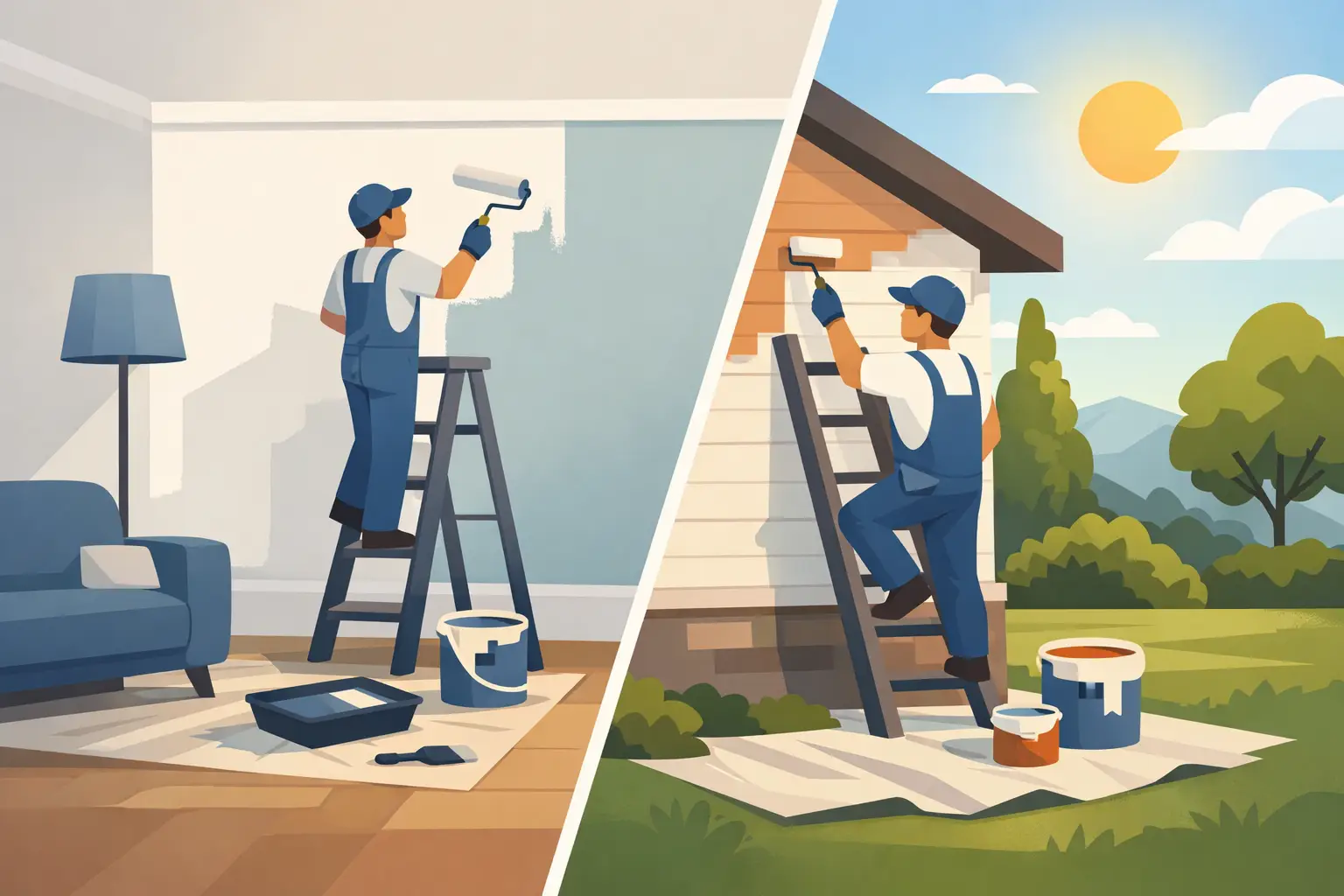
A freshly painted room can transform how a home feels, while a well-painted exterior protects the building from Adelaide’s harsh sun, winter rain and everyday wear. Although the finished result may look similar, interior versus exterior painting involves different products, preparation methods and working conditions. Treating them as the same job is one of the quickest ways to end up with peeling paint, patchy coverage or a finish that does not last.
For homeowners, landlords and business owners, understanding the difference helps with planning, budgeting and choosing the right solution for each surface. The best paint job is not simply about picking a colour. It starts with knowing what the surface needs before the first brushstroke.
Interior versus exterior painting: the main difference
Interior paint is designed for appearance, cleanability and everyday living. It needs to stand up to scuffs, fingerprints, cooking residue, steam and regular cleaning without making rooms smell strongly for days. Exterior paint has a tougher job. It must cope with UV exposure, temperature changes, moisture, wind-blown dust and movement in the building materials underneath it.
That means exterior coatings are generally more flexible and weather-resistant. They are formulated to expand and contract as timber, render, metal and masonry respond to changing conditions. Interior coatings focus more on achieving a smooth, even finish with the right level of sheen for the room and surface.
Using exterior paint inside is rarely a good shortcut. It can have a stronger odour, take longer to cure and create an unnecessarily hard-looking finish. Using interior paint outside is worse – it usually breaks down quickly when exposed to sun and weather.
Preparation sets the standard for both jobs
Whether the work is indoors or outdoors, preparation is where durable results are won or lost. Paint will not hide loose material, failed old coatings, dents, water damage or surface contamination for long. A neat finish depends on a stable, properly prepared base.
Interior surface preparation
Indoor walls often need more repair work than people expect. Small dents, picture-hook holes, cracks around cornices and stains can all show through a new coat, especially under natural light. Walls should be cleaned to remove dust, grease and residue, then filled, sanded and spot-primed where required.
Bathrooms, laundries and kitchens need extra attention. Steam, mould and cooking grease can affect adhesion, so these areas may require specialised cleaning and suitable mould treatment before painting begins. Water stains on ceilings or walls should also be investigated first. Painting over an active leak only hides the problem temporarily.
Protection and cleanliness matter indoors as much as the coating itself. Floors, furniture, benchtops and fittings need to be covered properly, and careful cutting-in keeps paint where it belongs. For rental properties and commercial premises, organised preparation also helps keep disruption to a minimum.
Exterior surface preparation
Outside, preparation is often more demanding because surfaces have been exposed to the elements for years. Peeling paint needs to be scraped back, chalky surfaces cleaned, and loose render repaired before new paint is applied. Timber may need sanding, filling or treatment, while metal requires careful removal of rust and the correct primer.
Brick, rendered walls, fences, eaves, fascia boards and decks all behave differently. A deck coating needs to handle foot traffic and moisture. Render may need crack repairs and an appropriate sealer. Aluminium and other metal surfaces need products that adhere properly rather than flaking away after a season or two.
Pressure washing can be useful for removing dirt and loose material, but it is not a complete preparation method on its own. The surface must be allowed to dry fully, then checked for defects that washing may reveal. Rushing this stage can trap moisture beneath the coating and cause early failure.
Paint finish and colour choices serve different purposes
On interior walls, sheen level affects both appearance and maintenance. Lower-sheen finishes help disguise minor imperfections and suit many living areas and bedrooms. Washable low-sheen paints are practical for hallways and family spaces, while satin or semi-gloss finishes are often used on doors, trims and skirting boards because they are easier to wipe clean.
Exterior finishes are chosen around exposure and substrate. Lighter colours can help reduce heat absorption on sun-exposed walls, while dark colours may suit selected features but can make surface movement and fading more noticeable. The right colour also needs to work with roof tones, paving, fencing and surrounding homes, particularly when preparing a property for sale.
Colour selection is never only about trends. A bright white interior can make a room feel open, but it may show marks quickly in a busy rental. A deep exterior colour can look sharp, but it needs the right product and surface preparation to perform well in Adelaide conditions. Practical advice at the start can prevent expensive changes later.
Weather and timing change exterior painting
Interior projects can usually be scheduled year-round, provided rooms are ventilated and the surfaces are dry. Exterior work relies far more heavily on weather. Rain, high humidity, very cold mornings and extreme heat can all affect drying times and adhesion.
Adelaide’s hot, dry periods need particular care. Paint applied to a surface that is too hot can dry too quickly, making it harder to maintain an even finish. It may also affect how well the coating bonds. Good planning considers the forecast, the direction each wall faces and the time of day work is carried out.
This is one reason an exterior job should not be judged only by how quickly it is finished. Allowing for proper drying between coats and adjusting the schedule around weather gives the paint system the best chance of doing its job for years.
Costs depend on more than square metres
Interior painting is often priced around room size, wall condition, ceiling height, trim work and the amount of repair required. A simple repaint of clean, sound walls is very different from restoring damaged plaster, repainting detailed timberwork or working around occupied rooms.
Exterior painting costs are influenced by access, height, surface condition and the type of materials involved. Two homes with the same footprint can require very different amounts of work if one has peeling timber, cracked render, rusted metal or difficult access around a sloping block.
An honest quote should account for preparation, suitable primers, quality coatings, application and final clean-up. The cheapest option can become costly if it skips repairs or uses paint that is not suited to the surface. A properly scoped job provides a clearer picture of what is being done and why.
When professional painting makes the difference
Some small indoor touch-ups are manageable for a capable owner. Full repaints, damaged walls, high ceilings, exterior restorations and occupied commercial spaces often benefit from professional planning and application. The work involves more than rolling paint onto a wall: it requires product knowledge, safe access, tidy masking, repair skills and the discipline to prepare every surface properly.
For landlords and real estate professionals, a reliable painter can also make turnaround work less stressful. Coordinating wall repairs, repainting, timber coatings and final presentation through one team helps keep the property on track for incoming tenants or sale inspections.
Shine Painters Adelaide approaches interior and exterior work as separate systems with one shared standard: no shortcuts on preparation and no compromise on a clean, durable finish. The right paint, applied to a sound surface at the right time, gives your property something better than a quick refresh – it gives it lasting protection and a result you will be proud to show off.