
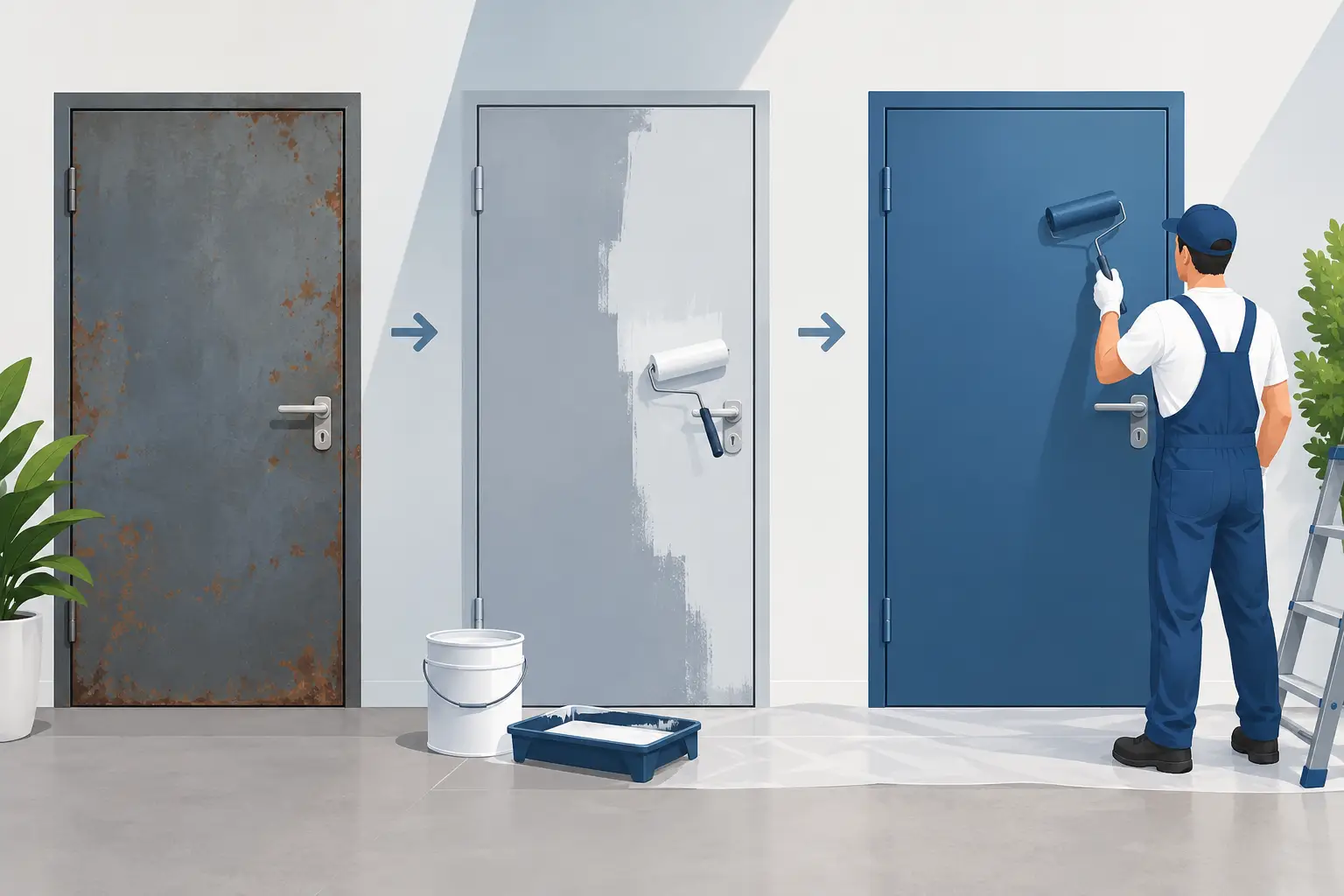
A metal door can look tired long before it stops doing its job. Flaking paint, rusty edges, chalky colour and hand-marked panels can make an otherwise well-kept home, rental or commercial property feel neglected. A proper metal door repainting process restores the appearance, but more importantly, it seals out moisture and helps prevent corrosion from spreading beneath the coating.
The visible paintwork is only the final part of the job. Long-lasting results come from identifying the metal, dealing with rust properly and using compatible primers and topcoats. Skipping those steps may save time on day one, but peeling, bubbling and rust bleed-through often follow soon after.
Start by assessing the door and its condition
Not every metal door needs the same treatment. Steel security doors, garage doors, wrought iron gates, aluminium entry doors and galvanised steel frames each respond differently to preparation and paint. The condition of the existing coating matters just as much.
A door with sound paint that is simply faded may only need a thorough clean and a light sand before recoating. If the paint is peeling, the metal is rusting or previous coats are cracking, more extensive preparation is needed. Rust around lower edges, welds, hinges and fixings deserves particular attention because these areas hold moisture and are often the first places to fail.
For older properties, it also pays to take care before sanding heavily painted surfaces. Older coatings may contain lead. If there is any doubt, have the paint assessed and use safe preparation methods rather than creating dust around the property.
Preparation is the heart of the metal door repainting process
A clean, stable surface gives paint something reliable to bond to. This is where a professional job separates itself from a quick coat applied over grime and loose paint.
The door is first washed to remove dirt, salt residue, oil, cobwebs and chalky paint. Entry doors often carry invisible oils from hands and cleaning products, while commercial doors can collect grease, dust and scuff marks. A suitable degreaser and clean water remove contaminants that can stop primer from adhering properly.
Once dry, loose and failed paint is scraped away. The remaining coating is feather-sanded so there is no sharp ridge between bare metal and existing paint. This makes the finished surface smoother and reduces the chance of old paint edges showing through the new coat.
Treat rust before it spreads
Rust cannot be painted away. If corrosion is left underneath a fresh coating, it will keep working and eventually push the paint off from below.
Surface rust is generally removed by sanding, wire brushing or mechanical abrasion until clean, firm metal is exposed. Pitted areas may need extra attention, as rust can sit deep in small holes and seams. After dust is removed, a rust-inhibiting treatment or suitable metal primer is applied without delay. Bare steel can begin to oxidise again quickly, particularly in damp conditions.
Where rust has caused holes, weakened sections or serious deterioration around the frame, repainting alone is not the answer. The affected metal may need repair or replacement first. This is especially relevant for security doors, external fire doors and commercial access doors, where function and safety matter as much as appearance.
Choose primers and paints that suit the metal
The right coating system depends on the door material and where it sits. An exterior steel door exposed to Adelaide sun and winter rain needs a different approach from an internal metal storeroom door with light foot traffic.
Bare or rust-treated steel generally needs a purpose-made metal primer with corrosion resistance. Galvanised metal and aluminium can be more difficult because their smooth surfaces do not always accept standard primers well. They need careful cleaning, light abrasion and a primer designed specifically for non-ferrous or galvanised surfaces.
For the finishing coats, quality exterior enamel or water-based metal paint can both work well when used over the correct primer. Traditional oil-based enamels can offer a hard finish and good flow, but they take longer to dry and can have a stronger odour. Premium water-based systems dry faster, have lower odour and hold colour well, which can be useful for occupied homes, rental turnarounds and businesses that need minimal disruption.
Gloss level is also a practical decision. Gloss is easy to wipe clean and suits many entry doors, but it shows dents, brush marks and uneven preparation more readily. Satin or semi-gloss is often more forgiving while still offering a neat, washable finish. A matte coating can look modern, though it may mark more easily on frequently handled doors.
Remove hardware where practical and protect the area
A clean finish around handles, locks, weather seals and hinges is difficult to achieve if everything is painted around in a hurry. Where practical, hardware is removed or carefully masked. The surrounding frame, glass panels, paving and nearby walls are protected before painting starts.
For an operational front door or business entry, the work also needs planning. The door may need to remain partly accessible, or painting may need to be scheduled outside trading hours. Drying times, security requirements and weather all affect the best approach. A door should not be closed against a fresh coating before it has cured enough, or the paint can stick and tear away.
Apply the coating evenly, not heavily
A metal door needs even coverage rather than one thick coat. Heavy paint can sag on vertical panels, gather around edges and take longer to cure. Two controlled topcoats normally give better colour depth, protection and appearance than one overloaded coat.
Brushes are useful for edges, mouldings and detailed sections. Rollers help create an even finish on broad flat panels, while spray application can provide a very smooth result when the site, ventilation and masking allow for it. The best method depends on the design of the door and how much protection is needed around it.
Each coat needs the drying time recommended for the product and the day’s conditions. Adelaide heat can make paint dry quickly on the surface, but that does not always mean it has cured underneath. Direct sun, wind and very hot metal can also make application harder, so timing the work for cooler parts of the day often produces a better finish.
Check the details before calling the job complete
The final inspection is more than a quick look from the footpath. Check edges, lower rails, corners, hinge sides and areas behind handles for missed spots or thin coverage. Confirm that the door opens and closes freely, weather seals sit correctly and paint has not bridged moving parts.
Any removed hardware should be refitted carefully once the coating has dried sufficiently. Rubbish, sanding dust and masking materials should be cleared away so the area is ready to use, not left for the owner to sort out later.
When professional repainting is the sensible option
A straightforward metal door can be a manageable DIY task if the paint is sound and the surface is easy to access. But professional help is often worthwhile when rust is widespread, the door has detailed metalwork, access is difficult, the coating system is unknown or the door is part of a busy commercial premises.
For landlords and real estate agents, it can also make sense to have the work completed properly in one visit rather than returning to fix peeling paint during the next tenancy. Experienced painters can handle repairs, preparation, masking and coating selection as one organised job. Shine Painters Adelaide takes that no-shortcuts approach, with tidy work practices and coatings selected for the surface rather than a one-paint-fits-all solution.
A freshly painted metal door should look sharp, open smoothly and stand up to daily use and changing weather. Give the surface the preparation it deserves, and the finish will keep doing its job long after the paint smell has gone.