
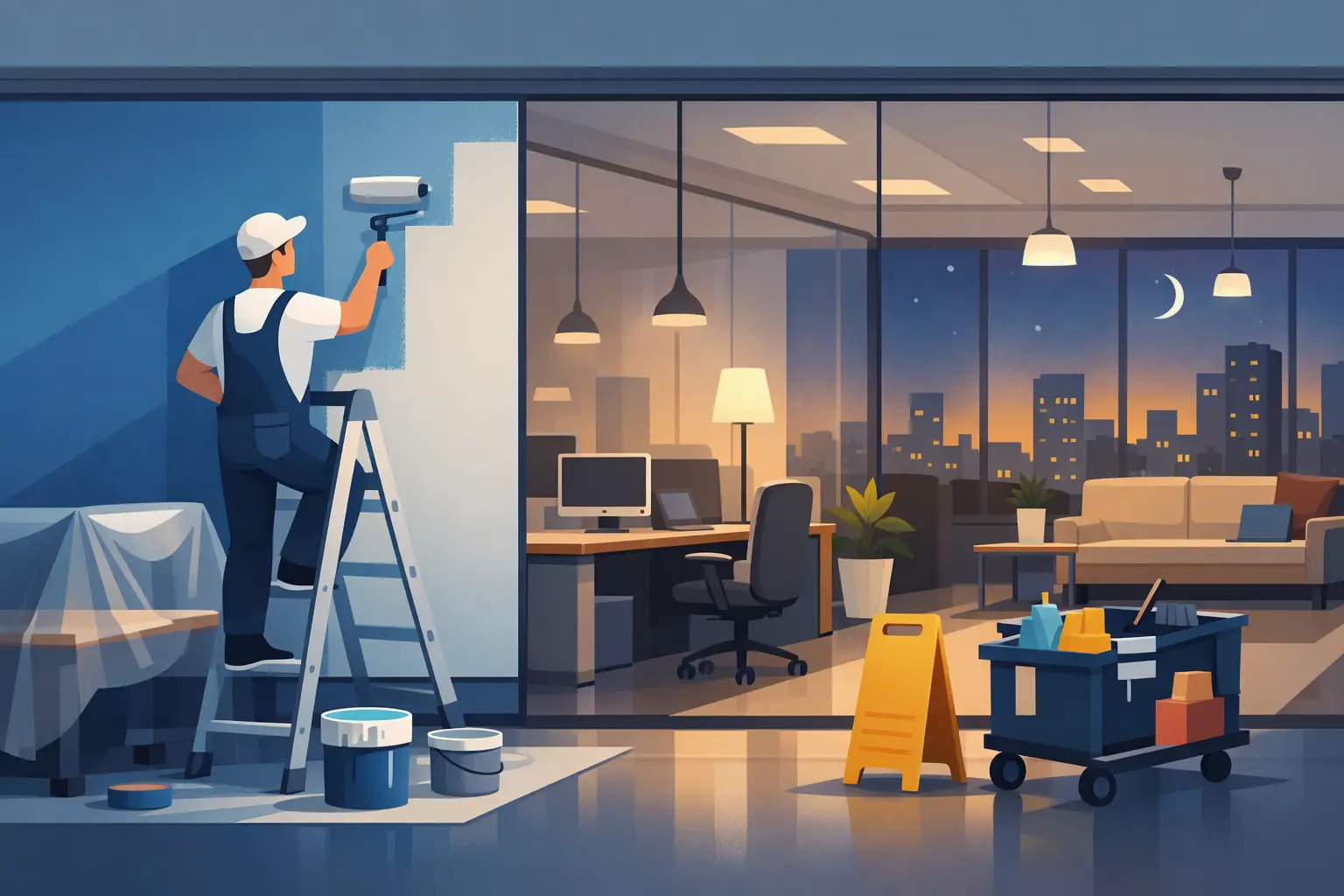
A tired reception wall, scuffed corridors or a dated boardroom can make a business look less cared for than it is. Office repainting after hours gives Adelaide businesses a practical way to refresh their workplace without closing the doors, moving staff off-site or putting normal trade on hold.
The job still needs to be planned properly. Painting at night is not simply a matter of arriving later with a few rollers. Access, safety, drying times, odours, security and cleaning all need to be managed so the office is ready for staff and clients the next morning.
Why repaint an office after hours?
For most businesses, the main benefit is continuity. Your team can work their normal hours while painters complete preparation, repairs and coating work in vacant areas. This is especially useful for offices with customer-facing reception areas, meeting rooms that are booked most days, medical and professional suites, and workplaces where moving desks during business hours is not realistic.
After-hours work can also make the painting process safer and neater. With fewer people moving through the building, there is less risk of someone brushing against a freshly painted wall, walking through a protected area or tripping over drop sheets. Painters can mask glass, cover floors and move equipment through hallways without disrupting staff.
There is a trade-off. Night work requires clear access arrangements and a reliable schedule. Some buildings have strict lift, loading dock or security rules outside normal hours. If a large area needs extensive wall repairs or several coats, the project may still need to be staged across multiple evenings or a weekend. A professional painter will set expectations early rather than promise an unrealistic overnight turnaround.
Planning office repainting after hours properly
A good result begins before the first tin is opened. The painter should inspect the condition of walls, ceilings, trims and doors, identify repairs, confirm the paint system and work out how each area can be accessed. Scuffs and light marks may need only cleaning and repainting, but peeling paint, water staining, dents or damaged plaster need proper attention before new paint goes on.
Colour choices matter in a working office too. Crisp whites can brighten enclosed rooms, while softer neutrals often hide minor marks better in busy corridors. Dark feature colours can add character in a reception or meeting room, but they need careful application and enough drying time between coats to avoid patchiness. The best option depends on natural light, existing flooring, branding and how hard the area is used.
Set a realistic work sequence
Rather than trying to paint the entire office at once, experienced painters usually work zone by zone. A typical sequence might begin with an empty meeting room, continue through reception after closing, then move to offices or shared spaces once staff have cleared their desks.
This approach keeps disruption low and gives each surface the right preparation time. It also means a business can keep essential rooms available. For example, a legal practice may need its client meeting room every morning, while a larger office may be able to rotate staff between floors or departments.
Before work starts, confirm who will provide keys, alarm instructions, after-hours contact details and access to parking, lifts and amenities. Sensitive documents, computers and personal items should be secured or moved away from work areas. Desks do not always need to leave the room, but they should be cleared enough for furniture to be shifted and covered correctly.
Preparation is where durable work starts
Fresh paint will not hide every problem. Walls need to be cleaned, loose paint removed, cracks filled, damaged plaster repaired and rough patches sanded smooth. Glossy trims and doors may need sanding and priming so the new coating adheres properly.
This preparation is particularly important in high-traffic workplaces. Corridors, kitchens, reception counters and door frames collect fingerprints, trolley marks and knocks. Using a suitable hard-wearing paint finish in these areas can make routine cleaning easier and help the repaint last longer.
A tidy crew should protect carpets, hard flooring, furniture, data points and fixtures before work begins, then remove coverings and rubbish at the end of each shift. The aim is not merely to leave a room painted. It is to leave it clean, functional and ready to use.
Managing paint odours, drying and air quality
Modern low-odour, low-VOC paints are a sensible choice for many office interiors, especially where staff return soon after painting. They can reduce lingering smells, but they do not remove the need for ventilation and sensible drying times. Windows, air-conditioning settings and building ventilation should all be considered before the work is scheduled.
Paint that feels dry to touch is not always fully cured. Doors, cabinetry and heavily used trims can be vulnerable to marks if they are handled too soon. A careful plan allows enough time between coats and avoids putting furniture back against walls before the paint has properly settled.
If the office has employees with sensitivities, a childcare-related tenant, a medical use or limited ventilation, discuss this upfront. In some cases, weekend painting or completing the work in smaller stages is the better call. The right schedule is the one that protects the finish and the people using the space.
Security and safety do not stop at closing time
After-hours painters are working in a business premises when the usual staff are gone, so trust and process matter. The contractor should be licensed and insured, use safe work practices and have a clear arrangement for locking up, alarms and reporting any issue that arises during the shift.
Clear communication is just as important as the painting itself. Building management may need notice for lift use, visitor parking, rubbish removal or access to common areas. If painters are working near a shared entry, footpath-facing windows or a tenancy boundary, the area should be protected and left presentable for the morning.
At Shine Painters Adelaide, this practical side of the job is treated as part of the workmanship. A neat finish means little if staff arrive to uncovered furniture, a blocked entry or avoidable mess.
When after-hours painting may not be the best option
After-hours painting suits many offices, but not every project. Large-scale ceiling work, major plaster repairs, water damage treatment or full-floor repainting may require more drying time and access than an evening allows. Trying to rush these jobs can compromise preparation and lead to a shorter-lasting result.
A vacant period, public holiday or weekend can be more efficient for bigger projects. It may also reduce cost where a crew can work a longer continuous shift rather than repeatedly setting up and packing down each night. On the other hand, a small reception repaint or a few offices can often be completed after hours with minimal impact on the business.
The answer depends on the condition of the surfaces, the size of the premises, how much access is available and how quickly each room needs to return to service. An honest site assessment is worth more than a one-size-fits-all promise.
What to ask before booking the work
Ask how the painter will protect furniture and flooring, what repairs are included, which paint products are proposed and how long each area should remain clear. You should also know whether the quote covers after-hours labour, cleanup, rubbish removal and touch-ups once the job is complete.
It is worth confirming the finish level as well. A premium office repaint should have consistent coverage, clean cut-in lines, smooth repaired walls and no paint splashes on carpets, glass, switches or fittings. These details are what staff and clients notice when they walk in.
A refreshed office does more than cover scuffs. It shows clients that the business is organised, gives staff a cleaner place to work and protects the surfaces that take daily wear. With the right preparation and a schedule built around your operations, the work can be done while the office is quiet and be ready for the next working day.