
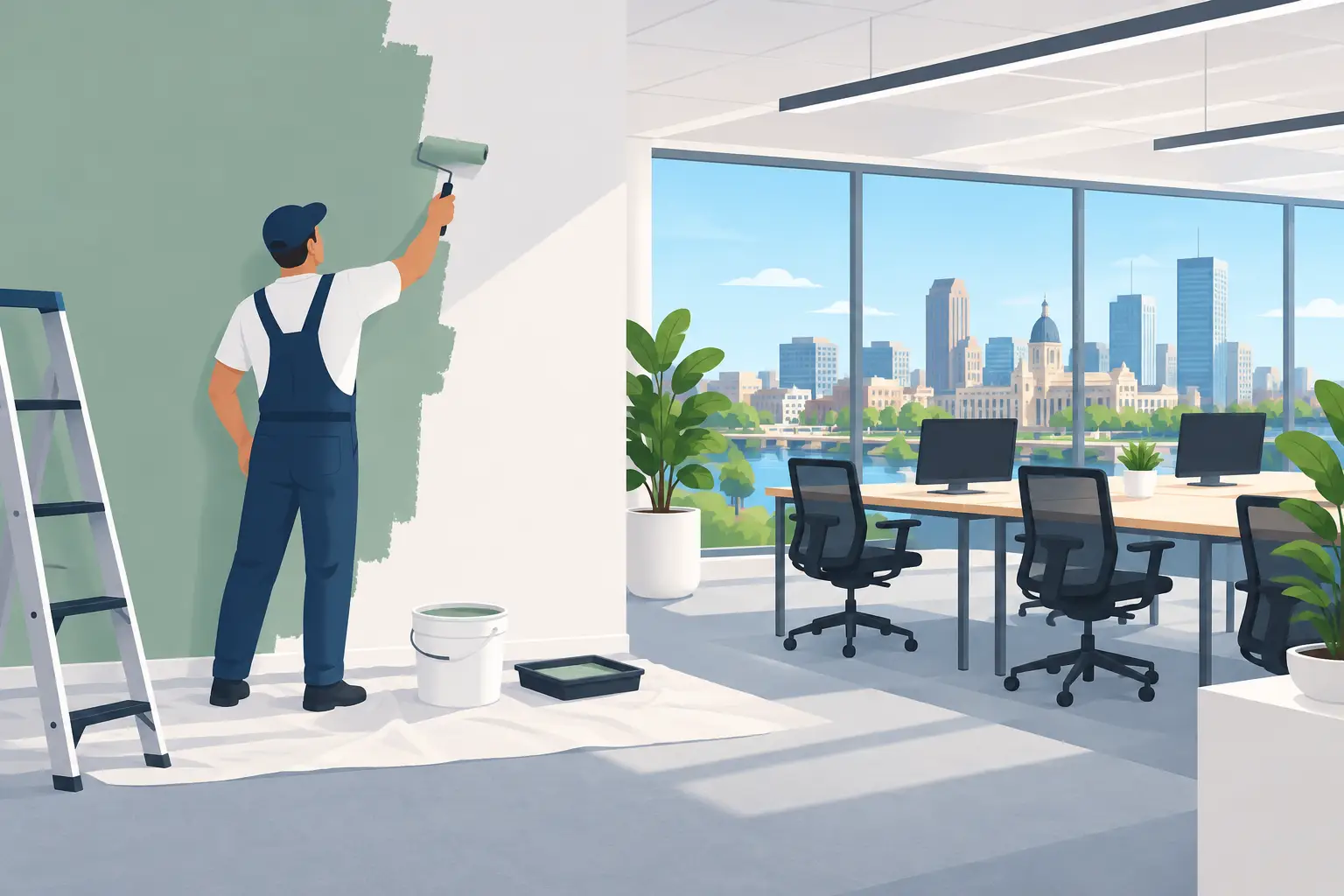
A worn office can send the wrong message before a client reaches reception. Scuffed corridors, marked meeting-room walls and tired colours also affect how staff feel during a long week at work. This office repainting case study looks at how a well-planned commercial repaint can lift a workplace without bringing day-to-day operations to a halt.
The project below is based on the sort of repainting work Adelaide businesses regularly need: an occupied office with visible wear, limited downtime and no room for messy shortcuts. The lesson is simple. A durable result starts well before the first coat goes on.
The brief: refresh the office without stopping work
The office was a medium-sized professional workplace with a reception area, open-plan desks, several meeting rooms, private offices, a kitchen and connecting corridors. The existing light-coloured walls had been in place for years. They were marked around door frames and switches, chipped along corners, and stained in the busiest walkways.
The business wanted a cleaner, more current look before hosting clients and recruiting new staff. It did not want a dramatic fit-out or weeks of disruption. The brief was to repair the damaged areas, repaint the interior and work around the team’s normal schedule.
That last point shaped the entire job. Repainting an empty premises is straightforward. Repainting a working office takes planning, clear communication and tradespeople who keep the site tidy every day.
What the inspection uncovered
At first glance, the office appeared to need little more than fresh paint. A proper inspection showed why that approach would not have lasted. There were small plaster cracks near a doorway, dents from moving chairs and equipment, old adhesive marks, loose paint around a few window trims and uneven patches from past touch-ups.
Painting over those issues would have made them more noticeable once the new finish dried. Gloss levels change under office lighting, and even small surface defects can stand out on a freshly painted wall. The preparation stage therefore included patching, sanding, spot priming and feathering old paint edges so the repaired sections sat flat with the surrounding wall.
The team also checked for the practical issues that can slow a commercial job down: access to rooms, furniture placement, ventilation, security procedures and where painting equipment could be stored safely overnight. Sorting these details early helps avoid last-minute decisions that cost time and inconvenience staff.
Choosing colours that work across the whole office
The colour plan needed to look professional rather than trendy for the sake of it. A soft warm neutral was selected for most walls, replacing the tired cool tone that made the office feel flat under fluorescent lighting. It gave the reception and open work areas a brighter, more welcoming feel without making the space look stark.
Meeting rooms received a slightly deeper feature colour on one wall to create definition behind screens and presentation areas. High-contact trims and doors were finished in a hard-wearing low-sheen coating that would be easier to clean than the old paintwork.
Colour choice depends on the workplace. A creative studio may suit stronger accents, while a medical, legal or property office may need a calmer and more neutral scheme. The important thing is testing colours in the actual room, with its own natural light and artificial lighting, before committing to the full job.
The office repainting case study schedule
To keep disruption low, the repaint was split into workable stages. Reception and meeting rooms were scheduled first, then private offices, followed by open-plan zones and corridors. Staff were advised in advance about which areas would be unavailable and when furniture needed to be moved.
Preparation and painting were completed outside peak working periods where possible, with quieter tasks handled during office hours. Drop sheets protected floors and furniture, while work areas were kept contained so dust and paint equipment did not spread across the premises. At the end of each shift, equipment was packed away and the site was left orderly for the next business day.
There is always a trade-off between speed and access. Completing every room at once can shorten the overall programme, but it can also make the office harder to operate. Staging the work takes more coordination, yet it allows staff to keep working with fewer interruptions. For most occupied Adelaide offices, the staged approach is the better value choice.
Preparation made the finish last
The visible result came from the paint, but the quality of the job came from what happened underneath it. Damaged plaster was repaired before any topcoat was applied. Sanded areas were sealed, stains were spot primed, and surfaces were cleaned to remove dust, hand marks and residue that could affect adhesion.
Edges around skirtings, window frames, doors and ceilings were carefully cut in for clean lines. This matters in commercial interiors, where rushed edges can make an otherwise decent repaint look unfinished. Two consistent coats were then applied where required to achieve even coverage and the correct depth of colour.
Using the right product also mattered. Busy office corridors and communal areas need finishes that can cope with regular cleaning. A cheaper paint may reduce the upfront quote, but it can mark easily, show roller patches or need repainting sooner. The best option depends on traffic levels, existing surfaces and how the office is used, not simply on the lowest price per litre.
The result: a cleaner, more professional workplace
Once the work was complete, the difference was immediate. The repaired walls looked smooth rather than patched, the refreshed neutral palette improved the light through the office, and the darker meeting-room accents gave those spaces more purpose. Doors, trims and high-contact areas had a cleaner, tougher finish built for daily use.
Just as importantly, the project was delivered without a prolonged shutdown. Staff could continue using the office in stages, and client-facing areas were kept presentable throughout the process. That is often the real measure of a successful commercial repaint: the business gets a proper finish while its work continues.
A repaint will not solve every workplace issue. Poor lighting, worn flooring and outdated furniture may still need attention. But walls cover a large share of what people see, and a clean, considered paint finish can make existing fittings and furniture look better than they did before.
What office managers can take from this project
Before requesting a quote, walk through the office as a visitor would. Look closely at reception, boardrooms, corridors, kitchens and doorways. These areas tend to show wear first and have the greatest effect on first impressions.
Be clear about timing from the beginning. Let your painter know which areas must stay operational, whether after-hours work is possible, and if there are building management rules, lift bookings or security requirements. Good scheduling is not an extra. It is part of doing commercial painting properly.
It also pays to include repairs in the scope rather than treating them as an afterthought. Cracks, dents and peeling sections do not disappear under fresh paint. Addressing them properly gives the final coating a sound base and helps the office stay sharp for longer.
For Adelaide businesses, Shine Painters Adelaide approaches office repainting with the same focus: honest planning, careful preparation, neat work and finishes made to handle real daily use. The aim is not to rush a coat over tired walls. It is to leave you with a workplace your staff feel good walking into and clients are confident walking through.