
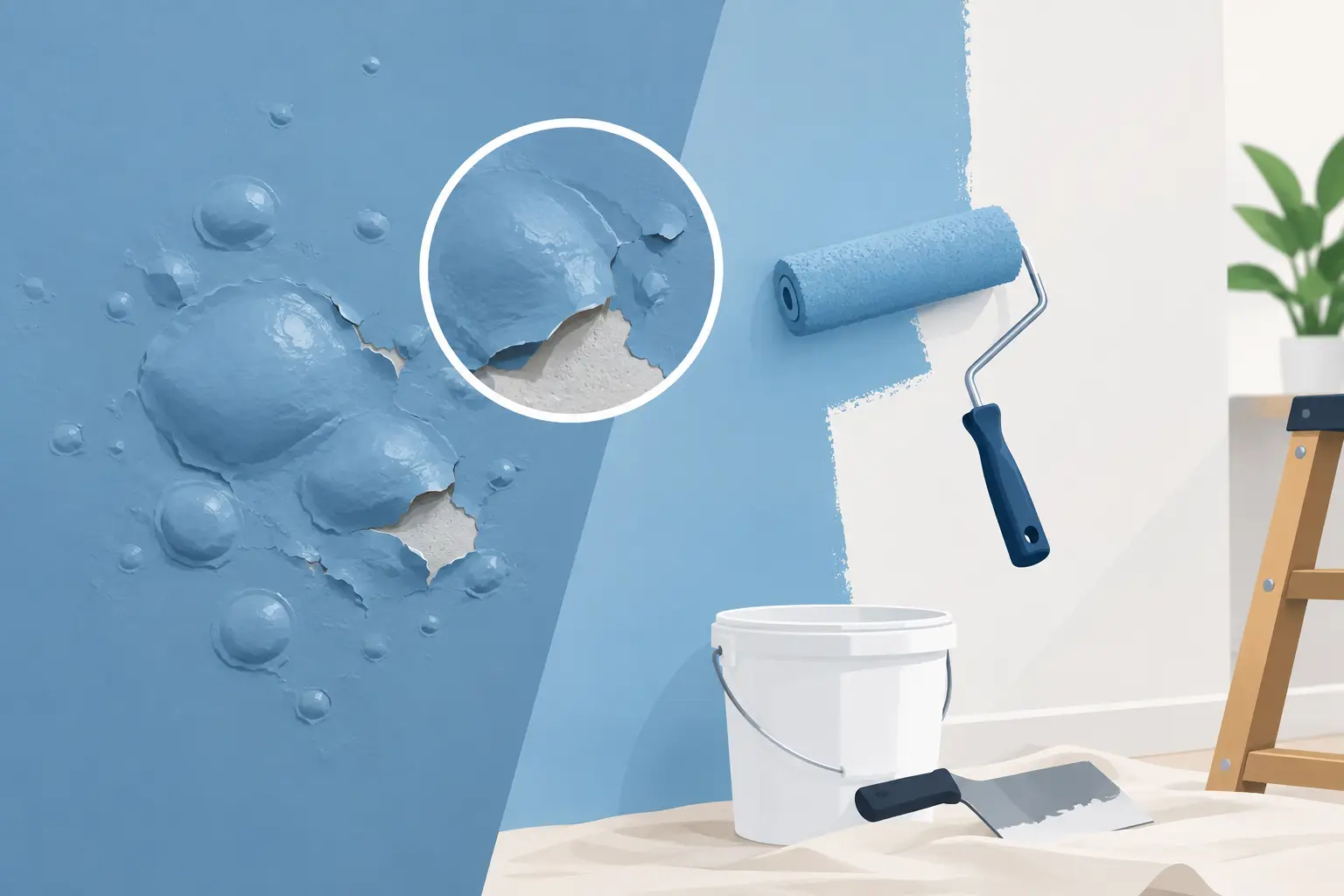
Paint blistering is more than an untidy patch on a wall, ceiling or exterior trim. Those raised bubbles mean the coating has lost its grip on the surface beneath it. Sometimes the cause is as simple as painting in harsh heat. More often, it is a warning that moisture, poor surface preparation or an incompatible coating needs attention before the finish gets worse.
For Adelaide property owners, blistered paint is particularly common on sun-exposed exterior walls, weatherboards, fascias, metalwork and older rendered surfaces. Inside, it can show up around bathrooms, laundries, kitchens, windows and ceilings after a leak. The right repair is not to paint over the problem. It is to identify why the paint failed, repair the surface properly, then apply a coating system suited to the area.
What causes paint blistering?
A blister forms when pressure builds underneath a paint film or when the paint cannot bond correctly to the surface. The bubble may feel soft, hollow or firm depending on what is trapped beneath it. Once it breaks, the paint often peels away in flakes, exposing bare plaster, timber, render, brick or metal.
Moisture behind the coating
Moisture is one of the most common causes. Water can enter through a leaking roof, cracked render, failed sealant around windows, plumbing leaks, overflowing gutters or poor drainage. It may also be moisture vapour moving through a wall from a bathroom, laundry or damp subfloor.
When moisture is trapped behind the coating, heat can turn it into vapour and push the paint away from the surface. Repainting without finding the source may make the wall look better for a short time, but the blistering is likely to return.
On exterior surfaces, look closely at where the damage occurs. Blisters concentrated under eaves can point to overflowing gutters or roof issues. Damage around a window may mean failed caulking, cracked masonry or water getting in behind the frame. A professional inspection should always consider the building issue as well as the paint issue.
Painting in heat or direct sun
Adelaide summers can be tough on exterior paintwork. If paint is applied to a hot wall or in direct afternoon sun, the top layer can dry too quickly while solvents or moisture remain underneath. This can cause small bubbles and poor adhesion.
The same issue can happen when a dark-coloured surface becomes extremely hot after painting. A quality exterior coating helps, but no product can compensate for unsuitable application conditions. Experienced painters plan work around the weather, move with the shade where practical and follow the manufacturer’s temperature and drying requirements.
Poor preparation or surface contamination
Paint needs a clean, sound surface to hold on to. Dust, chalky old paint, oil, grease, mould, salt residue and loose material all interfere with adhesion. This is especially relevant for kitchen walls, garage interiors, aluminium, steel gates and previously painted exterior timber.
A wall can appear clean and still have a powdery surface. If you can wipe colour or white chalk onto your hand, the old coating needs proper cleaning and stabilising before repainting. Skipping this stage is a shortcut that often leads to peeling, bubbling and an uneven finish.
Incompatible products or rushed recoating
Not every coating works over every surface. Applying a water-based paint over an unsuitable older coating, missing the right primer on metal or timber, or using the wrong product on damp masonry can lead to paint failure.
Rushed recoating can also cause problems. Paint may feel dry to touch but still need more time before another coat is applied. If the layer beneath has not cured sufficiently, solvents can become trapped and create blistering. This is why product selection, primer choice and drying times matter just as much as the final coat colour.
How to assess blistered paint before repairs
The location and pattern of the bubbles give useful clues. A few small blisters on a west-facing wall after a very hot day may be related to heat during application. Widespread blistering on an internal ceiling deserves more urgent attention, as it could indicate an active roof or plumbing leak.
Pressing on the affected area can help, but do not rely on appearance alone. If the surface feels damp, has staining, mould growth or a musty smell, treat moisture as the first priority. On older homes, large areas of peeling paint can also reveal several past coatings failing together, which may require more extensive preparation than a simple touch-up.
For landlords and property managers, it is worth addressing the cause before a tenancy changeover. A quick repaint over damp or loose paint may create a complaint and a repeat maintenance job within months. Proper preparation is usually better value than paying twice for the same wall.
Repairing paint blistering properly
A lasting repair starts only once the surface is dry and the underlying cause has been resolved. That may mean repairing a leak, replacing failed exterior sealant, clearing gutters, improving ventilation or allowing recently repaired plaster to dry fully.
The loose paint then needs to be scraped back to a firm edge. Sanding feathers that edge into the sound surrounding coating, so it will not show through the new finish. Any damaged plaster, timber rot, cracks in render or corroded metal should be repaired before paint is applied.
After cleaning away sanding dust, the exposed surface needs the right primer. Bare timber, patched plaster, metal, brick and render all have different requirements. A suitable primer seals the repair, improves adhesion and helps the topcoats dry evenly. Two quality finish coats then provide the colour and protection the surface needs.
Small isolated blisters can sometimes be repaired locally if the surrounding paint is sound and the cause was minor. Where blistering is widespread, patching can leave visible edges and inconsistent sheen. In that case, preparing and repainting the full wall, ceiling or section of exterior trim is often the cleaner and more durable choice.
Preventing paint blistering on Adelaide properties
Prevention comes down to moisture control, correct preparation and sensible application conditions. Keep gutters clear, inspect roof penetrations, maintain sealant around windows and doors, and deal with wall cracks before winter rain finds a way in. In wet rooms, use exhaust fans properly and give steam a chance to clear rather than leaving moisture sitting on painted surfaces.
Before any repaint, surfaces should be washed, mould treated where required, loose paint removed and repairs completed. Exterior work should be scheduled for suitable weather, avoiding rain, high humidity and hot substrates in full sun. The paint system should also match the material being coated – what works on a plaster wall is not automatically right for aluminium, masonry or a deck.
Colour choice can make a difference on highly exposed surfaces. Very dark colours absorb more heat, particularly on north- and west-facing façades. They can look sharp, but they place more stress on coatings and substrates. This does not mean dark colours are off limits, only that preparation, product choice and application need to be right.
When to call a professional painter
If blisters are spreading, recurring, linked to water stains or affecting more than one area, it is time for a closer assessment. The visible paint damage may be the smallest part of the job. A professional painter can identify failed coatings, prepare the surface correctly and advise when another trade needs to resolve a leak or building defect first.
At Shine Painters Adelaide, we take the time to prepare and repair surfaces before applying fresh paint. That approach keeps the job tidy, protects your property and gives the new finish a proper chance to last. A smooth wall is the goal, but a dry, sound surface underneath it is what makes that result worthwhile.