
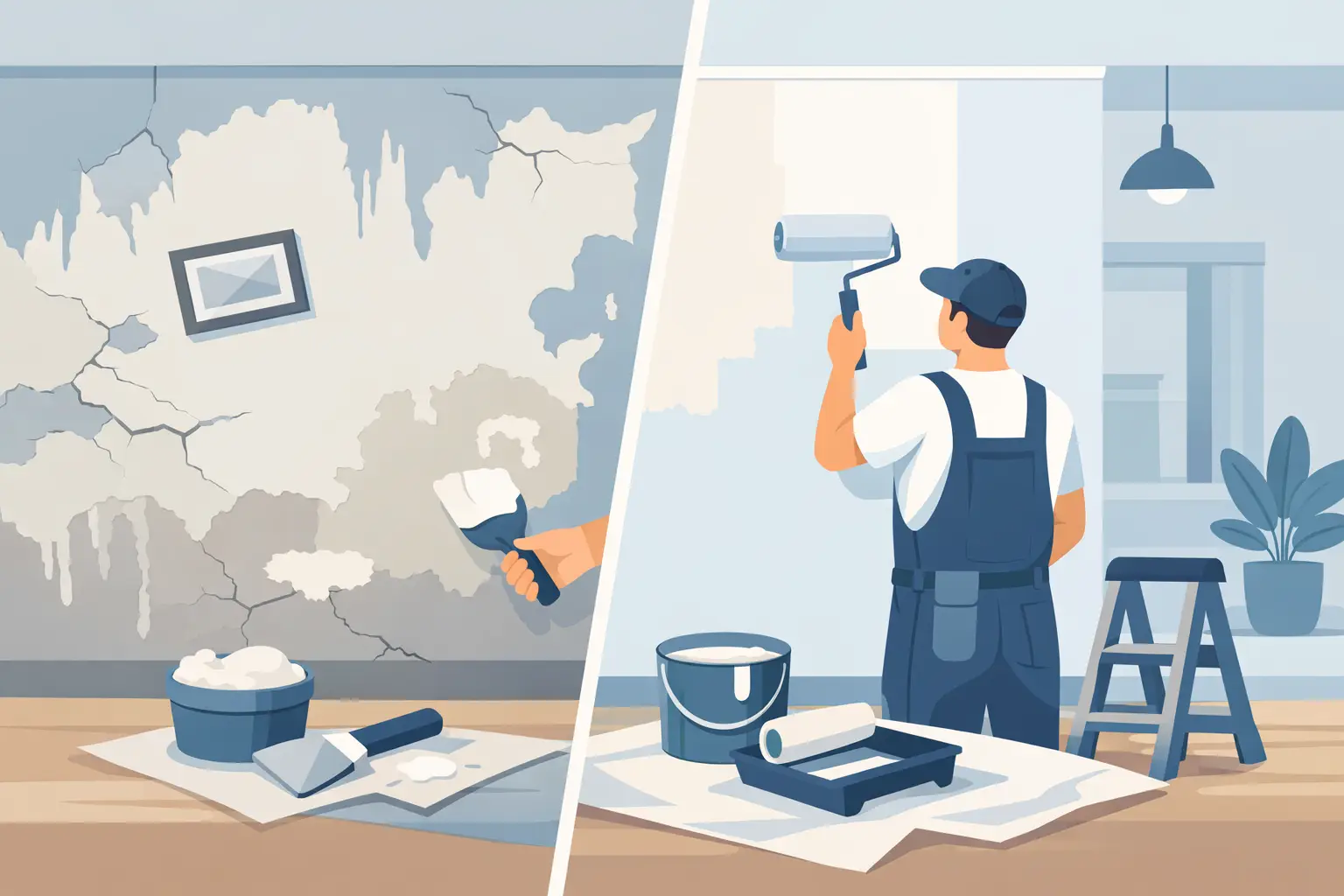
A rental can look perfectly presentable at the final inspection, then reveal a different story once furniture is out and daylight hits the walls. Scuff marks, picture-hook holes, peeled paint, stains and dents are common. Painting damaged walls after tenants is often the quickest way to return a property to good condition, but only when the repairs underneath are handled properly.
For Adelaide landlords and property managers, a rushed repaint can create more work at the next tenancy. Paint applied over unfilled holes, unstable plaster or greasy marks will not last. A sound repair and quality finish make the property easier to present, protect the walls from further wear and help keep turnaround time under control.
Start by separating wear from actual damage
Before choosing a paint colour or booking a painter, inspect every room in clear light. Normal wear might include light scuffs around hallways, faded areas where artwork has hung, or minor marks near switches. More substantial damage includes gouges in plasterboard, large holes, peeling coatings, water staining, crayon or grease marks, and poorly installed wall hooks.
This matters for two reasons. First, landlords need an accurate picture of the work required before organising the next tenant. Second, each issue needs a different repair method. A few small nail holes can be filled and sanded quickly. A soft, stained patch caused by a leak needs the source of moisture fixed before any paint goes on.
Take photos during the inspection and make a room-by-room note of what needs attention. It keeps the scope clear when arranging repairs and helps avoid spending money on a full repaint where targeted work may be enough.
When touch-ups are enough and when repainting makes sense
Touch-up painting can work well for a recent paint job where the original colour, sheen and product are known. It is useful for isolated marks, small repairs and a wall that is otherwise clean and sound. The challenge is that even an exact colour match may show if the existing paint has faded, been cleaned unevenly or has a different sheen.
A repaint of the full wall is usually the safer option after patching several areas. It provides an even finish and avoids the obvious rectangles that can appear around touch-ups. If damage is spread through a room, or the paint is tired throughout the property, repainting all walls in that space often delivers better value than repeated small fixes.
There is no single rule for every rental. A well-maintained unit between short tenancies may only need a few walls refreshed. An older home with patched plaster, smoke residue or years of scuffs may need more thorough preparation and a full internal repaint. The right approach depends on the condition of the surfaces, the expected rent level and how quickly the property needs to be back on the market.
Proper wall repairs come before paint
The quality of a paint finish is decided long before the final coat. Good preparation is not a nice extra. It is what stops repairs from showing through once the room is painted.
Fill holes, cracks and dents correctly
Small hook and nail holes should be cleaned out, filled with a suitable patching compound and sanded smooth once dry. Larger holes may need backing material, mesh tape or a plasterboard repair before filling. Cracks also need attention beyond simply brushing paint over them, particularly if they are widening or appear around doors and windows.
After sanding, the repaired section should sit level with the surrounding wall. Running a hand over the area is often the simplest check. If it feels raised, hollow or rough, it will likely show in angled light after painting.
Deal with stains before they bleed through
Marks from water, smoke, cooking grease, nicotine, mould or ink can reappear through ordinary wall paint. Cleaning is the first step, but it is not always enough. Once the cause is resolved and the surface is dry, a suitable stain-blocking primer may be needed to seal the area before top coats are applied.
Water marks deserve particular caution. Painting over an active leak only hides the evidence for a short time. Check roof plumbing, gutters, external walls, bathrooms or air-conditioning drainage first. Once moisture has damaged plasterboard or caused mould, repairs may need to go beyond paint.
Remove loose and peeling paint
Peeling paint is a warning sign that the coating has lost adhesion. It may be caused by moisture, poor surface cleaning, an incompatible previous coating or paint applied without adequate preparation. Loose material needs to be scraped back to a firm edge, sanded, patched where necessary and primed before repainting.
Skipping this step can leave a freshly painted wall looking sound for a few weeks, then lifting again as the weak layer underneath fails. No shortcuts here – stable surfaces are essential for a durable result.
Choosing paint that suits a rental property
Rental walls need to cope with regular cleaning, moving furniture and day-to-day traffic. For most internal living areas, a quality washable low-sheen acrylic provides a practical balance. It has enough durability for cleaning while keeping surface imperfections less noticeable than a high-gloss finish.
Flat or matt paint can look good on ceilings and can hide minor texture, but it may mark more easily on busy walls. Satin or semi-gloss finishes are generally better suited to trims, doors, skirting boards and areas that need frequent wiping. Kitchens, laundries and bathrooms may require coatings designed for higher moisture levels.
Neutral colours remain a sensible choice for many Adelaide rentals because they suit different furnishings and make rooms feel clean and open. That does not mean every property needs to be plain white. Soft warm whites, light greys and muted beige tones can give a more polished result while remaining broadly appealing. The key is consistency: use colours that are easy to maintain and straightforward to match later.
Painting damaged walls after tenants without delaying the next lease
Timing matters when a property is vacant. Painting too early, before maintenance trades finish, can lead to fresh damage from plumbers, electricians or flooring installers. Painting too late can hold up photography, open inspections and the incoming tenant.
The most efficient sequence is to identify all repair work at the final inspection, complete any moisture or building repairs first, then prepare and paint once other messy trades are finished. Allow drying time between filling, priming and coats. Trying to force the process with heavy coats or poor ventilation can affect the finish and durability.
For a simple room refresh, the work may be completed quickly. A larger property with extensive patching, smoke staining or multiple damaged areas takes longer because preparation cannot be rushed. A clear scope from the start helps painters, property managers and owners coordinate the work without unpleasant surprises.
Why professional preparation is worth considering
DIY repairs can be suitable for a confident owner dealing with a few minor marks. However, rental damage often looks easier than it is. Matching old paint, blending patches, sealing stains and repairing plasterboard cleanly require the right materials and experience. The cost of correcting a poor finish can be higher than having the job done properly from the outset.
A professional painter can assess whether walls need touch-ups, full-wall painting or broader repairs, then prepare the surfaces for a consistent finish. For landlords and agents, this also means one trade can manage patching, sanding, priming, painting and cleanup rather than leaving loose ends between contractors.
Shine Painters Adelaide works with rental property owners and managers across Adelaide to restore walls neatly and prepare homes for their next tenancy. With licensed, insured painters and more than 14 years of local experience, the focus is on honest advice, tidy work and finishes built to hold up.
A freshly painted rental should not just look good for inspection day. When damaged walls are repaired carefully and coated properly, the property is easier to let, easier to maintain and ready to make a better first impression on the people moving in next.