
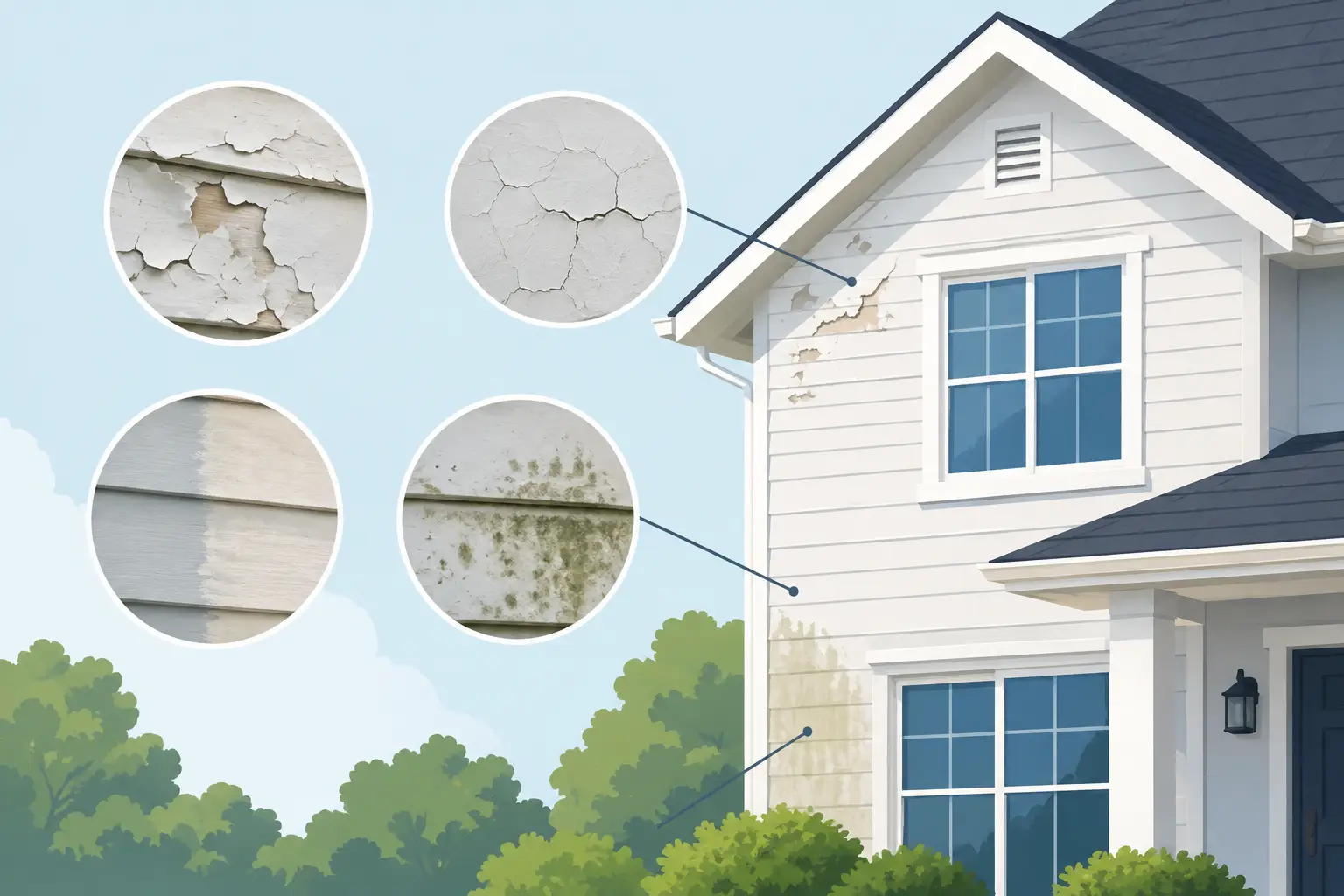
Paint rarely fails without giving a warning. A few bubbles near a window, powdery colour on your hand, or peeling along the eaves can quickly turn into a larger repair if moisture and damaged coatings are left untreated. Understanding common exterior paint failures helps Adelaide property owners deal with the cause, not simply paint over the symptom.
Exterior paint has a demanding job. It must cope with harsh summer UV, heat, rain, wind, temperature changes and, in some areas, salty coastal air. When the surface was poorly prepared, the wrong product was used, or moisture gets behind the coating, even good-quality paint can break down early.
Common Exterior Paint Failures to Watch For
Peeling and flaking paint
Peeling is one of the most obvious failures. Paint lifts away in strips or flakes, often exposing bare timber, render, metal or old coating underneath. It commonly appears around fascias, weatherboards, window frames, gutters and other areas exposed to water.
Moisture is usually the main culprit. Leaking gutters, failed sealant, cracked render, overflowing downpipes or water entering from the back of a wall can all push paint away from the surface. Peeling can also occur when a new coating is applied over loose paint, chalky residue, dirt or a glossy surface that was not properly sanded and primed.
The repair needs more than a quick touch-up. All loose material must be removed, the moisture source fixed, bare areas prepared and primed, and the surface repainted with a compatible exterior system. If the underlying problem remains, fresh paint will fail in the same place.
Blistering and bubbling
Blisters look like small or large raised bubbles beneath the paint film. Some are dry and caused by heat, while others contain moisture. On Adelaide homes, they are often seen on sun-exposed walls, doors and metalwork after hot weather or following rain.
Painting a surface that is damp, applying paint in unsuitable heat, or coating a wall before it has fully dried can trap moisture. Dark colours on exposed elevations also absorb substantial heat, which can put extra stress on paint, especially where several old layers are already present.
A painter needs to determine whether the blister came from heat or water before starting repairs. Heat blisters may be isolated, but moisture blisters call for a closer inspection of joints, flashings, gutters, window seals and wall cracks. Scraping and repainting alone is not a lasting fix if water is still getting in.
Cracking, crazing and alligatoring
Fine cracks in paint can look harmless at first. Over time, they widen, collect dirt and allow moisture to reach the substrate. Crazing refers to a network of shallow hairline cracks, while alligatoring produces a more pronounced pattern resembling reptile skin.
These failures often result from paint ageing naturally after years of weather exposure. They can also be caused by applying paint too thickly, using incompatible products, or painting over an unstable old coating. For example, a rigid topcoat over a softer layer can crack as the surface expands and contracts.
The correct repair depends on how deep the damage goes. Light surface crazing may be sanded back and recoated. Deep cracking or alligatoring usually means the failed coating needs to be removed more thoroughly before priming and repainting. Timber may also need filling, repairs or replacement where weathering has caused movement or rot.
Chalking and powdery surfaces
If you run a hand over an exterior wall and it comes away covered in coloured dust, the paint is chalking. This happens as the paint binder breaks down under ultraviolet exposure, leaving pigment at the surface. It is common on older painted render, masonry and fibre cement cladding.
A small amount of chalking can be part of normal paint ageing. Heavy chalking is different. It prevents new paint from bonding properly, so a repaint applied straight over it may soon peel or look patchy.
The wall should be cleaned properly, often with washing and controlled pressure cleaning where suitable, then allowed to dry completely. Depending on the surface and coating condition, a suitable primer or sealer may be needed before exterior paint is applied. Preparation is what turns a repaint into protection rather than a short-term cosmetic cover-up.
Fading and uneven colour
Fading does not always mean the paint was poor quality. Strong sunlight gradually breaks down colour pigments, particularly on north- and west-facing walls. Bright reds, deep blues and very dark colours can be more vulnerable than lighter, earthier shades, although paint technology and product selection make a real difference.
Uneven fading may point to more than UV exposure. It can happen when touch-ups were made with a different batch, sheen or product, or when parts of the building are sheltered while others receive full sun. On commercial premises, signage removed after years in place can leave obvious colour differences around the protected area.
A full repaint of the affected elevation usually gives the cleanest result. Colour choice matters too. A professional can help weigh up the look you want against heat absorption, maintenance requirements and the building material being painted.
Mould, mildew and green growth
Dark spotting, green staining and mould growth are common in shaded, damp parts of a property. Think southern walls, areas behind shrubs, under eaves, near leaking taps and poorly ventilated outdoor spaces. Paint may look dirty or discoloured, but the real issue is persistent moisture and limited airflow.
Exterior mould should be treated with an appropriate cleaner, not painted over. The area then needs to dry, while the cause is addressed where possible. Pruning vegetation back, improving drainage, repairing leaks and keeping soil or mulch away from cladding can all reduce repeat growth.
For rental properties and commercial sites, this is worth dealing with promptly. Aside from appearance, neglected mould can make a property look poorly maintained and lead to wider surface deterioration.
Efflorescence on brick, masonry and render
Efflorescence is a white, salty or crystalline deposit that appears on masonry, brick and render. It occurs when water moves through the material and carries salts to the surface. Once the water evaporates, the salts remain.
Painting over active efflorescence is risky because it can disrupt adhesion and create recurring patches. The source of water must be identified first. It may be rising damp, poor drainage, a plumbing leak, cracks in render or water entering through unsealed masonry.
After the surface has dried and salts are removed, the coating system needs to suit the substrate. Masonry and render require products that manage moisture appropriately, rather than trapping it behind a non-breathable film.
Why Preparation Prevents Most Exterior Paint Problems
Many exterior paint failures begin before the first coat goes on. A sound paint job starts with a close inspection of the building, including timber condition, cracks, failed sealant, rusty metal, drainage issues and loose previous coatings. The surface then needs cleaning, scraping, sanding, repairs and priming where required.
Product compatibility matters just as much. Exterior timber, rendered walls, brick, steel, aluminium and previously painted surfaces all need different preparation and coating approaches. Applying one general-purpose product across every surface may save time on day one, but it often costs more when premature failure requires repairs later.
Timing also matters. Paint needs suitable weather conditions and adequate drying time between coats. Rushing work because rain is forecast, a property handover is approaching or a business needs to reopen can compromise the finish. A good painter plans around conditions and explains where a repair needs time to dry properly.
When to Repair and When to Repaint
A small isolated issue, such as paint damage from a leaking downpipe, can often be repaired once the leak is fixed. Localised sanding, priming and blending may be enough if the surrounding paint is sound and the colour is still in good condition.
A broader repaint is usually the smarter option when chalking, fading, cracking or peeling appears across multiple walls. It gives the building a consistent finish and allows defects to be repaired before they spread. For landlords, this can also be a practical way to improve presentation between tenancies. For businesses, it protects the professional appearance customers notice before they walk through the door.
Older properties need additional care. If there is any chance older paint contains lead, particularly on surfaces painted decades ago, avoid dry sanding or uncontrolled removal. The work should be assessed and managed safely by professionals with the right process and equipment.
Shine Painters Adelaide approaches exterior painting as a preparation and protection job first, then a colour job. That means identifying failed areas, repairing what can be repaired, using suitable coatings and leaving the site clean once the work is complete.
If your exterior paint is peeling, bubbling, fading or leaving powder on your hand, do not wait for a small defect to become damaged timber, cracked render or a larger repaint. A proper inspection now can protect the building and give you a finish you will be proud to show off for years.